
The Collapse of a Public System as a Catalyst for Private Growth
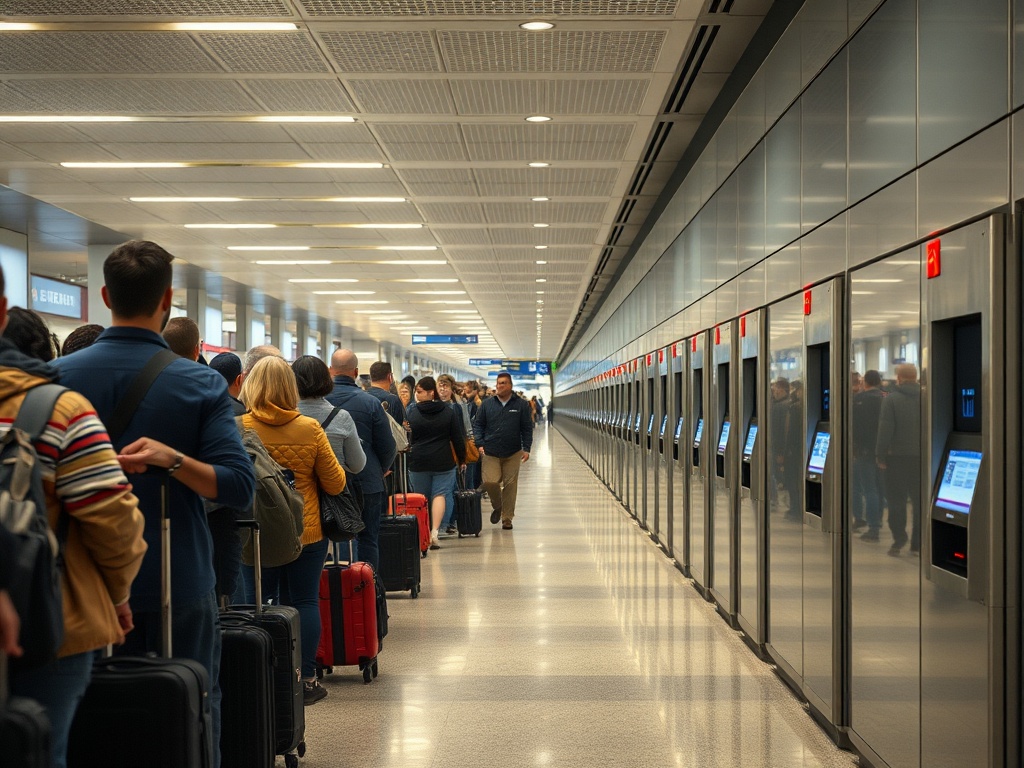
As lines at the Transportation Security Administration (TSA) in U.S. airports began to soar—wait times exceeding an hour at major terminals during peak seasons—one publicly traded company reported subscription figures that analysts did not anticipate so soon. CLEAR, the company offering expedited biometric access to security checks, seized this friction and turned it into a nearly self-written sales pitch: the public system fails, we do not.
The mechanics are straightforward. CLEAR does not compete with the TSA; it operates alongside it: verifying a traveler’s identity through fingerprints and iris scans before they approach federal security, allowing them to skip the document-checking queue. The time saved can range from 20 to 40 minutes on high-demand days. For a business executive with weekly flights, that time savings comes at a justifiable price. For a family flying twice a year, however, the calculus is less clear.
This is where the growth narrative begins to show its seams.
What the Subscription Price Reveals About the Business Model
CLEAR operates on an annual membership fee nearing $189 for individual users, with discounts available for those already enrolled in TSA PreCheck or Global Entry. The company has reported over 25 million registered members and has expanded its presence to over 50 airports. At first glance, the numbers appear solid.
However, the revenue structure warrants a more critical examination. The value that CLEAR delivers is not created by CLEAR; it is transferred from a degraded public system. The willingness to pay from frequent travelers does not increase because CLEAR has improved any intrinsic aspect of the security process; it rises because the free alternative has become more painful. This distinction has concrete financial implications: if the TSA improves operationally—through public investment, automation, or a reorganization of flows—part of CLEAR’s core argument erodes even though the company did nothing wrong.
This does not automatically render CLEAR’s model unsustainable, but it does precisely define its most overlooked structural risk. Subscriber growth correlates more with the dysfunction of the public system than with the innovation of the private service. An investor who fails to disentangle these two variables is interpreting the same number with two completely different meanings.
Diversifying into sports stadiums, hospitals, and office buildings aims to reduce this dependency. It signals that someone within the company has identified the issue. The operational question is how much of the recurring revenue still comes from the airport context and how quickly that proportion can shift.
The Value Chain CLEAR Does Not Control
CLEAR’s model relies on infrastructure it does not own and on an institutional relationship that can be renegotiated. Airports provide them with physical space—kiosks, exclusive lanes, floor staff—in exchange for commercial agreements whose full terms are not public. The TSA, for its part, is the entity that ultimately processes the passenger; CLEAR only manages the meters before security.
This architecture has distributive implications that rarely appear in growth analyses. If CLEAR extracts value from a flow that passes through public and private infrastructure financed and operated by third parties, the sustainability of the model depends on those third parties feeling that the agreement is beneficial for the long term. An airport with increasing bargaining power—or a federal administration with incentives to equalize the traveler experience—may reconfigure the terms of that relationship in ways that no short-term financial model captures well.
The risk is not regulatory in the classical sense. The risk lies in structural dependency: CLEAR needs the airport to allocate premium space, the TSA to maintain long lines for non-members, and frequent travelers to perceive a significant enough difference to renew their membership. If any of these three conditions deteriorates simultaneously, the cancellation curve may shift before quarterly reports reflect it.
There is a business logic that works when all nodes in the system have aligned incentives to remain. The current architecture of CLEAR features nodes with asymmetric incentives: the airport relinquishes valuable space, the TSA provides the operational contrast that justifies the membership, and the user pays. The only actor that directly captures recurring revenue is CLEAR. This asymmetry is not automatically unsustainable, but it does require that the perceived value remains high enough so that no node decides to reconfigure the agreement.
Expansion Beyond Airports as a Redistribution Gamble
CLEAR’s most interesting strategy is not in airports; it lies in what the company is attempting to do when replicating its biometric infrastructure in environments where user pain does not depend on a public failure. In stadiums, hospitals, and corporate access points, CLEAR must generate its own value proposition without relying on the TSA’s collapse to justify its existence.
This is a more demanding test. If the company can charge a membership fee in settings where the alternative system functions reasonably well, it will have demonstrated that its asset is biometric convenience itself, rather than the exploitation of a bottleneck. If conversion in these environments is materially inferior, the diagnosis shifts: the flagship product is merely a band-aid over a systemic flaw, and the expansion is cosmetic diversification.
Publicly available data does not yet allow for a precise resolution of this question. However, the direction of expansion and the pace of adoption outside the airport are the indicators that truly matter for assessing whether CLEAR is building something durable or simply monetizing an opportunity window that other actors—public or private—can close.
The model that generates value for all actors in its network tends to be the hardest to displace. CLEAR is currently operating in a model where the value for the user exists, but the value for institutional partners is less evident, and the value for travelers without membership is negative by design. This asymmetrical distribution is precisely what makes this growth, although real in the numbers, more fragile than subscription holders may suggest.