
The Cost of Being Public When the Market Doesn't Understand
On April 9, 2026, Ares Management Corporation announced the acquisition of Whitestone REIT for $1.7 billion in cash, at a price of $19.00 per share. The official premium was 12.2% over the previous day's closing price. However, there's a more revealing figure: a 26.5% premium over the price prior to March 5, when Reuters reported that Whitestone had engaged advisors to explore a sale.
That second percentage is the key takeaway. It indicates that before the market was aware of an active sales process, Whitestone's shares were trading at a significant discount to what an institutional buyer managing $623 billion considered a fair value. There was no gradual market correction; it was a direct purchase. This gap between the trading price and the acquisition price represents, operationally, the cost of being public in a sector that Wall Street struggles to understand.
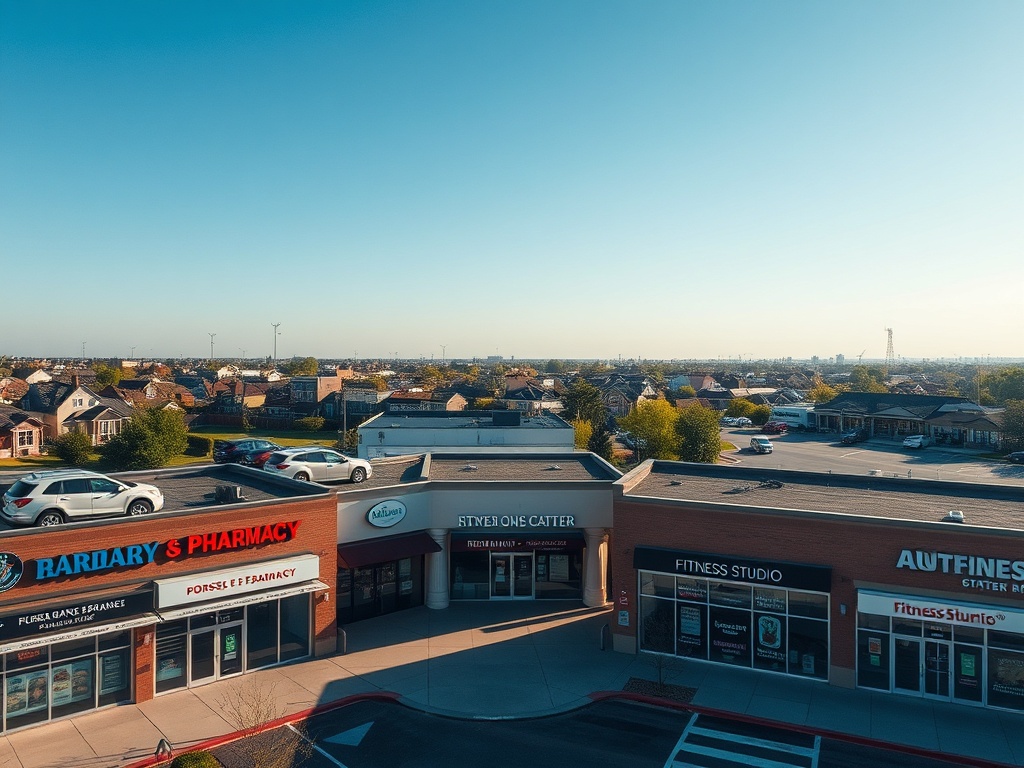
Whitestone operates 56 open-air shopping centers with approximately 4.9 million square feet spread across Phoenix, Austin, Dallas-Fort Worth, Houston, and San Antonio. They’re not large retail spaces or malls; they are neighborhood centers focusing on frequently used services: restaurants, pharmacies, clinics, gyms, and financial services—spaces that people visit two or three times a week for reasons that cannot be replaced by Amazon.
Why Private Equity Sees What Public Markets Ignore
The public market has a structural problem with proximity retail models: it evaluates them using the same criteria that were applicable to traditional retail during the e-commerce collapse between 2017 and 2020. This institutional memory distorts the comprehension of models that operate under a completely different logic.
Ares, from its position as an alternative asset manager, applies a different lens. David Roth, its global head of real estate strategy, described the acquisition as a bet on "new economy real estate," a term that, in his view, signifies physical spaces where consumers receive services that require in-person presence: healthcare, food preparation, wellness routines. It is not luxury retail or discretionary retail; it’s essential consumption infrastructure in markets with constrained supply.
This nuance has concrete financial implications. Whitestone’s centers are located in the high-growth demographic markets of the Sun Belt in the United States. Texas and Arizona have been absorbing populations from states with a higher cost of living for years. More residents in markets with limited availability of well-located commercial land means lower vacancy risk and reduced pressure on rents. The model does not rely on retail expansion; it depends on existing and growing population density.
In that context, paying $1.7 billion for 56 properties in these markets is a decision based on solid operational fundamentals, not a speculative bet. The asset generates predictable cash flow from day one because its tenants—pharmacies, clinics, fast-food chains, yoga studios—have medium-term contracts and operate in categories with structural demand.
The Operational Model That the Public Market Compressed
Being listed on the stock exchange entails costs that go beyond commissions or reporting requirements. The public market demands quarterly visibility and penalizes long-term investments when they impact immediate results. For a REIT like Whitestone, whose model requires active management of tenant mix and constant reinvestment in small-format properties, this pressure creates operational friction.
Christine Mastandrea, President and COO of Whitestone, emphasized the team’s commitment to building a platform aligned with surrounding communities. This management philosophy—selecting tenants based on their role in the neighborhood's commercial fabric, not just their ability to pay rent—is challenging to convey to a market that measures performance by quarterly FFO.
As a private company under Ares management, Whitestone will be able to operate without this short-term pressure. It will invest in property renovations, negotiate contracts with greater flexibility, and expand its portfolio in markets where it already has operational density without having to justify every decision to analysts applying models designed for large-format shopping centers.
Ares did not acquire just square footage; it bought a community management model that, if executed effectively without the constraints of the public market, has room for improvement in occupancy efficiency and tenant mix quality. The transaction does not include financing conditions, which eliminates the common execution risk in such operations and accelerates the expected closure to the third quarter of 2026.
The Pattern This Operation Confirms for the Industry
This acquisition follows a pattern that has been repeating in the U.S. real estate market since 2022: private equity funds identify REITs with solid assets in markets with favorable demographic fundamentals, wait for the public market to undervalue them below their replacement value, and execute direct purchases at a modest premium over market price but at a discount to the intrinsic value of the assets.
Whitestone’s case has an additional peculiarity. The March 5 announcement about hiring advisors did not result in any significant price correction until the buyer and price were confirmed. This suggests that the market lacked conviction regarding how much the portfolio would be worth in a private transaction. Ares had the conviction.
For other small-format retail REITs operating in similar markets—Sun Belt, neighborhood centers, everyday service tenants—this transaction sets a reference for private valuation that their trading prices likely do not reflect. Institutional capital with a long-term horizon will continue to find this gap attractive while the public market applies broad discounts to the retail sector without differentiating between models with opposing operational fundamentals.