
Why Private Capital is Betting on the Nervous System of the Energy Transition
On March 25, 2026, Clearlake Capital Group—an alternative asset manager with over $185 billion under management—signed a definitive agreement to acquire Qualus Corporation, a company specialized in engineering services, consulting, and digital solutions for the U.S. national electrical grid. New Mountain Capital was the seller. Financial terms were not disclosed.
Discretion regarding pricing is common in private equity transactions. What is uncommon is the clarity with which this transaction signals where institutional money is going as the most sophisticated managers of the world read the energy map of the coming twenty years.
The Electrical Grid as a Civilizational Bottleneck
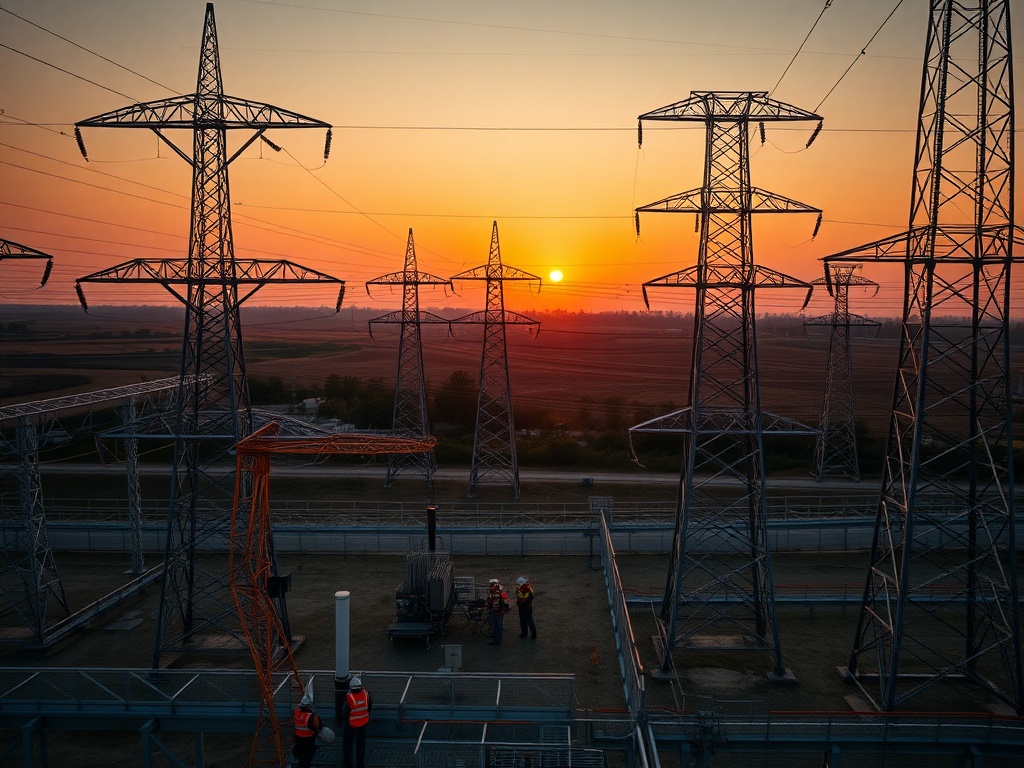
Qualus does not manufacture solar panels or build wind farms. It operates in the invisible layer that makes everything else possible—or impossible: planning, engineering, program management, digital solutions, and field services that determine whether the electric grid can absorb the load that the modern economy is imposing on it.
This load is growing at a pace that the existing infrastructure was not designed to support. The data centers fueling artificial intelligence, the electrification of heavy transport, large-scale energy storage projects, and the integration of distributed renewable sources are simultaneously demanding a grid conceived in an era of predictable consumption and centralized generation. The result is a structural gap between projected demand and the installed technical capacity to manage it.
Qualus operates right at that critical point: its clients are the major private investment utilities in the country, trade and industrial organizations, renewable energy and storage developers, and data center operators. It is not a niche provider; it is an integrator of the complexity that the energy transition generates daily at the operational level.
Clearlake is not buying an asset. It is buying a position at the bottleneck.
What the Financial Architecture of the Deal Reveals
The financing structure speaks volumes more than any press release. Apollo, Goldman Sachs Alternatives, and Clearlake itself acted as joint arrangers of the private credit for the operation. Latham & Watkins specifically advised on that financing. Simpson Thacher & Bartlett and Wachtell, Lipton, Rosen & Katz covered legal advising for the parties involved.
This is not the legal and financial profile of a routine transaction. It is the architecture of a leveraged buyout backed by the most sophisticated players in the global private debt market. The involvement of Apollo and Goldman Sachs Alternatives as co-arrangers indicates that there is enough conviction regarding Qualus' future cash flows to structure debt upon them, even without public revenue metrics or valuation.
That conviction has a concrete basis: contracts with large regulated utility companies generate long-term revenue visibility that institutional capital recognizes as functionally equivalent to an investment-grade bond with operational upside. The regulatory stability of Qualus' clients is the real asset that justifies the leverage.
New Mountain Capital, on the other hand, exits the investment having built a platform that now attracts one of the most active infrastructure managers in the market. The timing of the exit is not accidental: selling when demand for electrical grid assets is at its peak institutional attention maximizes the exit multiple, regardless of the exact figure.
The Pattern Confirmed by This Operation
There is an underlying macroeconomic logic that transcends this specific transaction and deserves precise naming: electric grid service assets are being repriced by the private capital market as critical infrastructure, not as cyclical engineering services.
This reclassification has direct consequences on valuation multiples, financing availability, competition for specialized talent, and sector consolidation. When institutional capital decides that something is infrastructure, the cost of capital decreases, investor patience extends, and the barriers to entry for competitors without scale become prohibitive.
Qualus, with its integrated model covering everything from strategic consulting to field service, is exactly the type of platform that Clearlake can scale horizontally: adding capabilities, expanding geographies, incorporating additional digital solutions, and deepening relationships with regulated clients that have decades-long investment horizons. The statement from CEO Greg Herasymuik—that Clearlake's backing will enable scaling capabilities in response to growing operational demands—is not mere corporate rhetoric; it describes an inorganic growth program funded with the balance sheet of a $185 billion manager.
The convergence of three simultaneous trends makes this investment thesis particularly robust: industrial electrification pushing base load demand, renewable integration introducing variability and technical complexity into the grid, and the proliferation of data centers requiring hospital-level supply quality. None of these three trends show signs of reversing on the horizon for any active private capital fund today.
The Invisible Infrastructure Determining Who Wins the Energy Transition
There exists a dominant narrative about the energy transition that focuses on generation: how many gigawatts of solar, how many from wind, how quickly battery costs are falling. This narrative dangerously neglects the realities for capital decision-makers.
Clean generation without a grid capable of integrating, transporting, and distributing it with resilience is like having an eight-lane highway that ends in a dirt road. The limit isn’t in generation; it lies in the transmission, distribution, control, and management infrastructure that determines how much energy effectively reaches where it is needed, when it is needed, and with the quality that modern industrial processes require.
That layer of invisible infrastructure—the one Qualus represents—has historically received the least media attention and the most chronic underinvestment. Clearlake's decision to bet here, with the financing structure it chose and the partners it assembled, is a market signal that energy sector operators, regulators, and executives in electricity-dependent industries must heed.
Leaders who understand that the next competitive advantage in energy will not be earned by installing more generation capacity, but by securing privileged access to the services that keep the grid functioning amidst the complexity to come, will be the ones positioning their organizations on the right side of a gap that private capital is already arbitrating in its favor.