
When the Cloud Faces Physical Impact: The New Trust Contract Demanded of Big Tech
The quiet promise of the cloud has always been brutally simple: no matter what happens, your systems stay online. That promise has been built on redundancy, automation, and continuity manuals designed with software failures, human errors, and at most, cybersecurity incidents in mind. This week, that narrative collided with a reality older than computing: physical infrastructure is also vulnerable to deliberate attacks.
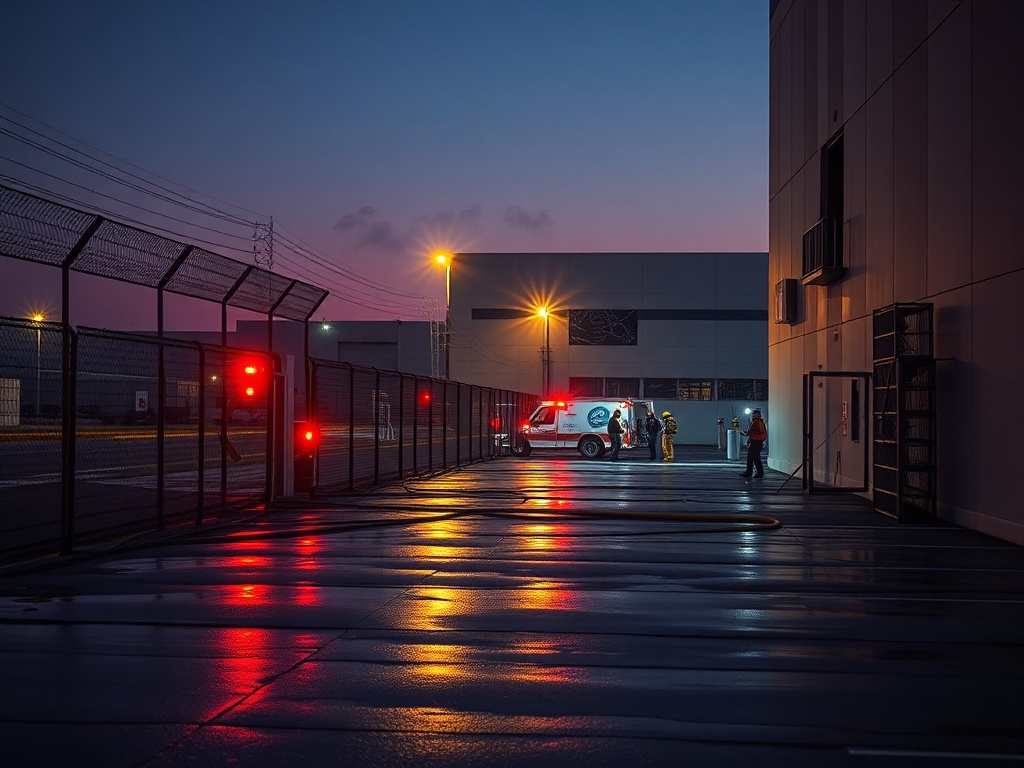
According to information published by Business Insider, three Amazon Web Services (AWS) data centers in the Middle East were damaged by drone attacks related to the ongoing conflict between the United States and Iran—two in the UAE and one in Bahrain. AWS stated that the impacts caused structural damage, power supply disruptions, and in some cases, fire suppression activities that added water damage. There were evacuations and access closures at least at one facility due to structural damage and flooding, according to an internal document cited by the media.
What we have here isn’t “another AWS outage” like those the sector remembers due to configuration errors or network issues. This is different: it marks the cloud’s transition from the category of “technology service” to that of critical asset with military value. And when an asset becomes critical, buyer behavior changes.
From Logical Unavailability to Material Damage: What Really Changed on March 1
The facts are concrete, and that's why they matter. AWS communicated that the attacks occurred in the early hours of Sunday, March 1, 2026. Two sites in the UAE were “directly hit” by drones, while the center in Bahrain suffered damage when a drone landed nearby. The operational impact was reflected in the AWS Health Dashboard, with incidents in me-central-1 (UAE) and me-south-1 (Bahrain), including service disruptions and power outages due to fire risk management.
Attribution in conflicts is often slippery ground, and here the professional standard is to not go beyond what can be verified. Business Insider reported that Iranian state media and the Islamic Revolutionary Guard Corps (IRGC) claimed responsibility for the attack, at least against the site in Bahrain, describing it as a strategic target due to its alleged role in supporting “enemy” military and intelligence activities. The media itself notes that it could not independently verify those claims, although it did confirm the damages through internal and public statements from Amazon.
In business terms, this episode introduces a distinction often underestimated in continuity plans: a failure corrected through engineering is not managed in the same way as failure managed with physical protection, regulatory negotiation, and coordination with local authorities. When there is structural damage, recovery time ceases to be an exclusively technical variable. Personnel safety, site access, electrical integrity, and fire protocols, along with the risk of flooding due to emergency response, come into play.
This nuance is what changes the market. Because the corporate customer doesn’t just “use” the cloud. The corporate customer transfers risk to the cloud. And that transfer has a limit when the risk ceases to be digital.
The Cloud as Critical Infrastructure: The Real Cost of Selling "Neutrality"
For years, major providers have operated under an implicit narrative of neutrality: general-purpose infrastructure for any industry, in any geography, with economies of scale. In practice, that model coexists with another reality mentioned in coverage: large clouds host workloads for governments, universities, and businesses, and have become a central piece of public sector digitalization.
The Middle East case makes this evident due to its regional relevance. The AWS region in Bahrain (me-south-1) was launched in 2019 and is described in coverage as the largest American data center facility in the Middle East, also serving as a gateway for services to the Gulf. It is also mentioned that it hosts AWS Ground Station. That detail, in a war context, ceases to be a product line and becomes part of the “strategic value” perception of the facility.
Here lies the uncomfortable twist: the very concentration of services that makes the cloud efficient also makes it visible. Efficiency is purchased because it reduces operational complexity; visibility is inherited as a side effect. And when an armed actor decides that a digital asset is “supporting infrastructure,” the provider ceases to be a distant third party.
This does not mean that data centers become targets simply for being “technology.” They become targets due to the role attributed to them within a power system. For management teams, the point is not to discuss the geopolitical narrative, but to understand its effect: the risk of availability is no longer contained within the technical perimeter.
What follows is a contractual and cultural shift: the enterprise buyer begins to demand not only SLAs and redundancy but also clarity regarding regional exposure, dependence on a single region, migration plans, and actual capacity to operate under physical disruption.
Enterprise Customer Behavior Changes: Buying Continuity, Not Computing
I have seen too many cloud strategies built as if the customer were purchasing instances, storage, or managed services. At the CFO's and COO's table, the real product is something else: operational continuity with predictable costs.
In this episode, AWS advised customers in the Middle East to migrate workloads to other regions and to redirect traffic away from the UAE and Bahrain to mitigate risks and disruptions. That recommendation is rational, but it also reveals a point the market tends to postpone: many deployments are still designed with too high a regional dependency for reasons of latency, data residency, or simply inertia.
When the risk was “a service outage,” the typical conversation revolved around fault tolerance and multi-zone architecture within the same region. With physical damage and a conflict environment, the minimum viable architecture shifts toward multi-region and, in some cases, degraded operational capability outside the primary cloud.
This change hits where it hurts: in costs and governance. Multi-region setups are more expensive, require data discipline, change the way monitoring is done, duplicate certain components, and necessitate failover exercises that many organizations avoid because they disrupt daily operations. However, the drone attack makes visible the hidden cost of not doing so: it’s not the cost of “best practice,” but the cost of interruption due to an event that cannot be resolved with a rollback.
The definition of a “strategic” provider also changes. The sophisticated buyer starts differentiating:
Meanwhile, this episode opens a window for simpler alternatives in certain segments. I’m not suggesting “going back on-prem” as nostalgia, but many companies will rediscover the value of hybrid architectures and contingency plans that maintain critical functions with a leaner design. When the customer perceives that the premium product includes risks they cannot control, demand arises for less elegant but more manageable solutions.
The New Cloud Innovation Is Not Another Service: It’s Verifiable Resilience
When a market matures, innovation ceases to be about catalog offerings and shifts toward reducing friction and risk. This case suggests three fronts where the cloud will genuinely compete.
First, resilience as a product, not as a document. It’s not enough to claim that there are 33 regions and 105 availability zones globally. The enterprise customer needs that scale to translate into preconfigured escape routes, periodic testing, and migration capabilities that don’t require rewriting half the system under pressure.
Second, operational transparency in physical incidents. In classic outages, the customer already expects postmortems and status panels. In incidents involving structural damage, transparency becomes complicated due to security, investigation, and coordination with authorities. Still, the trust standard will rise: the buyer wants to understand the impact, the “localized and limited” scope described in coverage, and the recovery trajectory. Prolonged silence is interpreted as fragility, even if the reason is caution.
Third, designing to operate under geopolitical tension. Here I’m not talking about taking sides but realizing that the regional expansion of data centers, driven by “multibillion-dollar” investment in the region according to the cited sector context, occurs in territories where risks are not homogeneous. Cloud engineering has always treated geography in terms of latency and regulation. Now geography is also about exposure.
Business Insider also mentions reports of attacks on data centers operated by Amazon and Microsoft in the Gulf, with fewer details available about Microsoft. That pattern—without needing to expand beyond what was published—indicates that the risk is not exclusive to one provider. A category is forming: Western digital infrastructure operating in tense regions.
The consequence for C-Level executives is direct: the technological risk map ceases to be an appendix for the CISO and becomes an agenda item for the CEO and the audit committee. When an asset is critical, continuity becomes a corporate governance issue.
The Market Is Buying One Thing: The Ability to Keep Functioning When the World Breaks
This episode shows that the progress companies “hire” when migrating to the cloud is not computing power or operational convenience. The real work being contracted is continuity under uncertainty, and since March 1, that uncertainty includes physical damage and regional escalation.