
The Mine No One Wants to Admit is Needed
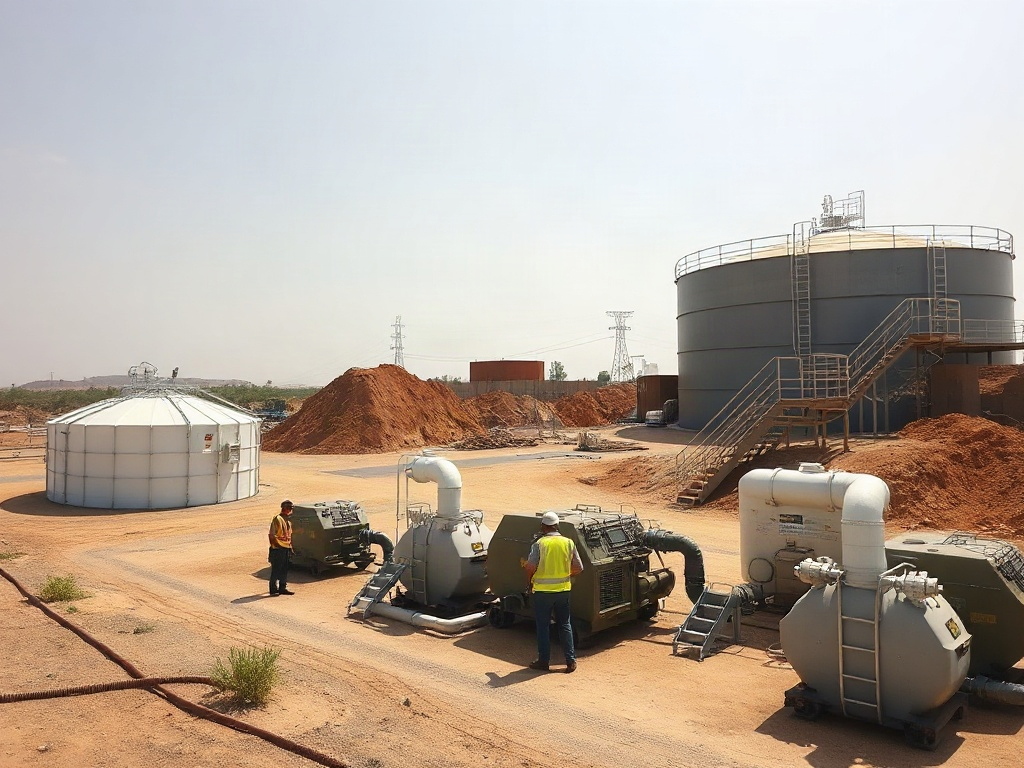
A federal judge in Nevada has just given the green light to one of the most controversial mining projects in recent years. The Australian company Ioneer will receive authorization to operate the Rhyolite Ridge lithium and boron mine located in Esmeralda County, between Las Vegas and Reno. The ruling reverses the efforts of conservation groups who have spent years trying to block the project, arguing that it would destroy the only habitat of Eriogonum tiehmii, commonly known as Tiehm’s buckwheat, a wildflower species endangered and found on merely ten acres of desert land. Ioneer plans to operate the site for over 77 years.
Conventional coverage of this case has split into two predictable camps: those who view it as a victory for energy security and those who denounce the sacrifice of a species for green capitalism. Both sides hold a partial truth. And precisely for that reason, neither is acknowledging the structural problem this ruling exposes.
The Extractive Model Didn’t Disappear, It Reoriented
There’s a fundamental contradiction within the dominant narrative of decarbonization that this case makes impossible to ignore. For two decades, the environmental discourse built its legitimacy on criticizing the extractive model: the logic of taking more from the land than is returned, monetizing natural resources without internalizing ecological costs. This discourse advanced regulatory frameworks, criteria for responsible investment, and corporate net-zero carbon commitments.
Now, that same decarbonization agenda needs lithium. It needs boron. It needs cobalt, manganese, and rare earths. And it needs them in volumes that cannot be obtained from recycling existing batteries, at least not at the scale or pace required for the transition to electric vehicles and renewable energy storage. The extractive model was not surpassed by the energy transition: it was relocated and renamed. What was once a coal mine in Wyoming is now a lithium mine in Nevada, with better public relations but the same territorial dilemmas.
This is not an argument against electrification. It is a diagnosis of the real architecture of the system we are building. When a flower occupying ten acres becomes the epicenter of a years-long legal battle, we are not witnessing an isolated case of conservation versus progress. We are observing the first judicial expression of a tension that will recur in dozens of jurisdictions over the next twenty years.
The Geography of Lithium Is a Concentration of Systemic Risk
The United States produces less than 2% of the global lithium supply. Chile and Australia control over 70% of extraction. The so-called Lithium Triangle, which encompasses parts of Argentina, Bolivia, and Chile, concentrates approximately 58% of the known global reserves. This geographical distribution creates a structural dependency that the American automotive and renewable energy sectors have begun to treat as a national security issue, not just a supply one.
Rhyolite Ridge is not just another mine. It is one of the few lithium and boron deposits with commercial scale within the continental United States. Ioneer has indicated that the project could supply enough materials to fabricate batteries for hundreds of thousands of electric vehicles annually. In the context of America's attempt to reduce its dependence on Asian supply chains for battery components, the Nevada deposit holds strategic value that far exceeds its immediate market value.
What the judicial ruling establishes, beyond its technical language, is a hierarchy of priorities. In that hierarchy, industrial sovereignty weighs more than the protection of a hyper-local botanical species. That’s the real political and economic calculation behind the decision. Denying it doesn’t make it disappear.
The systemic risk isn’t in this specific mine. It lies in the fact that Western democracies are building their energy transition on a supply chain that exactly replicates the geopolitical concentration issues they were trying to resolve. Swapping Gulf oil for Atacama lithium is not diversification; it is a substitution of dependency with a better climate narrative.
What the Market is Already Discounting While Regulators Have Not
Private capital has been grappling with this contradiction for several years at a pace faster than regulatory frameworks. Investment funds specializing in energy transition have begun to incorporate what some analysts call permitting risk, the likelihood that essential mining projects will be indefinitely blocked by environmental litigation, indigenous consultation processes, or land-use restrictions. This risk is dampening investment in the extraction of critical minerals precisely when projected demand requires the opposite.
The Nevada case illustrates the friction between two legal frameworks operating on incompatible timelines. The Endangered Species Act was designed for ecological processes measured in decades. The expansion plans for electric vehicles from global automotive manufacturers are measured in product cycles of three to five years. When these two time horizons collide in a federal court, the outcome is not a solution, but a precedent that shifts the conflict to the next project.
Ioneer will operate Rhyolite Ridge. Yet the pattern this litigation sets, the ability of conservation groups to delay critical mineral projects for years using legal instruments designed for other contexts, will be replicated at every new deposit seeking to be developed on American or European soil. Financial models for the energy transition that do not incorporate three to seven years of litigation as a standard operating cost are significantly underestimating their cost structure.
The Real Price of a Frictionless Transition Doesn’t Exist
There exists a narrative that circulates too comfortably in forums for responsible investment and corporate sustainability reports: the idea that the transition to clean energy can be executed without challenging territorial commitments, that technology and recycling will eventually resolve the need for new extraction, and that it is possible to decarbonize without mining.
That narrative is operationally false within the relevant time horizon for decarbonization commitments of 2030 and 2050. Lithium recovery rates from lithium-ion battery recycling remain below 50% in large-scale industrial processes. Projected demand for 2030 exceeds several multiples of what the current stock of batteries in circulation could someday recycle. Recycling is a necessary complement, not a substitute for primary extraction in this cycle of transition.
Rhyolite Ridge is neither an anomaly nor a pyrrhic victory. It is the first of a series of decisions that governments, investors, and companies will have to make with increasing frequency over the next fifteen years. The question is not if the energy transition will require new mines. We already know it will. The question that decision-makers must address now is under what environmental standards, with what territorial compensation mechanisms, and with what speed of regulatory approval that inevitable extraction will be conducted.
Leaders who build the institutional frameworks today to answer that question with precision and social legitimacy will determine which economies lead the value chain of 21st-century energy. Those who avoid it for political discomfort or narrative will face it as a supply crisis when there is no margin left to deliberate.