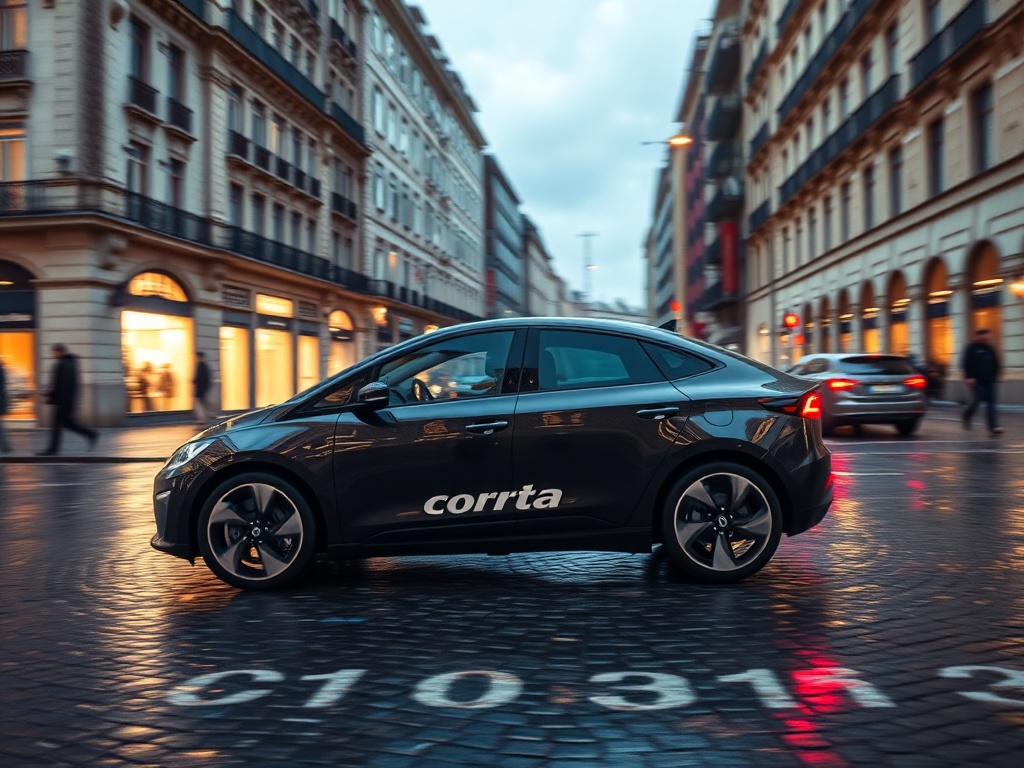

The Croatian Robotaxi That Uber Couldn't Ignore
Croatia might not be the first country that comes to mind when thinking about the global race for autonomous driving. Waymo operates in Phoenix and San Francisco. Baidu is rolling out fleets in Beijing. Tesla is collecting data on an industrial scale. However, from Zagreb, a startup named Verne has just entered the scene with a proposition that has caught Uber’s attention, and that’s significant.
Verne was born under the umbrella of Rimac Group, the Croatian conglomerate primarily known for its high-performance electric hypercars and its acquisition of Bugatti. This technological pedigree is not merely decorative; it provides Verne access to electric propulsion engineering, precision manufacturing, and, most importantly, enough institutional credibility to attract partners that typically would not consider a startup from Eastern Europe.
The operation kicks off in Zagreb with a robotaxi service. The model is still in early stages, geographically limited, and doesn’t currently compete at scale with industry giants. However, the question of interest is not whether Verne will dethrone Waymo, but rather what this move says about how Rimac Group is managing its business portfolio.
Rimac Built a Laboratory with a License to Fail
The first thing that stands out from an organizational design perspective is the decision not to integrate Verne within Rimac as an internal division, but instead to structure it as a separate entity with its own identity. This distinction is not cosmetic.
When a parent company launches a high-risk initiative under its own corporate roof, what inevitably happens is that the budgeting cycles, approval committees, and financial indicators of the core business end up suffocating the project before it can generate learning. The innovation division starts reporting losses in the first quarter, someone on the board demands a twelve-month return plan, and the project dies without even validating its core hypothesis with real customers.
Verne avoids this structural trap. By operating autonomously, it can measure what truly matters at this stage: accumulated autonomous kilometers, human intervention rate per trip, passenger satisfaction, and speed of software iteration. None of these indicators appear in Rimac’s financial statements, and that is exactly correct. The cash flow from the core business, sustained by manufacturing contracts and the Bugatti brand, funds the exploration without requiring it to justify itself with the same metrics as a 2 million euro hypercar.
This is bimodal management executed coherently: the current revenue engine operates independently from the exploration project that may bleed capital over the next three years.
What Uber Brings to the Table and What It Gains in Return
Uber’s involvement in this project deserves careful dissection because it is not just technological philanthropy or a speculative bet. Uber has a well-documented structural problem: it abandoned its own autonomous driving program when it sold Advanced Technologies Group to Aurora in 2020. Since then, its model has relied on human drivers, which means its operational cost structure has a floor it cannot breach without changing the fundamental input of its service.
Partnering with Verne in Zagreb allows Uber to achieve several things simultaneously. It regains exposure to autonomous driving technology without reopening its own R&D center, which previously cost hundreds of millions of dollars annually. It tests the integration of autonomous fleets into its distribution platform, which already exists and has users. And it does so in a sufficiently small market so that operational missteps do not generate the type of adverse media coverage it faced in cities like San Francisco or Austin.
For Verne, the equation is equally straightforward. Uber provides immediate demand infrastructure: an app installed on millions of phones, a proven payment system, and historical urban mobility data that any robotaxi startup would pay dearly to have. The risk of launching an autonomous driving service without a user base is that the first months are statistically irrelevant. With Uber as the channel, that problem disappears from day one.
This alliance architecture, where each party contributes surplus and gains what it lacks, is more robust than a pure investment agreement. It aligns operational incentives without merging governance structures, preserving Verne’s agility while linking it to Uber's scale.
The Market That No One Was Watching
Central and Eastern Europe has been treated as a secondary market in the autonomous mobility agenda for years. This omission creates a tactical window that Verne is intelligently exploiting. Zagreb doesn’t have the regulatory costs or competitive pressure of San Francisco. The Croatian legal framework, currently adapting to European directives regarding autonomous vehicles, offers a testing ground with manageable institutional friction.
Moreover, Zagreb’s urban profile—with medium density, predictable traffic compared to Asian or Latin American megacities—and a technically receptive user base makes it nearly ideal for accumulating the data necessary for any autonomous driving system to mature. Every kilometer operated in Zagreb is capitalized learning that Verne can monetize in future expansion or licensing negotiations.
The strategy structurally resembles how certain pharmaceutical companies choose more agile regulatory markets to accelerate clinical validation phases before tackling the FDA or EMA. The goal isn’t to remain in Zagreb; it’s to reach large markets with a learning curve already amortized.
From a portfolio perspective, Rimac Group is executing a move that few high-performance manufacturing companies have had the discipline to attempt: clearly separating the cash-generating business today from the business that will define the group’s relevance in ten years, without mixing their metrics, contaminating governance, or demanding that the latter justify itself against the standards of the former. If Verne fails, Rimac loses a limited exploratory bet. If Verne scales, the group will have built a position in autonomous mobility without compromising its operational core. This architecture of asymmetric risk is, technically, the correct way to finance the future from the present.