
Tesla Abandons Iconic Models and Bets Everything on One Card
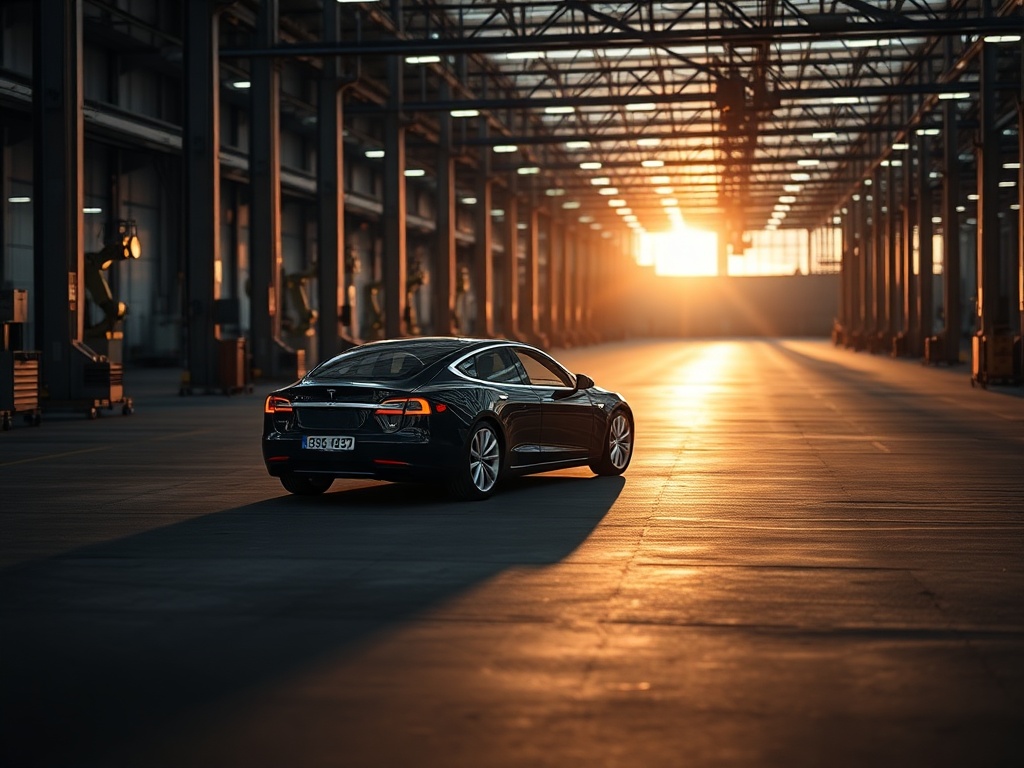
Some corporate decisions are branded as strategic boldness, but upon closer examination, they resemble a forced gamble. Tesla finds itself at this threshold. As reported by TechCrunch, the days of the Model S and Model X are numbered. The company that turned these vehicles into symbols of an entire industry now prepares to phase them out, concentrating its future on the Cybertruck, an autonomous vehicle that has yet to prove its capacity for mass production, as well as the Optimus robot, which faces an equally uncertain path toward mass commercialization.
I’m not interested in debating whether the Cybertruck is technologically superior. What I find more pressing is this uncomfortable question: what type of organization removes its most profitable and established products before their replacement has proven it can stand on its own in the market?
The Symptom Behind the Withdrawal
The Model S and Model X are not relics. They are, in many respects, the backbone of Tesla’s premium credibility. They represent decades of refined engineering, margins that exceed the company average, and a customer base with high loyalty and purchasing power. Discontinuing them is not like phasing out a secondary product; it’s akin to a fashion house burning its historical line before the new collection has hit the runway.
What this news reveals, if read between the lines, is a structure of pressure. Tesla needs to free up manufacturing capacity, engineering capital, and management attention to push the Cybertruck toward mass production. This suggests that internal resources are insufficient to support multiple fronts simultaneously. A company with ample operating margins and a robust supply chain would not need to make such sacrifices. They do so when time is running out and options become limited.
The pattern is recognizable to any executive who has managed a portfolio transition under financial pressure: the known is abandoned prematurely because maintaining it directly competes for funding with the new. The question isn’t whether the Cybertruck has a future; the question is whether Tesla is allowing it the space to fail gracefully before placing all bets on it.
The Trap of Visionary Narrative
There is an organizational phenomenon I frequently observe in companies led by highly visible founders: the narrative outpaces execution. The company's story, its identity before investors, media, and the market, is built upon future promises so compelling that they eventually become impossible to contradict internally. No one in that boardroom raises their hand to say the timeline is unrealistic because the political cost of doing so outweighs the perceived cost of moving forward.
Tesla has been operating under this logic for years. The Cybertruck was announced with the enthusiasm of someone who already envisions it rolling down the streets. Optimus was showcased in demos that generated global headlines. Yet, neither has demonstrated it can be produced in the volumes that justify retiring vehicles that are already selling today. That’s not strategic vision; that’s a narrative that has outpaced engineering.
The organizational risk of this pattern is specific: when the external narrative is too powerful, the toughest internal conversations—the ones that question timelines, highlight manufacturing bottlenecks, or warn about regulatory dependence on autonomous vehicles—cease to happen. Not because no one is thinking about them, but because the cost of voicing them aloud is too high. What I call an organization making decisions without the benefit of internal dissent. Its mistakes, when they arrive, do so alone.
What Optimus Reveals About the Real Bet
The Cybertruck, on its own, could be seen as an evolution of Tesla’s business model toward autonomous mobility as a service. It makes sense. The margin on robotized passenger transport could structurally exceed that of selling individual vehicles. However, when Optimus is added to the equation, the scenario changes entirely.
Simultaneously betting on a mass-produced autonomous vehicle and a general-purpose humanoid robot isn’t diversification: it’s doubling exposure to execution risk in the two most complex and regulatory-uncertain technological categories in the industry. Each would, separately, demand total concentration from the company’s best engineering, manufacturing, and validation teams. Pursuing them in parallel, while discontinuing the vehicles that keep the lights on, raises a question no press release answers: who ensures the continuity of cash flow while both bets mature?
This is the invisible mechanic the markets eventually price in. Not the vision, but the gap between the vision and actual revenues. Tesla has navigated that gap masterfully for years, supported by investors willing to finance the narrative. However, each withdrawal of a consolidated product shortens that tolerance margin.
The Solitude of the Leader Who Cannot Afford to Doubt
There’s something that genuinely troubles me about this story, and it’s rarely mentioned in conventional financial analysis. Leading a company of Tesla's magnitude and visibility involves operating under a narrative pressure few organizations experience. Every public statement becomes a commitment. Every commitment turns into a market expectation. And every unmet expectation becomes an article questioning the viability of the entire project.
In this context, the ability to publicly recalibrate, to admit that a timeline was optimistic or that a product needs more time, becomes extraordinarily costly. Not because leaders internally don’t understand this, but because the system of financial, reputational, and governance incentives penalizes public corrections with disproportionate severity. The result is an organization that learns to manage external perception more rigorously than its internal reality.
This isn’t a moral judgment on any individual. It’s a diagnosis of a power structure that ultimately produces decisions that sound strategic but operate as accumulated pressure released all at once. Pulling the Model S and Model X at this moment, with the Cybertruck unvalidated at scale, has that texture.
The culture of any organization is the accumulated result of every difficult conversation its leaders had the courage to sustain, and the inevitable symptom of all those they postponed until the market made them urgent and unavoidable.