
The $107M Auction That Reveals an Uncomfortable Lesson for SMEs: Price is Earned with Certainty, Not Volume
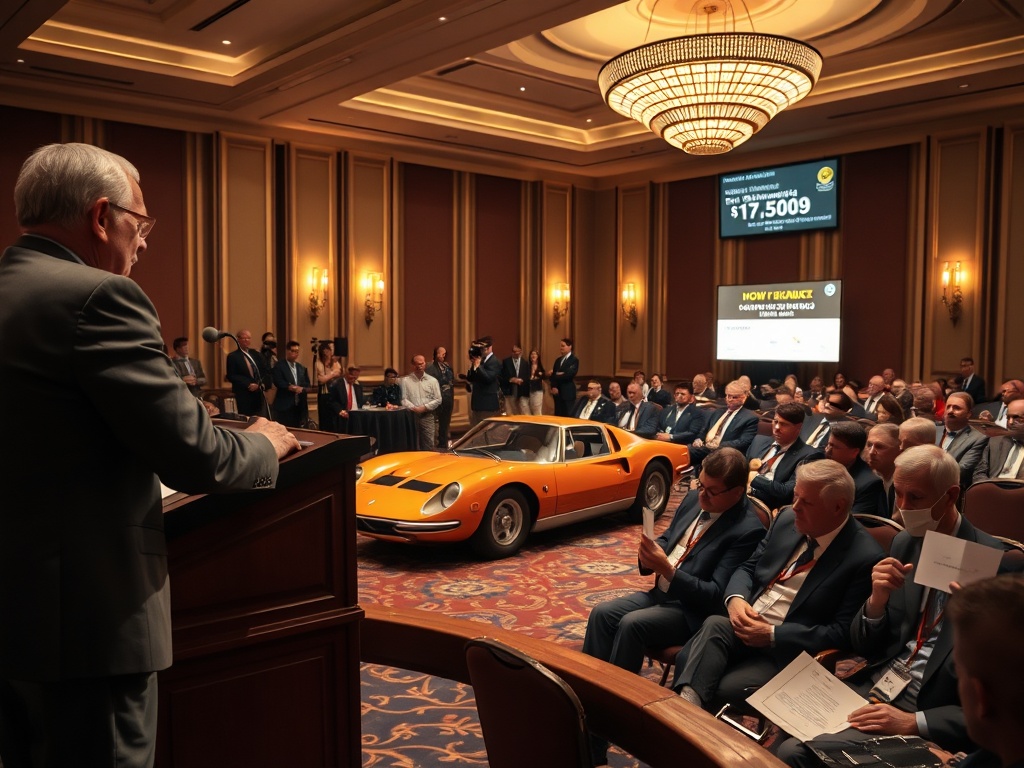
On March 7, 2026, at The Ritz-Carlton in Amelia Island, Florida, Broad Arrow Auctions wrapped up its official auction for The Amelia Concours, surpassing $107 million prior to post-sale activities and official outcomes. The headline-grabbing lot was a 1972 Lamborghini Miura P400 SV, described as an incredibly original specimen, that concluded at $6,605,000 after an intense phone bidding war. This figure not only obliterated its pre-sale estimate of $3,500,000–$4,000,000, but also broke the previous auction record for a Miura by over $1,700,000. Additionally, there were world records set for a 2001 RUF RGT at $335,000 and a 2015 Ferrari 458 Speciale at $912,500. More than 170 cars crossed the auction block over two days, all powered by Hagerty (NYSE: HGTY), which operates Broad Arrow as its auction arm.
At first glance, this story seems distant for an SME. Many people dismiss it as a tale of the wealthy, of collecting, of whims. I interpret it differently: it’s a public, brutal, and quantifiable demonstration of how willingness to pay is constructed when a product is expensive, compared, and subjected to real-time pressure.
The lesson for SMEs isn't in selling Ferraris. It's in understanding why a buyer pays millions without a "discount", why bids escalate with intentional increments, and why an organizer can amass nine figures in a weekend without relying on "promos". At Amelia Island, it wasn't the loudest bidder who won. It was the one who designed an environment where paying more felt rational to the buyer.
The Hammer Doesn’t Sell Cars: It Sells Risk Elimination
Most SMEs believe that price is decided by the market as if it were a natural force. At a high-level auction, the truth is revealed: price is the consequence of how much uncertainty remains in the buyer's mind and how much friction exists on the path to purchase.
The case of the Miura SV is surgical. Broad Arrow's note highlights an attribute that, in business terms, is dynamite: “incredibly original” and maintained by a single private U.S. collector for over half a century. I need no more to understand the mechanism. Originality and continuity of ownership aren’t romantic notions; they are risk reduction. In categories where history matters — and this applies to SMEs in B2B, professional services, specialized manufacturing, industrial maintenance, even healthcare — people pay a premium for credible signals that the promised outcome will be achieved.
Then there is the format. An auction at an event like The Amelia Concours, in a venue like The Ritz-Carlton, with over 170 cars and in-person and phone participation, is not just “glamour”: it's infrastructure of trust. The live bidding exposes real demand. Nobody needs to be assured that buyers are present; they see them compete. The report describes a Saturday dynamic with intentional jumps in bids from multiple bidders and a final hammer down on a phone bidder. That’s real-time market transparency.
For an SME, the translation is uncomfortable: if your offer requires endless explanations, lengthy PDFs, and endless calls for the customer to believe, your price is limited. Not because of your costs, but because uncertainty remains alive. The auction demonstrates that when a buyer perceives authenticity, traceability, and legitimate scarcity, the price defends itself.
The $107M Record is a Portfolio Strategy, Not Just Luck
Broad Arrow claims that this was its most successful event since its founding in 2021. This fact matters less for ego and more for what it implies: operational consistency. The figure of $107M+ isn't supported by a single "unicorn" like the Miura; it's upheld by a mix of categories and a machinery capable of maintaining bidding energy lot after lot.
The same source speaks of highlighted sales in modern collectibles from the 90s and 2000s, alongside American and European pre-war and post-war cars from private collections. There lies the business pattern: diversifying inventory to capture different pockets of demand without diluting the standard of the event.
In SMEs, the equivalent isn’t just “selling everything.” It’s about building a coherent value ladder: a line of products or services where each level increases the price because it enhances the certainty of results and reduces friction. Broad Arrow doesn’t compete to be the cheapest place to sell a classic car. It competes to be the trusted venue where the seller feels confident consigning and the buyer feels compelled to bid high.
Another point that many underestimate: the auction is reported as $107M before post-sale activities. This reveals a second layer of the model: the closure doesn’t end at the hammer. There are subsequent processes that convert intent into collection, payment management, logistics, and formalization. In SMEs, the “post-sale” exists too, albeit under different names like onboarding, implementation, activation, delivery, or support. If your post-sale fails, your real price falls, as you begin compensating with discounts, refunds, or commercial concessions.
And one final detail, without inventing numbers: the piece mentions that Hagerty insures 2.7 million vehicles in the U.S., Canada, and the U.K. The figure isn’t just about scale; it’s about distribution. When a company has a channel and a community, the cost of generating trust in new business lines decreases. SMEs that rely solely on performance marketing to "create" trust from scratch pay a staggering premium in customer acquisition cost (CAC) or end up lowering prices to unlock closures.
The Signal for SMEs: The Market Pays Premium for Proof, Not Promises
The additional records are revealing because they indicate that the phenomenon isn’t just a “rare day” for a Miura. A 2015 Ferrari 458 Speciale at $912,500 and a 2001 RUF RGT at $335,000, both marking world records, indicate depth of demand across different microsegments. In other words: there are buyers willing to pay more when the asset fits a clear value criterion.
That criterion, in SMEs, is called evidence. And evidence isn’t an emotional testimonial on a landing page. It is:
- A delivery process so standardized that the customer knows exactly what happens after payment.
- A value proposition that eliminates typical objections by incorporating guarantees, verifiable milestones, or acceptance metrics.
- A positioning narrative that doesn’t rely on adjectives, but on observable facts.
The aggressive bidding for the Miura SV suggests something else: when there is certainty, the buyer doesn’t just pay; they compete to pay. This mindset is the dream of any SME, but it cannot be achieved through advertising creativity. It must be built through offer architecture.
There’s also a lesson about temporal segmentation. The note highlights interest in modern collectibles from the 90s and 2000s. This is a precise reading of the generational shift in buyers: people who today have liquidity and nostalgia for their teenage or youthful years. An SME that doesn’t understand the “nostalgia” of its customer — their historical pains, their fatigue with past solutions, their need for predictability — ends up communicating in a language that the market no longer buys.
The Actionable Thesis: Raise Prices When You Can Promise More Firmly Than Anyone
The executive conclusion of this story isn’t that “luxury is doing well.” It’s that Broad Arrow turned a difficult sale — unique, expensive assets, only comparable in nuances — into a high-speed transaction because the design of the environment increases trust and reduces friction.
For an SME, the path to higher prices does not involve inflating marketing. It involves hardening the offer: less ambiguity, more traceability; less dependence on the “charismatic” seller, more process; less open promise, more limited and verifiable results.
And there’s one last detail I find important: the note is careful not to sell smoke. It speaks of figures, records, event context, and next steps of official results. That style sells too. Precision reduces risk.
The market does not reward those who shout value; it rewards those who make it demonstrable. Commercial success, in SMEs and at nine-figure auctions, appears when the strategy reduces friction, maximizes the perceived certainty of outcomes, and elevates the willingness to pay with a proposal so solid that the price ceases to be a discussion and becomes a consequence.