
The Tax Fraud That Uber and DoorDash Can't Afford to Ignore
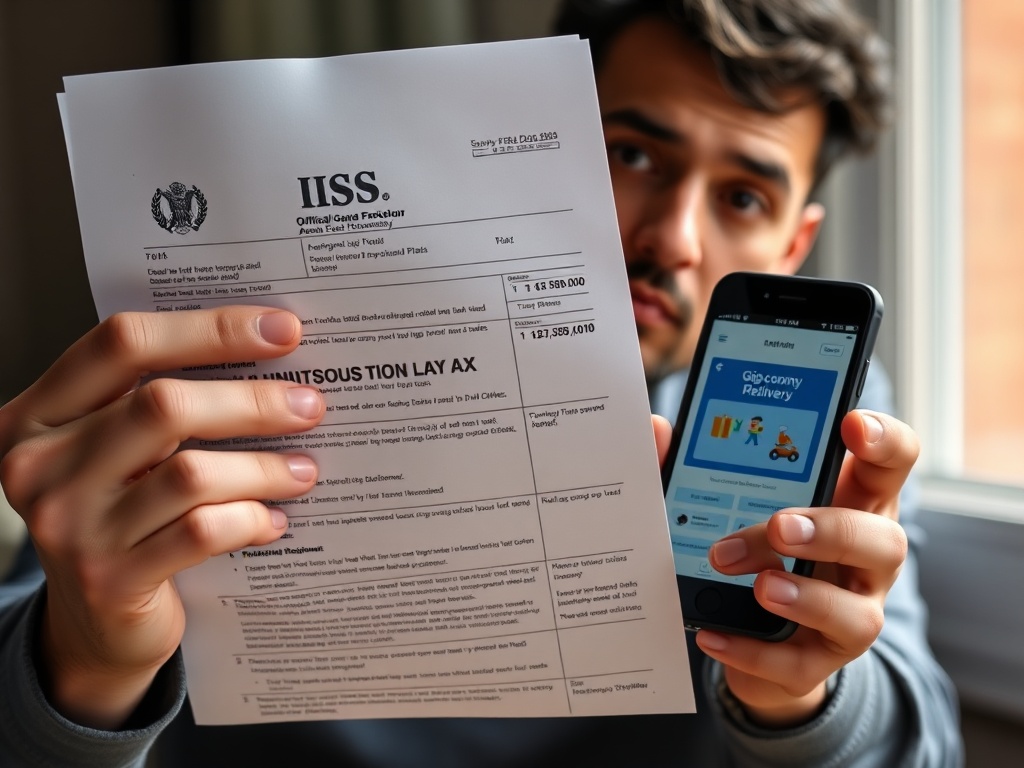
Damian Josefsberg has never downloaded the Uber app. He has never transported a passenger, never activated the platform's GPS, and never signed a service contract. However, the U.S. Internal Revenue Service (IRS) received a Form 1099 in his name reporting over $1,200 in income for the 2021 fiscal year. Last month, he filed a class-action lawsuit against Uber in Florida. His attorney, Kenneth Dante Murena, had already received around two dozen similar calls before the case became public.
Shortly after, Business Insider documented the case of Christie Reynolds, an after-school program worker in New Mexico, who received a letter from the IRS notifying her that DoorDash had reported $24,000 in income under her name in 2023, a sum sufficient to disqualify her from the Child Tax Credit. Reynolds had also never worked for DoorDash.
These are not isolated administrative errors. They are the visible surface of a structural failure with measurable financial consequences.
How the Integration Model Fails
The mechanism is simple: identity thieves use stolen personal data to open accounts on ride-share or delivery platforms, generate income under that identity, and the automated tax system of the platform issues a 1099 in the victim's name. The IRS receives that document, cross-references it with the real taxpayer's return, and detects a discrepancy. The victim not only faces potential tax debt; they may lose tax credits, delay their refunds, and enter a bureaucratic process that no tech platform is designed to resolve efficiently.
A video from the Rideshare Rodeo channel documented a single fraudulent account that generated nearly $70,000 in just two months. Murena estimates he has been contacted by hundreds of affected individuals in discussions related to the case. If those two figures are taken as references, the potential scale of the problem easily surpasses one million dollars in incorrectly reported income just among the publicly documented cases.
Uber and DoorDash have responded in different ways but with similar results: error forms, requests for official identification, selfies with documents, and police reports. These are reactive processes that shift the operational burden onto the victim. This is not a control system; it’s a damage control system.
The relevant financial question is not whether the platforms have made a mistake. It is how much it costs them to maintain that level of control versus how much it costs them not to have it.
The Cost Calculation Platforms Prefer Not to Show
Uber reported revenues of $37.28 billion in 2023, with a year-over-year growth of 17%. DoorDash reached $8.63 billion, growing by 31%. Both platforms operate under models where the speed of onboarding drivers and delivery personnel is a direct multiplier of supply, and supply determines wait times, which, in turn, affect user retention. Every percentage point of friction in the onboarding process incurs a measurable opportunity cost in unfulfilled transactions.
That incentive has a technical name in financial architecture: it is the cost of acquiring operational capacity. And when that cost is reduced by cutting verification processes, the savings are immediate and visible on the balance sheet; the loss is deferred and diffuse, distributed among victims of identity theft, future litigation, and regulatory adjustments.
Josefsberg's lawsuit seeks class status, meaning that it could add dozens or hundreds of plaintiffs with individual claims ranging from $1,200 to $24,000, plus punitive damages and correction costs before the IRS. If the class is certified and the cases documented by Murena represent even 10% of the total real, the consolidated financial exposure could exceed $100 million, based on estimates from reported scales. That number does not yet show up in any quarterly risk report, but it should.
DoorDash attributed Reynolds' case to external identity theft unrelated to its platform. Technically, this may be correct. Financially, it is irrelevant: the correction of the 1099 form, coordinating with the IRS, addressing the case, and eventual litigation consume real operational resources regardless of the fraud's origin. Not being the entry point for the theft does not exempt them from the cost of being the channel that amplified it.
Quick Onboarding Comes at a Delayed Price
Uber activated 7.4 million drivers globally in 2023. At that scale, even a fraud rate of 0.1% represents 7,400 potentially compromised accounts. If each account generates the conservative average documented in the Josefsberg case—$1,200 in incorrectly reported income—the fiscal impact on third-party victims reaches $8.9 million just in that base scenario. With Reynolds' case ceiling of $24,000 per account, the range escalates to $177 million.
Those are not direct losses for Uber. But they are contingent liabilities that materialize in litigation, in reactive legislation like that currently being processed in California, and in higher insurance premiums associated with drivers whose identities were not verified rigorously enough. Murena articulated it precisely, noting that drivers with unknown identities represent a security risk for passengers, an argument that connects tax fraud with separate litigation Uber already faces over improper conduct issues.
Platforms have implemented biometric verifications, periodic selfies, and in-person checks. Those measures exist. The documented problem is that the black market for active accounts bypasses them: someone correctly verifies their identity, activates the account, and then rents or sells it to a third party operating under that identity. The control is at the moment of onboarding, not during ongoing operations. That gap cannot be closed with onboarding technology; it requires constant operational monitoring, which comes with significant fixed costs that pressure margins.
The Model Is Growing Faster Than Its Control Infrastructure
There is a financial logic explaining why this problem persists. Gig economy platforms were built on the premise that the marginal cost of adding a new service provider is nearly zero. This premise justified extraordinary valuations for years: if scaling supply doesn’t cost anything, profit margins improve with every new driver or delivery person onboarded.
But the marginal cost of properly verifying the identity of each new service provider is not zero. It is a real, recurring, and growing cost as the volume of onboarding increases. When that cost is underestimated or outsourced, as in this case to the tax system and to the victims, the model appears more efficient than it is. Efficiency did not disappear; it shifted off the balance sheet.
The revenues of Uber and DoorDash are paid by users and merchants who trust that the platform operates with integrity of identity. Each 1099 fraudulently issued under a third party’s name erodes that trust in a concrete and quantifiable way. The only financial architecture that withstands that kind of erosion is one where the cost of control is incorporated from the outset into the unit economics of each activated account, not silently distributed among those who never chose to participate.