
Oil is Just the Headline. The Real Hit Comes from Fertilizer
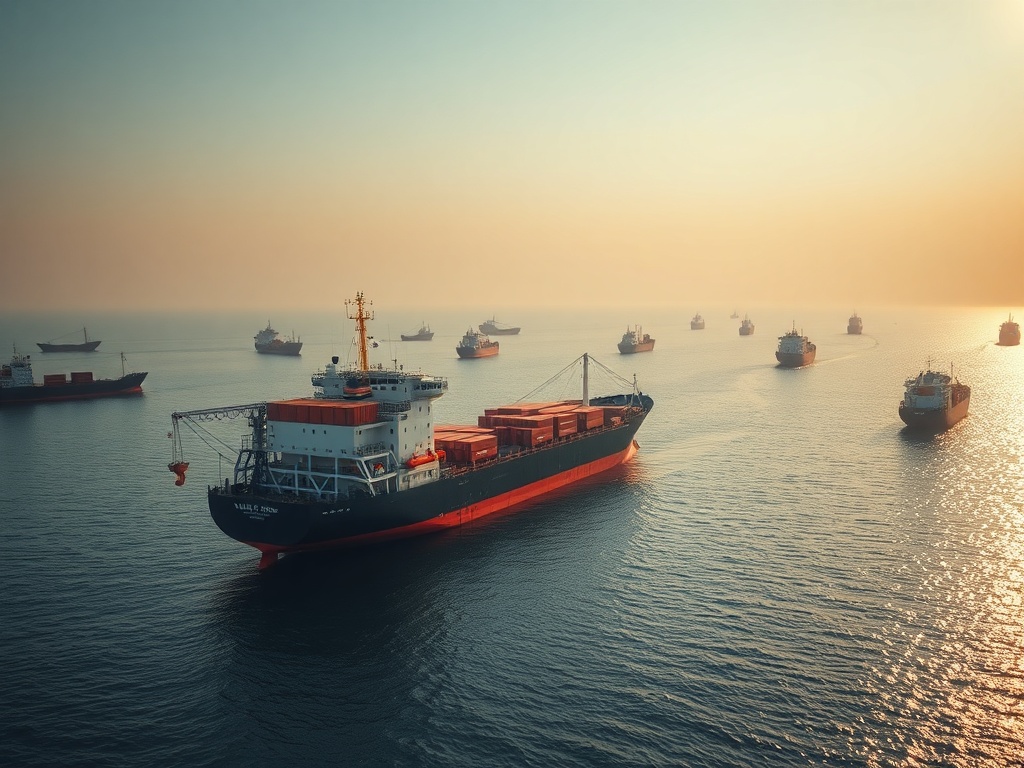
On February 28, 2026, attacks on Iran turned regional tension into a systemic clash. Brent crude soared above $100 per barrel, 57 container ships became stranded in the Strait of Hormuz, and daily vessel traffic, which averaged 129 ships, plummeted nearly to zero. Headlines chased the crude price, but that’s the easy story.
The Strait of Hormuz does not just move oil. It transports 29% of the world’s liquefied petroleum gas, 19% of liquefied natural gas, and 13% of global chemicals—including fertilizers. It also sustains air routes through which the Middle East controls between 15% and 20% of the planet's air cargo capacity. Dubai is the largest cargo airport in the world. When that system halts, the impact transcends sectors and geographies.
For a Latin American or Spanish SME, this isn’t foreign news. It’s pressure on their cost structure that is already mounting, even though it hasn't yet appeared on this month's invoice.
When Air Freight Rises 100%, Everyone Loses Margins Even If They Don’t Fly Anything
The first transmission mechanism affecting SMEs isn’t the price of oil; it’s freight costs. Since the onset of the crisis, air cargo rates have doubled, and seemingly disconnected routes—such as from Vietnam to the United States across the Pacific—are experiencing increases of 50% to 60%. This occurs because, when airlines like Emirates, Qatar Airways, and Etihad scale back operations or redirect capacity, the global air cargo market constricts instantaneously.
Translating this to the financial mechanics of an SME importing electronic components or textiles with operational margins of 12% to 18%, if logistics costs account for 8% of the sale price and that item rises by 60%, operational margins shrink by 4 to 5 percentage points without the company making any flawed decisions. They didn’t incorrectly fire their operations director. They didn’t overestimate demand. They simply absorbed an externality that no internal financial model had calibrated for this scenario.
The structural issue isn’t the crisis itself but rather that most SMEs lack long-term freight contracts or coverage against logistical volatility. They operate on a spot market, which is the most vulnerable position when the market breaks. A company with enough volume to negotiate fixed rates for 6 or 12 months transforms that variable cost into something predictable. An SME purchasing freight week by week assumes the complete risk of events like this.
Fertilizer is the Variable That No Corporate Finance Is Watching
Ryan Petersen, founder of Flexport, made a direct observation: the fertilizer issue could surpass the economic impact of oil, precisely because the crisis coincides with the global planting season. This observation isn't mere rhetoric; it carries an underlying financial logic worthy of unpacking.
Nitrogen fertilizers—the most utilized in intensive agriculture—rely on natural gas as a primary input. Qatar, whose LNG exports transit entirely through the Strait of Hormuz, is a key supplier for Asian and European markets. When that flow is disrupted, not only does the price of gas rise: the production cost of fertilizers increases, which is passed on to the food costs in the subsequent harvest. The temporal lag between input disruption and the impact on final food prices typically spans 3 to 6 months.
For an SME in the agri-food sector, food retail, or the restaurant industry, this lag is a trap. Consumer selling prices adjust slowly—due to contracts, competition, or habit—but raw material costs respond quicker. The result is margin compression that doesn't show up in March's balance sheet but does erode cash flow in the second half of the year.
Morgan Stanley has already identified this vector: aluminum, plastics, petrochemicals, and fertilizers are upstream materials in manufacturing chains that will take longer to recover than the underlying conflict. The reason is operational, not political: recovery protocols prioritize restoring energy exports before manufacturing capacity. The secondary industry waits.
The Financial Architecture That Distinguishes Those Who Survive from Those Who Adjust
What this crisis highlights is not only geopolitical fragility but also the difference between two financial operating models.
A company with dominant variable costs, supply contracts featuring indexed price revision clauses, and a customer base that finances its operating cycle—through advances, subscriptions, or cash payments—has real levers to absorb a shock like this. They can transfer some of the cost increase with objective arguments, renegotiate delivery terms, and reduce exposure without sacrificing liquidity.
A company with high fixed cost structures, inventory funded with short-term debt, and tight margins per order has none of those levers. When freight costs rise 60% and the cost of inputs simultaneously increases by 20%, the only variable they can move is already narrow margins. In such a scenario, every week that the crisis persists is a week of erosion of working capital that isn't easily recovered.
The CEO of United Airlines modeled that the crisis could cost the company $11 billion in fuel. This figure is designed for large-scale contexts, but the mechanics are identical for an SME: the impact is measured by how much of that cost you can pass on to the customer before they leave and how much you must absorb before it destroys your cash position.
The variable that most separates resilient companies during these disruptions isn't size. It’s whether their customers pay them before they pay their suppliers. This flow asymmetry—getting paid first, then paying—remains the only real protection when the environment shifts faster than any plan.
Market validation isn’t measured in investment rounds or available credit lines. It’s measured by how much customer money arrives before external costs overwhelm the structure. That, in a crisis of this magnitude, is the only metric that ensures the company continues operating when the strait reopens.