
No Turning Back: Why Renewables Have Already Won the Economic War
When the former CEO of Ingka Group, the operating arm of IKEA, states that being climate-smart is equivalent to being smart about resources and costs, he is not reciting a green manifesto. He is describing an accounting reality that many boards are still reluctant to acknowledge. Jesper Brodin, upon receiving the Earth Award from Time magazine, succinctly captured what took a decade to become undeniable: the energy transition has ceased to be a moral gamble and has become a mathematical consequence.
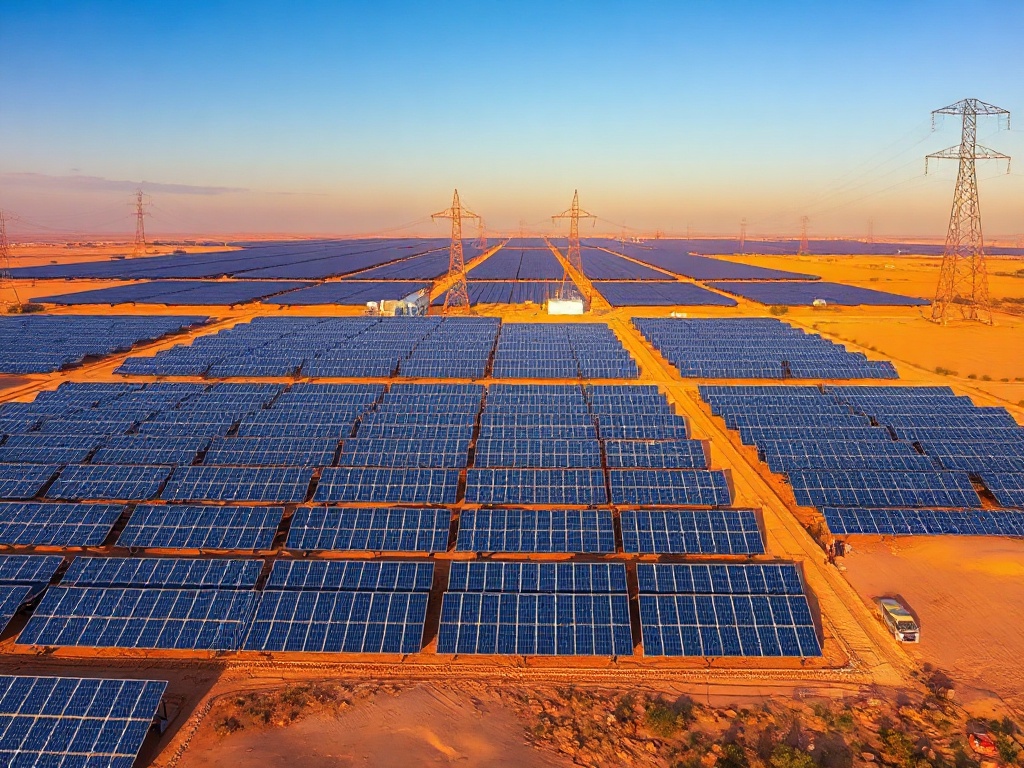
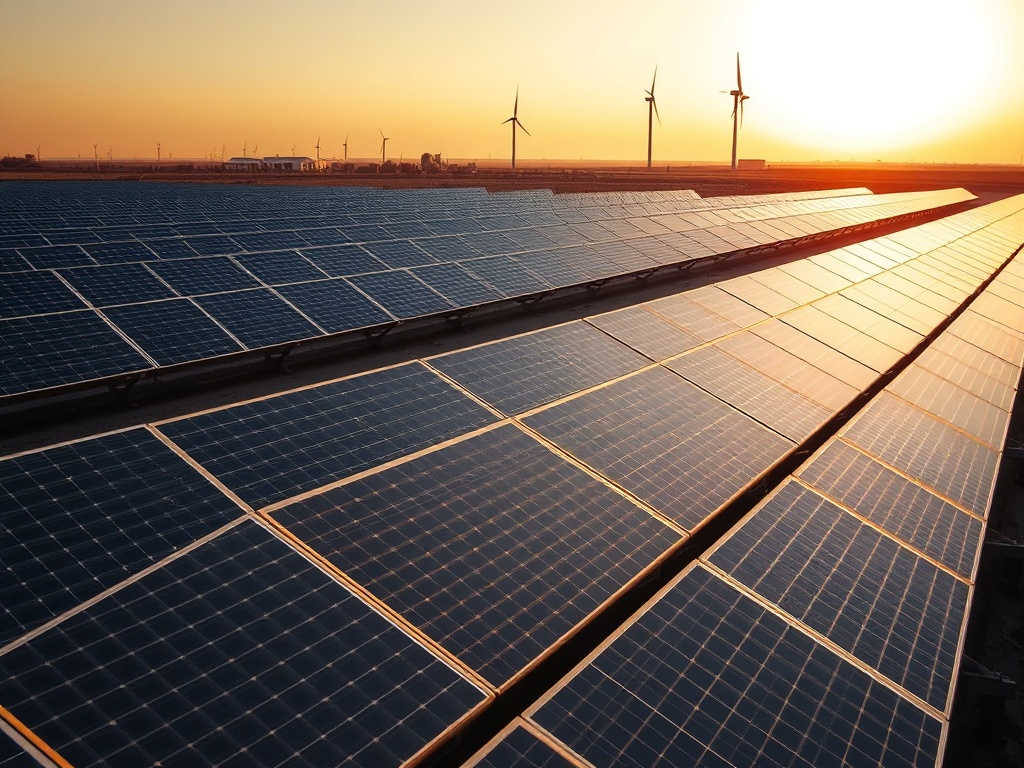
This distinction matters more than it seems. While political debates in Washington, Brussels, or Riyadh continue to revolve around subsidies, agreements, and diplomatic pressures, the physics of markets have already resolved the issue on their own. The levelized cost of solar energy has dropped by more than 90% over the past decade. Land-based wind now competes on equal footing with natural gas in most markets worldwide without any form of government support. What was once an industry sustained by political will is now an industry driven by capital returns.
The Argument CFOs Can't Ignore
Brodin did not reach this conclusion from a public policy laboratory. He arrived from the operational trench of one of the largest retail chains on the planet, with a presence in over 30 countries and a cost structure that critically depends on energy prices, materials, and logistics. From that position, renewable energy is not a declaration of principles: it is a hedge against the volatility of fossil fuels.
And here is the point that conservative boardrooms continue to misinterpret: fossil fuels are not cheap because producing energy from them is efficient. They are perceived as cheap because their volatility costs, geopolitical risk management, and environmental externalities seldom appear on a company’s operational line. They surface later, in other forms: in insurance premiums, supply chain disruptions, regulatory litigation. Renewables, in contrast, offer something that energy commodity markets have never been able to provide: predictable long-term prices. A 15-year solar energy contract is, in financial terms, a hedging instrument. And corporate treasuries that still do not see it this way are managing their companies' energy risks with outdated 20th-century models.
Ingka Group understood this before most others. The company invested heavily in its own renewable energy generation, not because IKEA wanted to appear on sustainability rankings, but because distributed generation and long-term contracts allowed them to uncouple their operating costs from the turbulence of global energy markets. That is risk management, not philanthropy.
The Circularity That Extractive Models Cannot Replicate
There is a deeper mechanics behind Brodin's argument that deserves careful attention. The fossil fuel-based energy model is, by definition, a linear extraction model: extract, burn, emit, and discard. Every unit of energy produced consumes a resource that is not replenished and generates an environmental liability that someone will pay for, even if it is not the company that generated it.
The renewable model operates under a radically different logic. The sun and wind have no marginal fuel cost. Once the infrastructure is installed, the cost of producing the next unit of electricity tends to zero. This is not a metaphor: it explains why electricity markets with high renewable penetration register negative marginal prices during peak generation times, a phenomenon that would have seemed absurd twenty years ago. Energy is becoming a resource whose production cost converges toward the initial capital cost, not the cost of continuous inputs.
This structural difference has consequences that go far beyond the energy sector. Industries that can anchor their operational models to energy sources with decreasing marginal costs will achieve a compounded competitive advantage over time. Not in the coming quarters, but in the next strategic cycles. Those that remain tethered to fossil volatility will be managing a cost disadvantage that will quietly accumulate until it is too late to react without destroying value.
Ingka Group is not an isolated case. Large manufacturing corporations, logistics chains, and fast-moving consumer goods conglomerates that now lead the energy transition are not doing so for image: they are doing it because their financial planning teams have already run the scenarios, and the numbers are compelling.
The Point of No Return is Not Just a Slogan, it’s a Cost Function
Brodin chose to speak of a "point of no return," and that lexical choice deserves serious analysis. It is not climate rhetoric. It describes a turning point in the cost function of any energy-intensive industry. Once a company builds its own generation capacity, signs long-term contracts with renewable producers, or integrates energy efficiency into its value chain, the cost of reversing those decisions exceeds the cost of deepening them. The direction of investment has a clear gradient.
Markets are reading it this way. Global investment in clean energy surpassed investment in fossil fuels for the first time in 2023, according to sector data. Not because governments mandated it, but because risk-adjusted returns have systematically begun to favor renewable assets. Institutional capital, which operates under 10- to 30-year horizons, cannot afford to ignore that signal.
What Brodin articulated from the Earth Award stage is what the best corporate strategy teams already know but few leaders openly state with such clarity: energy sustainability does not compete with profitability; it is its future condition. Organizations that internalize this equation before their competitors will not merely be virtuous. They will be precise.
Leaders who still treat the energy transition as a reputation expense rather than a reconfiguration of their cost architecture are postponing a decision that the market will ultimately make for them, under far less favorable conditions.