
Neuralink Deciphers Silence: Who Captures Value When the Brain Becomes a Product
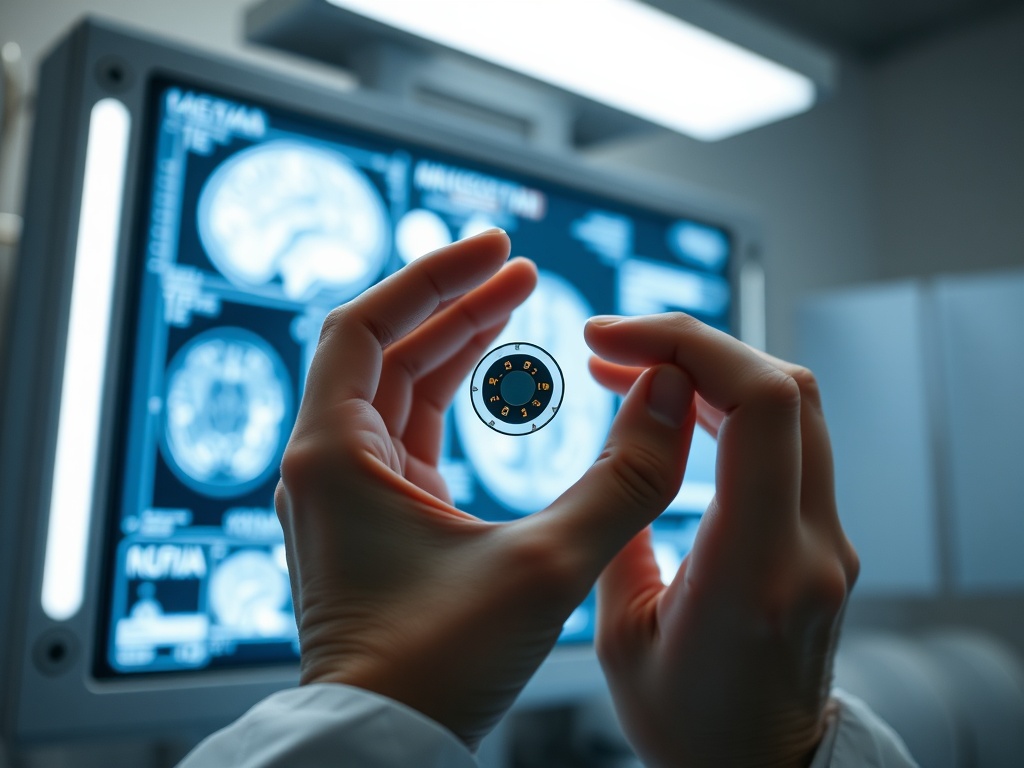
On March 24, 2026, Kenneth Shock spoke. He did not move his mouth. He did not produce any sound through his larynx. An implant the size of a coin, screwed into his skull and connected to threads of electrodes surgically inserted into his speech motor cortex, captured the neural intent to form words, processed it using machine learning models trained to map that activity to phonemes, and delivered it to a voice synthesis platform named 11 Labs. What came out was an artificial voice saying: "I'm talking to you with my mind."
Elon Musk posted the video on X with a phrase that encapsulates the project's ambition: "Neuralink is restoring speech to those who have lost the ability to speak." The engineering behind this is undeniably remarkable. The N1 system deploys 1,024 electrodes, operates wirelessly, charges without cables, and was implanted by the R1 surgical robot. Skyler Granatir, a Neuralink engineer, described the training protocol: first, the patient speaks out loud; then, they articulate silently; finally, they just think. The model learns to scale from physical movement to pure intent. The FDA granted this technology the designation of Breakthrough Device, accelerating regulatory review.
That’s the headline. However, what the headlines do not break down is the architecture of who gets what.
The Asset No One Puts on the Balance Sheet
In any brain-computer interface model, the primary input is not silicon or software. It is the neural activity of the patient. Without Kenneth Shock’s signals, the phoneme mapping model does not exist. Without data from Noland Arbaugh, the first implant recipient in January 2024, earlier versions of the algorithm would also not exist. Each patient entering the PRIME clinical trial not only receives experimental treatment; they generate proprietary data that train and improve a system that Neuralink will commercially own.
This is not an accusation. It is a mechanical description of how the model works. And this description reveals a value asymmetry that any ecosystem strategist should read carefully: the provider of the most critical input to the system does not have a stake in the value that input generates long-term. The ALS patient contributes their neural tissue as training data. The company retains ownership of the resulting model, future commercialization revenues, and the accumulated competitive advantage over rivals such as Synchron or Blackrock Neurotech.
In the most studied platform models, when the provider of the central input does not capture value, the system eventually faces one of two problems: a shortage of willing suppliers to participate, or regulatory intervention forcing a redistribution. In the case of BCI clinical trials, the second scenario is more likely, and Neuralink should be designing its response today, not when the FDA requires it.
Breakthrough Designation Accelerates the Clock, Does Not Stop It
The Breakthrough Device designation granted by the FDA to Neuralink for speech restoration has a clear practical effect: it prioritizes reviews, facilitates access to regulatory experts, and may shorten the path to pre-commercial approval. It is a positive signal for investors and a differentiation argument against competitors operating without that regulatory umbrella.
But that designation also compresses the time in which Neuralink can operate in the relative opacity of clinical trials. As the device approaches commercial approval, the compensation structure for participants, rights over neural data, and informed consent mechanisms will come under public scrutiny in a way that they are not today. The closest precedent is the debate over genetic data on platforms such as 23andMe: the user provided their DNA in exchange for a service, and years later discovered that the data had been licensed to pharmaceutical companies. The difference is that brain data has a granularity of intent that DNA does not reach.
Neuralink's plan to reach 1,000 implants by 2026, relying on Tesla AI surgical robots to automate the procedure, will accelerate the accumulation of that neural asset at a rate that no competitor can match today. That is a real advantage. It is also a concentration of reputational and regulatory risk that grows with each additional implant if the data governance model does not evolve at the same pace.
What Synchron and Blackrock Cannot Copy, and What They Can
The N1 has 1,024 electrodes. Synchron's endovascular alternative, the Stentrode, is implanted without opening the skull, through a jugular vein, and operates with significantly lower electrode density. Blackrock Neurotech uses the Utah Array, with decades of clinical history but without the wireless density of the N1. Neuralink has won the race for miniaturization and signal density. That is hard to replicate in the short term.
What they can replicate, however, is the data training model, as long as they can get patients. And here lies the central strategic paradox: if Neuralink does not design a visible and credible mechanism by which participants in its trials capture some form of derived value, its competitors will use precisely that as a clinical recruitment argument. A model where Synchron offers royalty participation on data, or where Blackrock guarantees perpetual and free access to the device once commercialized, may become more attractive to patients than a model where the sole benefit is the experimental treatment itself.
The shortage of patients willing to undergo experimental brain surgery is not a minor risk. The early record of the N1 includes retraction of the electrode threads in Noland Arbaugh, which reduced the device's functionality. This did not destroy the program, but it did generate a trust friction that Neuralink must actively manage in every new recruitment.
The 1,000 Implant Model is Not Just an Operational Goal
When Neuralink states it aims for 1,000 implants in 2026 using Tesla AI surgical robots, it is describing a phase transition: from artisanal clinical trial to semi-industrial production of neurological procedures. This substantially changes the business nature. A clinical trial with twelve patients operates under an evidence generation logic. An operation of 1,000 annual procedures operates under a logic of scale, standardization, and margins.
Surgical automation reduces the cost per procedure, which in principle should translate into greater accessibility. But recent history in health automation suggests that cost reductions tend to be captured as corporate margin before translating into an accessible price for the patient. If the N1 implant hits the market at a price only covered by comprehensive health systems or premium insured patients, the humanitarian argument of "restoring speech to those who lost it" becomes a service for a very specific segment of those who lost it.
Neuralink has the opportunity to design that pricing model today, before commercial approval forces it to make decisions under pressure. A results-based licensing model, where payment scales according to recovered functionality, or a subsidized access scheme for uninsured patients, are not just ethical gestures. They are mechanisms that broaden the patient base, accelerate the accumulation of training data, and reduce long-term regulatory risks.
Value is Captured by Those Who Control the Layer of Interpretation
Kenneth Shock spoke a phrase with his mind. That phrase passed through the N1, Neuralink’s models, and 11 Labs before becoming sound. There are four technological layers between the patient’s intent and the audible word. Neuralink controls three of them. 11 Labs controls the fourth, and today it is a supplier. Tomorrow it may become a competitor with access to each patient’s voice synthesis data from the program.
The most valuable layer in any AI system is not the hardware or the interface. It is the interpretation model trained on unique and irreplaceable data. In Neuralink, that model is trained with brain signals that no competitor can replicate because they come from specific individuals in specific clinical conditions. This data exclusivity is the real advantage of the program, and it makes it urgent to define precisely who owns that asset and under what conditions it can be used.
Patients currently participating in the PRIME trial are financing the training of a system whose projected commercial value is measured in billions. The model that determines how this value is distributed among Neuralink, its investors, its technology partners, and the patients who made the learning possible will be the factor that determines whether this program scales with the stability of a well-designed ecosystem or with the fragility of a platform that extracts without returning. Ecosystems where the provider of the most critical input has no economic reason to stay are the ones that eventually run out of input.