
The Unprecedented Energy Demand of Artificial Intelligence
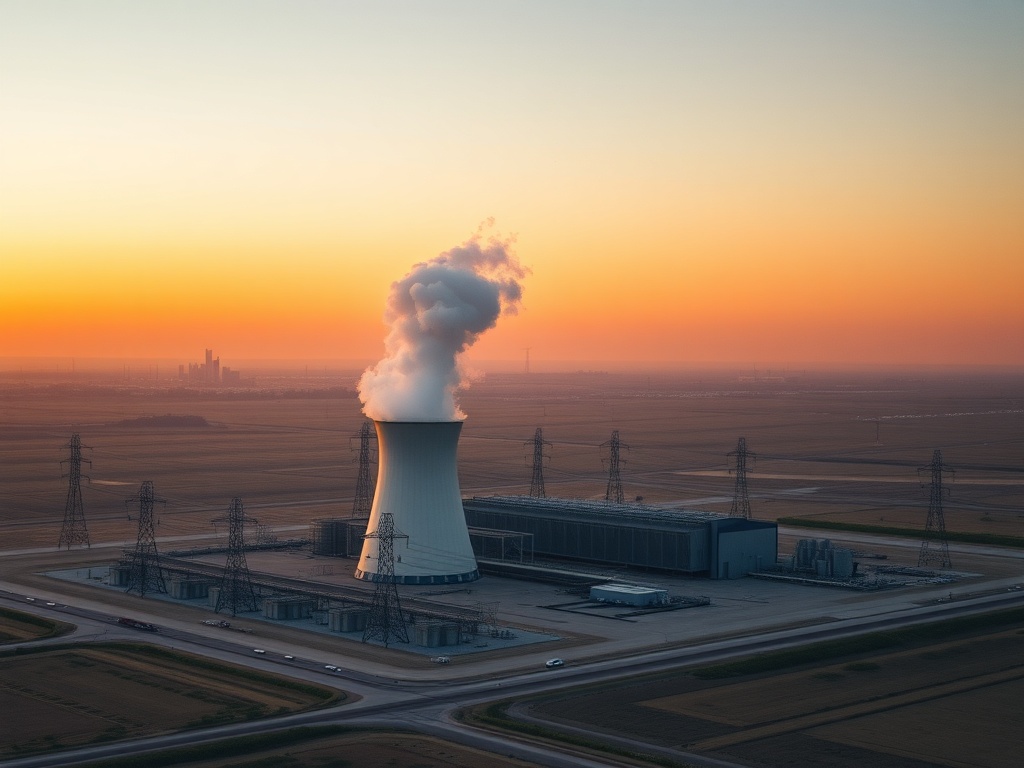
Microsoft, Chevron, and Engine No. 1 have confirmed they are in an exclusive agreement to develop a natural gas power generation project in Texas, valued at approximately $7 billion. None of the three parties have finalized commercial terms or a definitive agreement, as reported by Reuters. What is clear, however, is the purpose: to secure a dedicated and reliable power supply for data centers that support artificial intelligence platforms like Copilot.
This news isn't just about energy. It's about the cost architecture of AI at an industrial scale and what it reveals upon honest analysis.
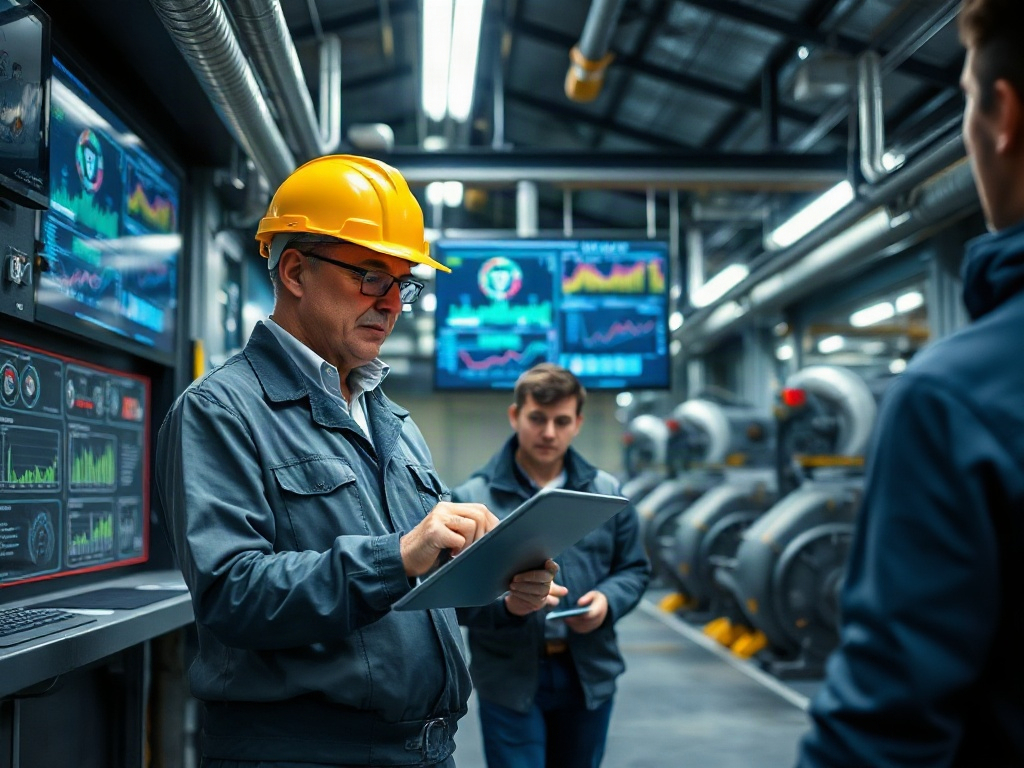
Large-scale language models consume electricity in ways that public infrastructure was not designed to accommodate. Every processed query, every generated image, and every interaction with a virtual assistant represents a fraction of a megawatt, which, when multiplied across hundreds of millions of simultaneous users, becomes an energy demand comparable to that of medium-sized cities. Microsoft isn't negotiating this deal because electricity markets have failed; it's avoiding them because it needs supply certainty that the existing grid simply cannot guarantee within the timelines demanded by its expansion.
The decision to build its own energy capacity, rather than purchase electricity from the spot market, transforms a variable cost into a fixed one of historic proportions. This isn't a sign of operational strength; it's a sign of strategic urgency.
Why Texas and Why Natural Gas?
Texas operates the most independent electrical grid in the United States, managed by ERCOT, allowing for greater regulatory agility than any other state. For a company that needs to connect gigawatts of capacity within 18 to 36 months, that regulatory independence holds tangible economic value that surpasses any tariff differential.
The choice of natural gas over renewable energies warrants a non-condescending analysis. Solar and wind power are intermittently defined; they don't generate electricity when there's no sun or wind, and large-scale battery storage technology cannot yet guarantee the continuous availability required by a data center 24/7. Natural gas, on the other hand, provides controllable dispatch: it can be turned on when needed and precisely regulated. For AI workloads that cannot afford interruptions, that feature is not a luxury; it's an operational requirement.
Engine No. 1, the activist investment fund known for placing independent directors on ExxonMobil's board to advocate for an energy transition, is involved in this agreement with what appears to be a contradictory logic at first glance. Their inclusion suggests that the project's structure includes some form of emissions offset or roadmap toward cleaner sources. However, details are not yet available, and committing to that narrative without data would be speculation, not analysis.
What can be asserted based on the business structure is that Microsoft is willing to capitalize on a $7 billion energy debt to secure a competitive advantage that cannot be purchased in the open market. This indicates projected future margins in their AI services are robust enough to absorb that fixed cost profitably.
The Equation Missing from Corporate Sustainability Reports
Microsoft has public commitments to being carbon negative by 2030 and has visibly invested in renewable energy for years. This history does not vanish with this agreement, but it comes into tension with it in ways that the company's sustainability executives will need to explain with numbers, not narratives.
The pattern observed here is not exclusive to Microsoft. It represents a structural pattern of any company operating with one foot in ESG commitments and the other in the demands of rapid growth. When both feet cannot occupy the same place at the same time, growth typically wins out because investors can measure revenue with quarterly precision while environmental impact is tallied over much longer cycles with metrics that lack global consensus for auditing.
The underlying issue is not that Microsoft is building a natural gas plant. The issue is that the massive-scale AI business model generates an energy demand that no company can fully meet cleanly today, and the industry as a whole is externalizing that cost onto the environment and the communities near the infrastructure, while the financial benefits concentrate among a select few stakeholders. This is extraction. Not necessarily done in bad faith, but by design of the model.
The communities in Texas that will live near this plant, who breathe the air surrounding its infrastructure and whose water resources will be impacted by cooling the servers, do not appear in the financial equation of this deal. They do not receive dividends from the project. They have no seat at the negotiation table. This is not a matter of implementation accident; it is a direct consequence of a value architecture that was not designed to distribute benefits beyond shareholders.
The Real Fuel for the Next Competitive Advantage in AI
The company that solves the energy equation for artificial intelligence without replicating the extractive model will not only build infrastructure: it will build lasting legitimacy with regulators, communities, and talent. That legitimacy, in an environment where governments in the European Union, Latin America, and parts of Asia are actively legislating about the environmental footprint of data centers, holds economic value that today appears nowhere on any balance sheet but will determine expansion costs over the next decade.
The model that Microsoft is executing in Texas is financially sound in the short term. It resolves the electricity supply problem with a vertical integration logic that any strategic consultant would endorse. But it operates with a narrow view of risk: it assumes that the regulatory environment, social tolerance, and access to natural resources will remain the same when the plant is operating at full capacity in 2027 or 2028.
Companies that are building energy supply models for AI with communities as active partners, structures for shared benefits, and integrated emission reduction criteria in their operational contracts are not doing so out of altruism. They are doing this because that architecture reduces regulatory risk, attracts capital at a lower cost, and creates barriers to entry that a competitor with more money but less legitimacy cannot replicate simply by writing a check.
The mandate for any C-level executive in the tech and energy sectors is to audit honestly whether their company is using the planet's and communities' resources as production inputs to generate shareholder returns, or whether they have the strategic audacity to use that return as fuel to uplift the people and territories that make their operation possible.