
The Leaked Code of Claude Reveals What Anthropic Preferred to Keep Private
When an artificial intelligence company decides to erase entire repositories through DMCA requests instead of limiting itself to protecting its legitimate assets, the market should take notice. Not for the legal drama, but for the more uncomfortable question that such a move raises: what was in that code that warranted such a response?
Anthropic, the AI lab behind Claude, reacted to the leak of what has come to be known as 'Claude Code' with an aggression that far exceeded what any standard intellectual property protection manual would recommend. Official repositories were deleted. DMCA requests were broadly issued. And the result was the opposite of containing damage: they turned a technical leak into a high-profile media event.
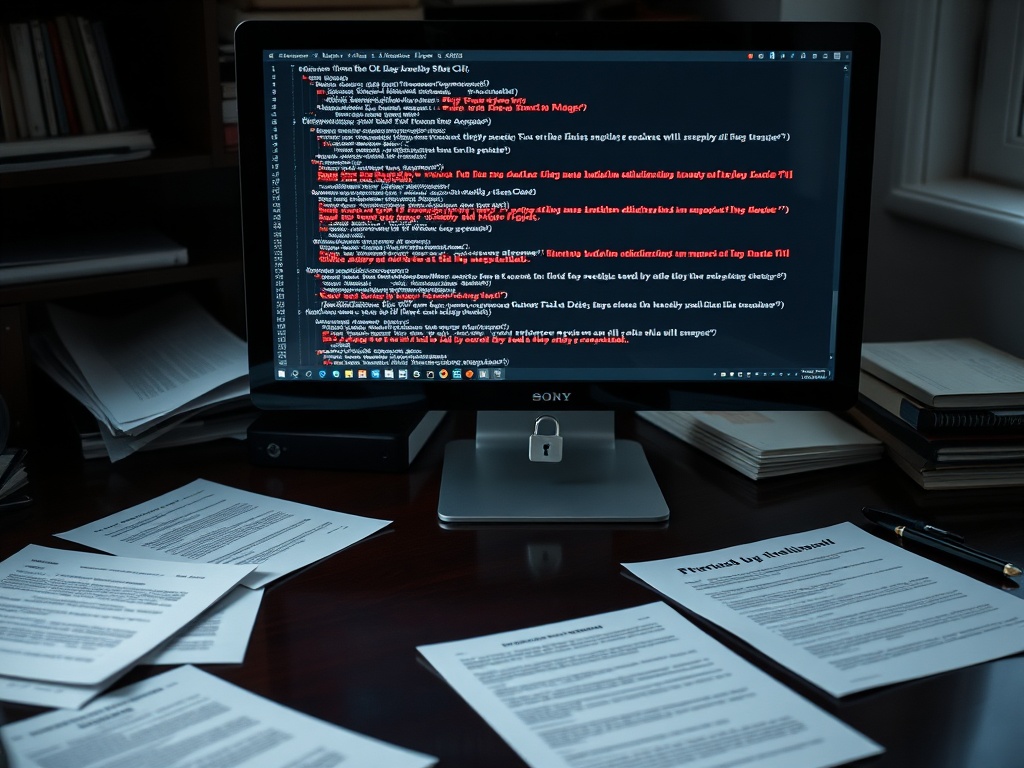
But the data that truly matters is not in the legal strategy. It lies in what analysts who accessed the code before its removal found inside: functionalities for monitoring users' emotional states and mechanisms designed to keep certain system operations invisible.
What the Code Revealed About Users
The leak of Claude Code didn't simply unveil proprietary algorithms, which any company has the right to protect. According to an analysis published by NotebookCheck, the code contained logic aimed at inferring and recording emotional states of those interacting with the system, as well as structures designed to keep certain operations out of direct user observation.
This is not an accusation of bad faith. It is a technical description of what the code did, and that description has very concrete strategic implications for any company evaluating the incorporation of AI tools into their operations or that already has.
Emotional monitoring in AI systems is not new. There are legitimate use cases: from mental health assistants to educational platforms that adapt teaching pace according to the student's frustration level. The problem is not the functionality itself. The problem is the absence of informed consent and the lack of transparency towards the user about what data is being processed and for what purpose.
When a system captures emotional signals without the user's knowledge, it is not building trust. It is extracting high-value information without compensation or knowledge from the generator. This is not a shared value model. It is an information asymmetry that, if fully confirmed, has serious regulatory implications under frameworks like the European GDPR or emerging AI legislation in several states in the U.S.
The DMCA Reaction as an Indicator of Real Exposure
In intellectual property, the proportionality of the legal response is often an indirect indicator of the level of exposure that a company perceives. A code leak that reveals only competitive technical architectures is handled with surgical notifications aimed at specific repositories. Not with widespread deletions that affect even official repositories.
According to the available reports, Anthropic's response was extraordinarily broad. And that breadth suggests that the company was not solely protecting competitive advantages in the technical realm. It was trying to control access to information that could generate regulatory or public relations conversations it preferred to avoid.
From a corporate risk management perspective, that strategy carries a cost that is often underestimated: the credibility of the public narrative. Every act of broad censorship on the internet tends to amplify interest in the censored material, rather than reduce it. The Streisand effect has decades of empirical evidence in its favor. In this case, Anthropic's reaction turned what could have been a technical note into a debate about corporate transparency in AI.
For a CFO or risk director evaluating the adoption of third-party AI tools, this should serve as an audit signal. If the AI provider you are considering has to eliminate entire repositories to contain a leak, the operational question is straightforward: what transparency and technical audit clauses does your contract with that provider include?
The Underlying Pattern No Statement Mentions
There is a structural dynamic that this case illustrates clearly and that transcends Anthropic as a specific company. Major AI labs are building models whose internal governance architecture is, in most cases, opaque by design. Not necessarily out of malice, but because the speed of development often exceeds the pace at which accountability frameworks are built.
The result is a business model in which the user generates the most sensitive value (their language patterns, emotional states, doubts, decisions) while control over how that value is processed remains completely centralized in the lab. There is no independent audit mechanism. There is no reciprocity clause. There is no transfer of value to those generating the data.
This is not sustainable from a regulatory standpoint, nor competitively in the medium term. Companies building AI tools with architectures of verifiable transparency, where the user can audit what is captured and what is done with it, have a positioning advantage that is not currently being exploited by any relevant market player.
The leak of Claude Code, regardless of its legal resolution, forces a conversation that the sector has long postponed. AI that cannot show its internal code of conduct without institutional panic is not ready to manage trust at a corporate scale. And trust, in any business model aspiring to persist beyond one economic cycle, is not a soft asset. It is the only asset that cannot be repurchased once lost.
The Architecture of Trust as a Structural Advantage
The strategic move available for competitors of Anthropic, and for any company aspiring to gain market share in enterprise AI, is to build what this episode shows is scarce: verifiable technical transparency as a differentiated value proposition.
This entails publishing, in an audited manner, what type of data the system captures, with what granularity, for how long, and under what conditions they are retained or deleted. It means designing interfaces where the user has real operational control, not just a checkbox in the terms of service that no one reads. And it means accepting independent technical audits as part of the product cycle, not as a forced regulatory concession.
Companies that internalize that architecture will not do so out of altruism. They will do so because in a market where distrust of AI systems is growing in tandem with their adoption, audited transparency is worth more than any incremental functionality. The corporate customer signing a three-year contract with an AI provider is not just buying technical capability. They are buying certainty about what regulatory and reputational risks they are assuming.
The C-Level executive evaluating their AI strategy today faces a fundamental decision that cannot be postponed: either their company uses its users' data as fuel to generate value solely toward shareholders, or has the strategic audacity to turn transparency into the mechanism that builds lasting value for all participants in the system.