
The Problem No One Wants to Measure in the Barn
Methane doesn’t make headlines as often as it should. While CO₂ monopolizes climate discussions, methane is 28 times more potent as a warming agent over a 100-year horizon, and its lifespan in the atmosphere—around 12 years—means that reducing it today yields visible results in decades, not centuries. This temporal asymmetry makes it the most cost-effective target for any climate strategy aiming for results before 2035.
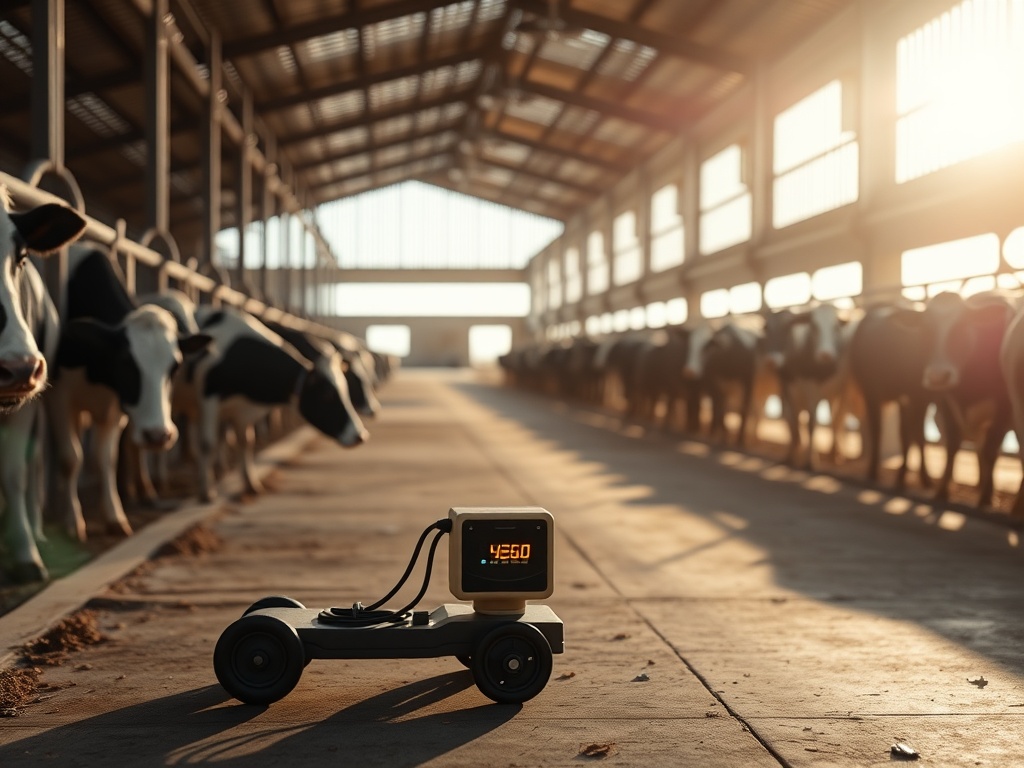
Audrey Parker, a fourth-year doctoral candidate in the MIT Department of Civil and Environmental Engineering, arrived at this conclusion from a unique angle: she grew up in Idaho, studied sustainable materials at Boise State University, and joined MIT through a summer research program. Today, she deploys car-mounted sensors among dairy cows to precisely quantify how much methane escapes from barns and at what rate. What she found challenges even the official models from the IPCC.
Her field data shows that methane concentrations in cross-ventilated barns reach 8 parts per million (ppm) in winter and scale up to 23 ppm in summer, when heat accelerates air flow to 10 to 60 air changes per hour. The most uncomfortable finding for the regulatory industry: IPCC models overestimate emissions from dairy farms by 80 to 90 percent. This does not absolve the sector; it reposition it. If the actual sources differ from those modeled, mitigation resources are targeting the wrong areas.
Why an Abundant, Cheap Material Changes Financial Logic
The technical heart of Parker’s work is copper-doped zeolite, a catalyst that speeds up the natural oxidation of methane, converting it into CO₂. Under normal atmospheric conditions, that conversion takes 12 years. With the catalyst applying external heat, the process occurs in operational time. The result: high-potency methane turns into CO₂, which has a warming potential nearly 28 times less.
The choice of material is not accidental. Zeolites are abundant, cheap, and structurally tolerant to pollutants that usually destroy catalysts in industrial settings, including hydrogen sulfide found in coal mines. This places them in a strategically distinct category from regenerative thermal oxidation systems that require methane concentrations above 1 percent to operate profitably.
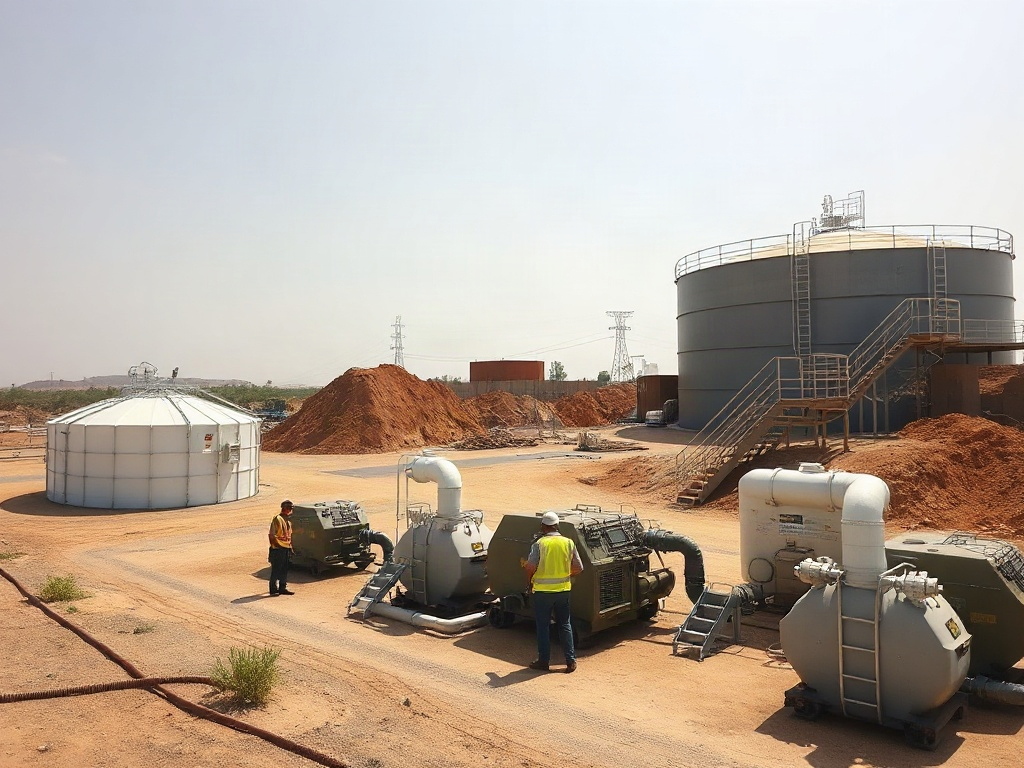
Here’s the mechanics that the carbon market has yet to price correctly: U.S. coal mines emit approximately 39 million metric tons of CO₂ equivalent annually through ventilation methane, at concentrations ranging from 0.1 to 1 percent. Too diluted for conventional burning technologies, too significant to ignore. Parker is working on a pilot system for mines that directly targets this concentration range that the industry claimed was technically unfeasible.
The emerging financial logic is straightforward: if voluntary carbon credits value the ton of CO₂ equivalent between $10 and $50 depending on the market and the quality of verification, then 39 million annual tons represent between $390 million and $1.95 billion in potential abatement value solely in the U.S. coal sector. The zeolite catalyst, if proven feasible at scale, turns a regulatory liability into a monetizable asset.
The critical threshold Parker identified in her 2025 article in Environmental Science & Technology—co-authored with a team from MIT and published under the supervision of Desiree L. Plata, a distinguished Climate and Energy professor—is the net climate benefit point: the moment when the energy consumed to keep the catalyst hot does not exceed the warming avoided by destroying the methane. If that energy comes from a renewable source, the equation is positive. If derived from natural gas, it may erode or nullify the advantage. This transparency about system limits is precisely what most technological climate promises lack.
The 6D Phase Where This Is Played Out and What Comes Next
Viewed from a technological cycles perspective, Parker’s research is firmly in the phase preceding market disruption: the technology has left the lab and is in real-world field trials but has yet to cross the threshold of mass monetization. Zeolites are already cheap. Measurement intelligence—sensors, anemometers, RFID for accurate per-animal or per-area inventories—are already available at low marginal costs. What’s lacking is the large-scale demonstration that bridges the gap between academic papers and verified abatement contracts.
That leap has an institutional accelerator that few analyses mention: MIT’s Methane Network, led by Plata with two dozen experts, aims for a 45 percent reduction in global methane emissions by 2030, which, according to their projections, could avoid an additional 0.5 degrees Celsius of warming by 2100. It is not a lab target. It's an operational roadmap that needs private capital, and Parker knows it: in spring 2026, she led a workshop from the MIT Climate and Sustainability Consortium specifically on financing voluntary carbon markets.
This connection between the experimental bank and the financial market is where technology matures or dies. The pilot studies in coal mines that Parker reports on but has not yet physically visited represent the real stress test: does the catalyst work under conditions of hydrogen sulfide, variable temperature, and coal dust for weeks on end, not just in controlled lab conditions? The answer to that question will determine whether this system can become a standard asset for the mining industry or if it remains a well-documented academic promise.
What is already resolved is more important than it appears: field measurement surpasses existing regulatory models. If the IPCC inventories overestimate dairy emissions by 80 to 90 percent, any abatement policy grounded in those models is poorly calibrated. Parker is not just developing mitigation technology; she is rebuilding the baseline by which any agricultural carbon credit will be valued in the coming years. Whoever controls the measurement methodology controls the price of abatement.
Copper-doped zeolite is, in this sense, less a lab gadget and more a tool for democratizing climate infrastructure: accessible materials, low-cost measurement, and deployable systems that don’t require the heavy engineering of a carbon capture plant. The technology doesn’t eliminate the need for scale or rigorous verification but drastically reduces the entry barrier for farm and mine operators to access carbon markets that are today structurally closed to them.