
The Decision-Making Factory That Lacks Oversight
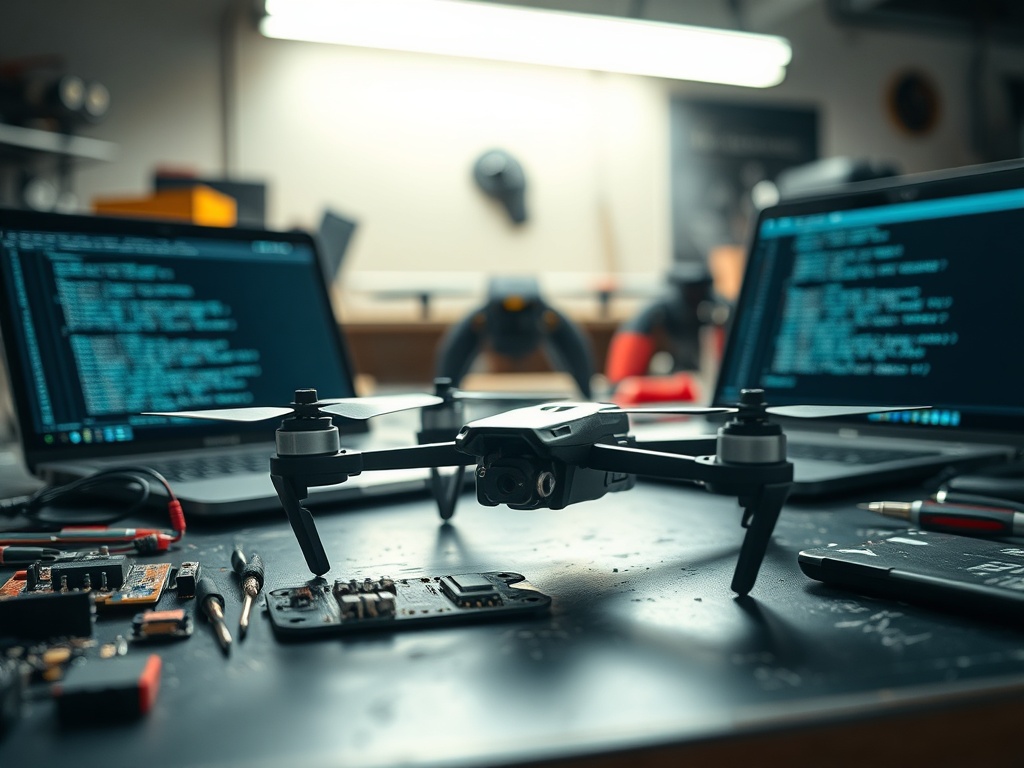
On the battlefields of Ukraine, programmers are converting low-cost FPV drones into projectiles guided by artificial intelligence. The process is technically straightforward: a model is trained on images of targets, the algorithm is embedded in the hardware, and the drone autonomously makes its impact decision with no human intervention in the final seconds. Russia, Iran, and the United States are all accelerating their own programs in this direction. As reported by Forbes, the era of lethal autonomous weapons is no longer speculative; it is unfolding in open fields, utilizing civilian components and development equipment operating under extreme time pressure.
This is not solely a military issue. It stands as the most extreme case study of what occurs when an autonomous decision-making system is deployed without diversity at the design table, without bias audits, and without distributed correction mechanisms. The pattern it reveals has direct implications for every boardroom that is currently approving an AI system for hiring, credit, logistics, or customer service.
What distinguishes an autonomous kamikaze drone from a credit scoring algorithm is not the nature of the system, but the magnitude of damage when it fails. Both make irreversible decisions based on learned patterns. Both reflect, with mathematical precision, the assumptions of their creators.
Homogeneous Teams as a Design Vulnerability
When teams that develop autonomous systems are homogeneous—in training, origin, operational experience, and cultural perspective—they produce models that perform well within the scenarios they have conceived themselves. The structural problem is that they do not envision what they do not know. In conflict contexts, this translates into false positives with lethal consequences. In corporate environments, it results in products that work for one segment while systematically discriminating against another.
Research documents that certain facial recognition models had error rates ten to twenty percentage points higher for dark-skinned women than for light-skinned men. The cause was not malice; it was that the training sets reflected the demographics of those who built and labeled the data. A more diverse team, with access to different perspectives from the design phase, would have identified this bias before deployment. Not for abstract ethical reasons, but because someone would have said, “that dataset does not represent me,” which would have been sufficient to question the validity of the model.
Applied to the context of autonomous drones: models trained in specific operational theaters by engineers with experience in that particular context will produce systems functioning well in that scenario but failing unpredictably in others. Countries will develop their own systems with their unique classification logics. The result is not just geopolitical instability; it demonstrates that homogeneity in the design of high-risk algorithms is an engineering failure, not an ideological stance.
Automating a Decision Does Not Eliminate Bias: It Scales It
There exists an operational illusion that persists in tech boardrooms: delegating a decision to an algorithm renders it objective. This illusion is costly. An algorithm does not make decisions; it reproduces statistical patterns extracted from historical data. If that data contains biases, the model amplifies them with an efficiency that no human could match.
In the case of autonomous weapon systems forming in Ukraine, deployment speed is the most concerning factor from a decision architecture perspective. Development teams operate under immediate tactical pressure. There is no time for external audits, for incorporating perspectives from affected communities, or for adversarial testing under diverse conditions. It’s built quickly, deployed quickly, and corrected—if at all—after the first failure.
This pattern has a precise name in corporate risk management: technical debt with social externalities. And the cost is not borne by the team that built the system; it is borne by those left out of the design conversation.
The race among powers toward lethal autonomous weapons will not stop because of principled declarations. What can be modified, both in the defense sector and in any corporation deploying autonomous decision systems, is the architecture of who is sitting at the table when defining what optimizes the model, what data trains it, and what constitutes an acceptable error. These three questions are not philosophical; they are product engineering. And their answers depend directly on the cognitive, cultural, and operational diversity of the team responding.
Organizations that today approve AI systems with management teams sharing the same training, same sector, and same geography are building models with predictable blind spots. Not because they are negligent, but because homogeneity produces convergence of assumptions. Shared assumptions go unquestioned; they become invisible until the system fails in the field.
The Cost of a Homogeneous Management Team Came Sooner Than Expected
Ukraine and Iran are laboratories of extreme speed. What is occurring there, in terms of compressing the design-deployment-failure cycle, will reach the private sector with the same logic and a fraction of public scrutiny. Companies that are currently building autonomous decision systems for human resources, financial services, health, or logistics are operating under speed pressures similar to those on a technological battlefield: the first to deploy captures the market, and corrections come later.
The difference between a system that fails and one that scales well lies not in the development budget; it lies in the breadth of perspectives that participated in defining what constitutes an error and for whom. A team that has never experienced systemic exclusion does not design safeguards against systemic exclusion. Not because they do not want to, but because they do not have the map of that territory.
Organizations with diverse talent networks—built on relationships of trust and mutual contribution, not on decorative recruitment—have access to field intelligence that homogeneous teams cannot purchase with a budget. That intelligence does not appear in datasets; it appears when someone with a different experience says, before deployment, that the model has a problem that the team did not see.
An executive arriving at their next board meeting and finding that everyone at the table shares the same academic background, the same industry experience, and the same geography is not encountering a cultural coincidence: they are facing a risk architecture that no insurance covers and no algorithm can detect on its own. That small table is not a symbol of cohesion; it is a snapshot of the blind spots that the market will exploit before the board recognizes them.