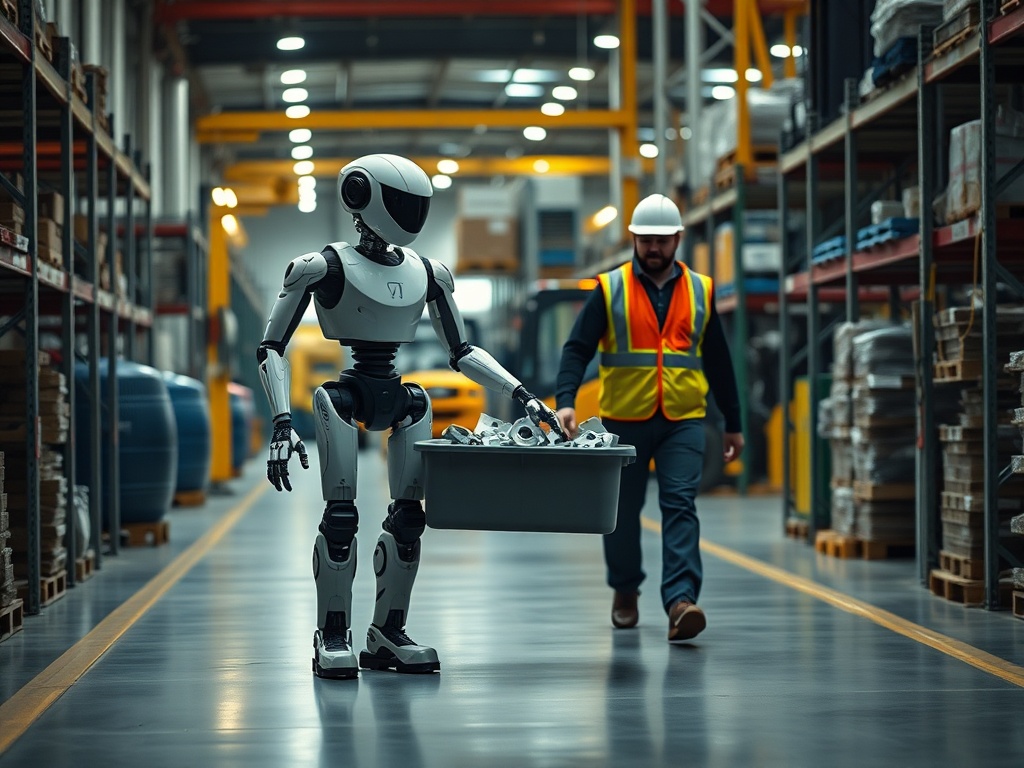

Industrial Humanoids Arrive Not to Replace Jobs But to Set the Cost of Repetitive Labor
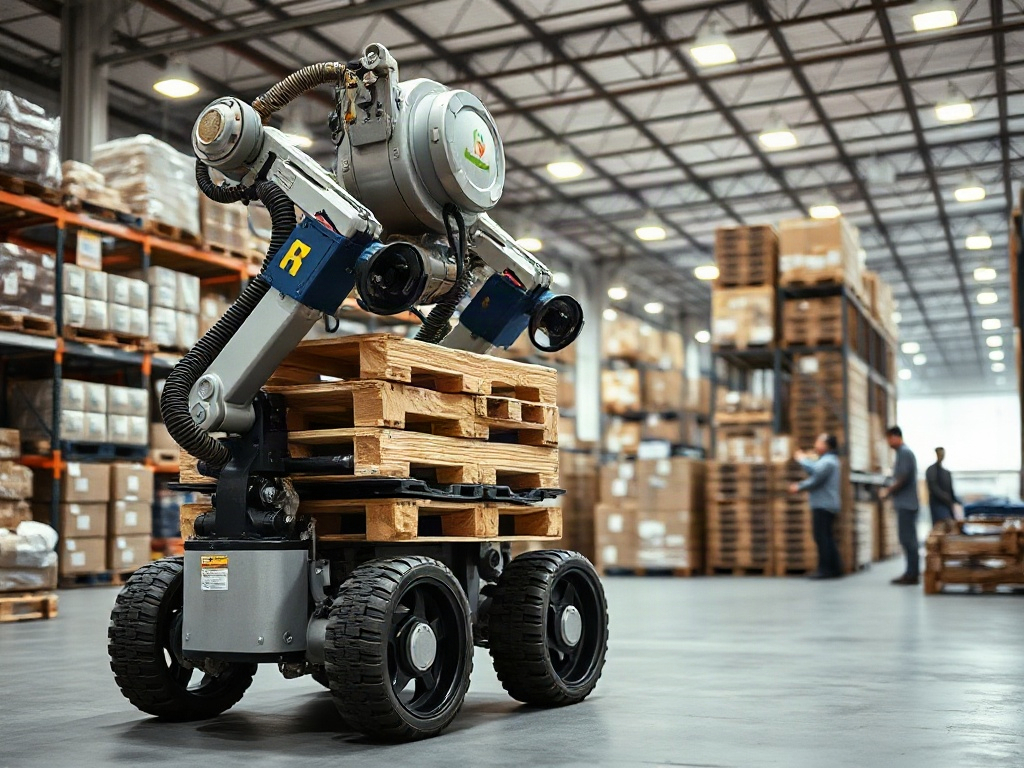
On March 6, 2026, Agility Robotics announced it will be rebranding simply as Agility. This decision may seem purely aesthetic at first glance, but a deeper look reveals a broader agenda: the company is expanding the deployment of humanoid robots in manufacturing, logistics, and warehousing, precisely where vacancies persist and repetitive physical work becomes a structural limitation. Their core product, Digit, is already in production and designed for tasks such as material handling in warehouses, factories, and distribution centers. The underlying message is starkly economic: the bottleneck is no longer the ability to build bipedal robots, but rather the ability to convert them into a standard operational resource.
The most concrete development came earlier, on February 19, 2026: Toyota Motor Manufacturing Canada signed a commercial agreement with Agility after a year-long pilot program, planning to deploy seven Digit robots at its Cambridge, Ontario plant to unload and move parts in support of manufacturing, supply chain, and logistics operations. The president of TMMC highlighted efficiency and team experience; Agility Robotics’ CEO, Peggy Johnson, framed the partnership as an integration of humanoid solutions into automotive production. There’s no need for romanticization. Seven units do not “automate” a plant but validate something more significant: the purchase, implementation, and operational model is becoming repeatable.
From a macroeconomic viewpoint, my analysis is clear and deliberately unsentimental. The wave of industrial humanoids is not defined by whether they walk "like humans," but by whether they can drive the marginal cost of repetitive labor down to an ever-lower floor. When this occurs, the balance of power shifts among companies, regions, and supply chains.
From Demo to Accounting: The Moment the Bipedal Robot Enters the Cost Sheet
Digit is not a future promise; it is in production and being deployed in industrial environments. Furthermore, Agility claims to be on track to deliver its first cooperatively safe humanoid in 2026, designed for operation in shared spaces with humans. This detail matters less for the safety adjective and more for the operational consequence: if human-robot coexistence becomes a standard for safety rather than a controlled exception, the robot ceases to be a “cell” and begins to function as a “hand.” A “hand” that does not require rebuilding the facility.
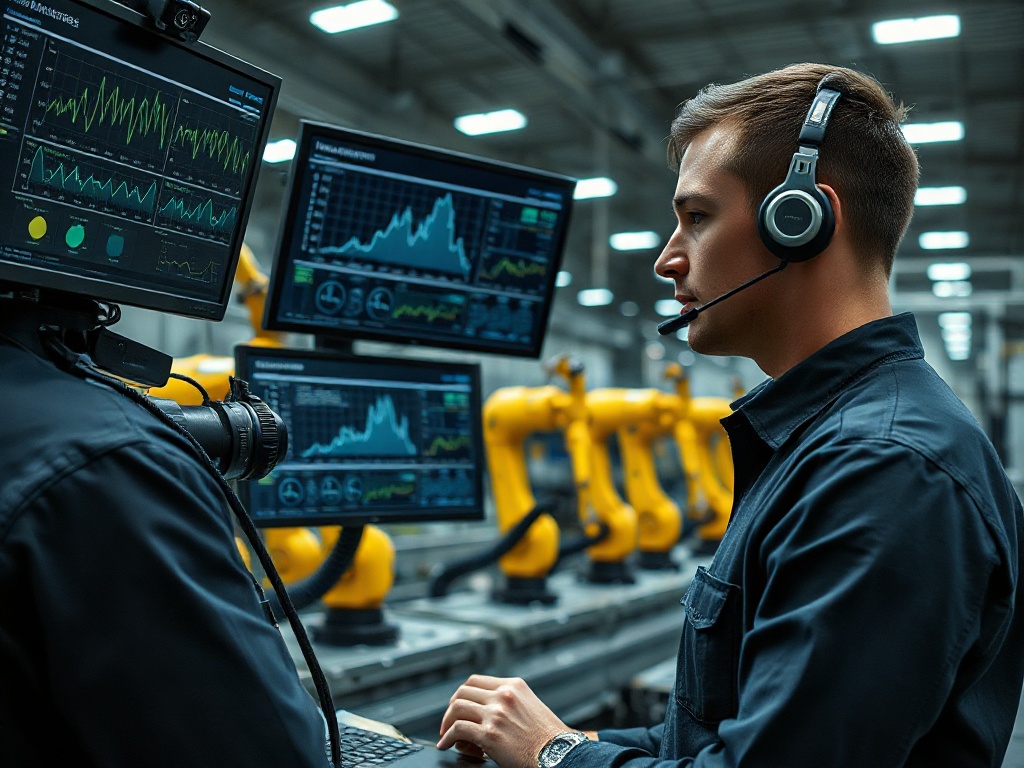
Here, a component emerges that many leaders tend to underestimate: Agility Arc, a cloud-based automation platform for deploying and managing fleets of Digit. This angle is not glamorous, but it is where mass adoption is decided. Conventional industrial robotics called for infrastructure, heavy integration, endless consulting, and a return that depended on the stability of the production mix. A fleet management layer suggests another path: robots incorporated as variable capacity, requiring fewer retrofits and more software-like operations.
The company emphasizes that Digit is assembled in Salem, Oregon, and that more than 80% of nearly 6,000 parts are sourced in the United States to minimize supply chain risks. This fact is not patriotic; it’s about ensuring reliability. When a company proposes automating repetitive tasks to an automotive manufacturer or logistics operator, the first objection is not about the robot’s intelligence. It is about availability risk: spare parts, maintenance, continuity of supply. In robotics, the reliability of the supply chain translates directly into uninterrupted operations.
Thus, the agreement with Toyota Motor Manufacturing Canada and the customers mentioned (GXO, Schaeffler, Amazon) serves as a harbinger of commercial maturity. They do not demonstrate technological dominance; they prove that the robot is already being purchased as an operational capacity, not as an experiment.
The Correct Lens: Marginal Costs Begin to Fall, Even If the Market Hasn’t Accepted It Yet
I analyze this news through a single lens: Zero Marginal Cost. Not as a slogan, but as a trajectory. Automation, once standardized, drives the incremental cost of producing an additional unit down. In logistics and manufacturing, the “incremental cost” is not just energy or depreciation. It is predominantly the combination of human hours, turnover, absenteeism, injuries, training, and coordination.
Humanoids target a specific segment: repetitive, physically demanding tasks that are hard to fill consistently. The headline of the original news item states bluntly: they are coming for the jobs that no one wants. That phrase may sound aggressive, but it describes a phenomenon many organizations already experience: positions that exist in the organizational chart and budget, but are not consistently filled.
What makes Digit interesting is not that it "looks human," but that it adapts to environments designed for humans. Industrial infrastructure is built around aisles, ramps, doors, heights, pallets, containers, and racks designed for human bodies. A functional bipedal robot reduces the adaptation cost of the environment. That cost, previously fixed and high, is what hinders projects in existing plants.
When hardware is combined with a fleet management and deployment layer, the economic effect starts to resemble what has occurred in other industries that have already gone through this transition: the cost doesn’t disappear, but becomes more "compressible" and comparable among suppliers. At that point, repetitive work ceases to be an exclusively local variable. It begins to be a measurable industrial service.
This represents a profound shift: the labor discussion extends beyond mere replacement of humans. It concerns benchmark pricing. If a company can move parts, unload internal containers, or restock materials at a predictable and scalable hourly cost, wages cease to be the sole mechanism for "purchasing continuity." This demands rethinking which tasks should remain human and which should become operational infrastructure.
Global Competition: China Scales Volume, the West Seeks Security and Deployment in Plants
The briefing mentions a significant statistic, albeit with a caveat of primary verification: China would control 90% of the global humanoid market, with Unitree having shipped 5,500 units in 2025, surpassing combined Western competitors. Regardless of the exact accuracy, the strategic pattern is plausible: the country that gains volume also gains manufacturing knowledge, cost advantages, and supply chain benefits.
Simultaneously, the competitive landscape in the West is becoming populated: Tesla with Optimus Gen 2, Boston Dynamics launching Electric Atlas at CES 2026, aimed at material handling and order fulfillment, Apptronik with Apollo, and 1X with NEO. This multiplicity has a direct consequence for industrial buyers: the market will fragment between those achieving volume and price and those providing safe, reliable, and governable deployments in shared environments.
Agility is betting on a specific combination: production with parts primarily sourced in the United States, ongoing deployments with large companies, and a discourse of cooperative safety to scale in spaces where humans and robots work mere meters apart. This triad seeks a particular type of customer: operations that prefer to pay more for certainty, less traumatic integration, and continuity of service.
The financial question, from my role, is not which robot is more “agile.” It is which provider transforms its robot into a stable budget line item. When an automotive factory decides to deploy seven units after a pilot, it indicates they have found a responsible model: who operates, who maintains, what occurs in case of failures, how productivity is measured. That is the bridge between prototype and scale.
In manufacturing, scale is not determined in the lab; it is settled on the plant floor when unions, industrial safety, maintenance, and operations management accept a new actor that moves through the same aisles as humans.
The New Social Contract Within the Plant: Humans as Value Climbers, Robots as Capacity Base
I aim to be precise: this news does not bring forth unit productivity data, injury reduction, or financial returns. Thus, serious analysis cannot fabricate percentages or promise miracles. What can be asserted is that the Toyota Motor Manufacturing Canada case introduces a type of validation that’s rarely achieved through demos: a year-long pilot leading to initial purchase and deployment.
This reorders the internal dialogue in any industrial company. The conversation shifts from "if humanoid robotics will serve someday" to "what repetitive tasks do we want to standardize as mechanical capacity." In logistics and manufacturing, repetitive work is a base upon which margin is built. If that base becomes automatable without necessitating facility reconstruction, capital is reassigned.
And this reassignment carries human implications. The easy narrative is replacement. The useful narrative is redesigning the task mix: less exposure to repetitive physical load and more human focus on coordination, supervision, continuous improvement, quality control, and exception resolution. This transition does not occur solely through goodwill; it happens because the marginal cost of "doing the same thing again" falls faster with robots than with people.
For governments and companies, a localization effect also comes into play. If labor shortages cease to be the dominant factor for locating capacity in certain countries or regions, the relative weight of energy, regulatory stability, market proximity, and supply chain resilience will increase. Humanoid automation does not just impact employment; it touches economic geography.
The final statement is a management decree, not science fiction. Leaders who treat industrial humanoids as a peripheral innovation project will lose margin and operational reliability to those who transform them into capacity infrastructure, as the marginal cost of repetitive work is shifting from an annual negotiation to becoming a function of technological deployment, fleet governance, and execution discipline.