
India Has Won the Technological Race. Now It Faces Another Challenge
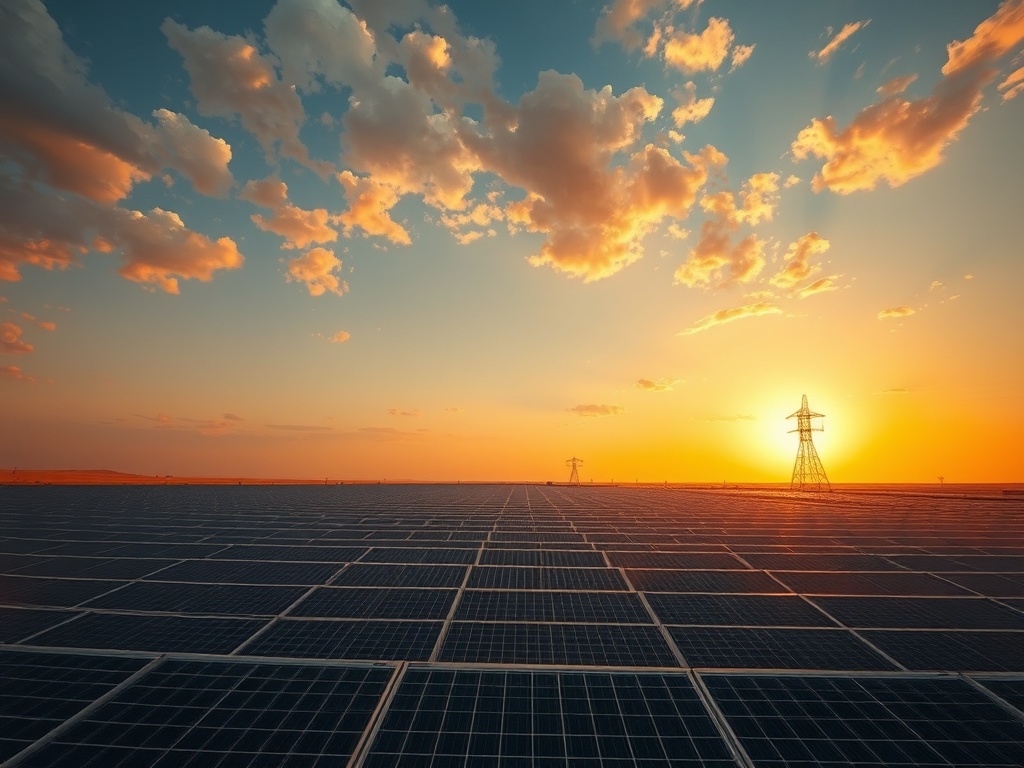
On March 25, 2026, the Indian Union Cabinet approved an update to its Nationally Determined Contribution (NDC): achieving 60% of installed non-fossil energy capacity by 2035. The figure seems ambitious until one reviews the history. India set a target of 40% for 2030 and achieved it in 2021, nine years ahead. The 50% target was also surpassed before the deadline: by February 2026, the country was already operating with 52.57% non-fossil capacity, equivalent to 275.46 GW, led by 143.6 GW of solar energy.
This means that the debate about whether India can reach 60% is, technically, irrelevant. The Central Electricity Authority (CEA) projects that non-fossil capacity will reach 70% of total installed capacity by the fiscal year 2035-36, with 786 GW out of a total of 1,121 GW. An analysis by Down to Earth on the annual growth rate of the non-fossil sector — an annual sustained growth of 12% between 2021 and 2025 — suggests that India could cross the 60% threshold as early as 2028, seven years ahead of its committed timeline.
So, if the technology is deployed and the policies are effective, where is the real risk? The Institute for Energy Economics and Financial Analysis (IEEFA) points out without mincing words: financing is the next major obstacle. And that obstacle has a very specific architecture worth dissecting.
The Problem isn't Capital; It's the Debt Structure
The investment figures required by the plan are on a different scale. According to IEEFA projections, the Indian renewable sector needs $68 billion annually until 2032 — approximately 6.18 trillion rupees — and that number must scale up to $145 billion annually by 2035. We are talking about more than doubling the investment in three years, directed at solar assets, battery storage, and electrical transmission.
Here’s the mechanics that most analyses overlook: renewable energy projects are not comparable in their financial structure to a tech startup or a manufacturing company. A solar farm or a transmission line has a lifespan of 25 to 30 years, with predictable cash flows but concentrated in the operational phase. That requires long-term debt with extended amortization periods, not standard corporate loans at 5 to 7 years. If the bond market cannot provide instruments of that tenor at reasonable costs, projects simply cannot finalize their financial structures, even if the technology is available and policies are favorable.
IEEFA notes that markets already recognize this difference: clean energy assets receive better credit conditions than thermal assets. That is an advantage, but it does not solve the issue of market depth. India needs its bond market to scale in volume, in sophistication of instruments, and in a base of institutional investors who can absorb 20-year debt in rupees without demanding risk premiums that destroy project profitability.
India's historical reliance on short-term bank financing for infrastructure is the structural bottleneck. Banks cannot indefinitely carry long-term exposure on their balance sheets without pressuring their capital ratios. The rupee corporate bond market, though it has grown, still lacks the secondary liquidity or yield curve sufficiently developed to be the main vehicle for $145 billion annually.
The Optimism Trap in Projections
Melanie Robinson, Global Director of Climate, Economics, and Finance at the World Resources Institute, stated that "domestic trajectories suggest India is on track to exceed this goal," describing the process as a "true momentum" in the energy transition. The CEA's projections align with this direction. And the track record of exceeding targets supports it.
However, there is a pattern worth identifying: the rate of installed capacity and the rate of financed investment are different metrics. India grew at a 12% annual rate in non-fossil capacity between 2021 and 2025 in a context where global financing rates were relatively low and international capital was urgently seeking green assets post-pandemic. The environment from 2026 onward is not identical: interest rates in developed markets remain high, the appetite for long-term emerging debt is more selective, and competition for institutional capital among developing markets has increased.
This does not invalidate optimism about India's technical trajectory. But it does introduce a speed variable: India may achieve 60% installed capacity before 2030, but the financing cost of that capacity over the next three to five years will determine if the model is replicable or if it was possible under financial conditions that no longer exist. The CEA projects 509 GW of solar energy by 2035-36. Financing that expansion with market debt at sustainable costs is the true maturity test of the model.
Another factor reinforcing the urgency to resolve the financial knot is India’s vulnerability to crude oil and liquefied natural gas (LNG) imports. Every dollar that India stops spending on imported fossil fuels is a dollar that strengthens its balance of payments and reduces its exposure to geopolitical shocks in commodity markets. This equation makes the cost of not financing the transition higher than the cost of financing it, even at elevated rates.
The Green Bond Market as Financial Infrastructure
The structural solution that IEEFA implicitly indicates is not to negotiate better with banks or attract more foreign venture capital. It is to build domestic financial infrastructure: a green bond market in rupees and with sufficient depth to absorb mass issuances, with domestic institutional investors — pension funds, insurers, sovereign funds — capable of holding those instruments to maturity without needing constant secondary liquidity.
That, in turn, requires regulations that allow Indian insurers and pension funds to increase their exposure to long-term infrastructure bonds without excessive capital penalties. It also requires the central government to act as a guarantor or provider of credit enhancements in early stages, reducing the issuance cost for projects that do not yet have sufficient operational history.
The paradox is that India has the elements to build that market: a significant domestic savings base, an expanding insurance sector, and a track record of exceeding climate targets that builds credibility with international investors. What is missing is the regulatory financial engineering that connects these elements with the 20 to 30-year projects that the NDC plan requires.
India's energy transition has already demonstrated it can execute at scale technically. The next cycle will be won or lost in financial regulatory rooms and the depth of the domestic capital markets, not in Rajasthan's solar fields.