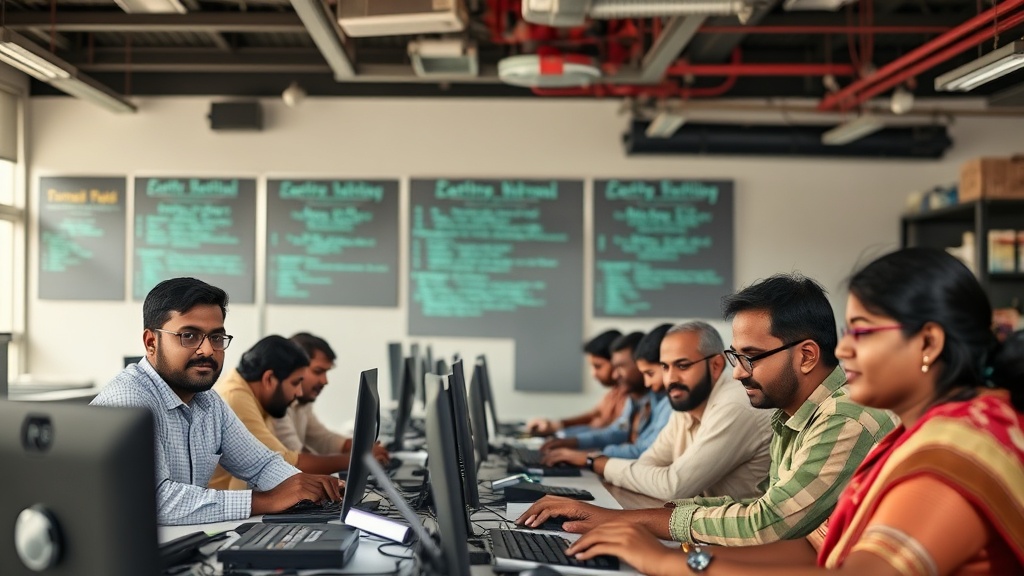

India and AI: Beyond the Algorithm Theater
India has emerged as a pivotal player in the development of inclusive and reliable artificial intelligence. This positioning is not by chance; the country boasts a vast pool of technical talent and a robust startup ecosystem driving innovation at exponential levels.
The Challenge of Inclusion in AI
The need for inclusive AI is becoming increasingly urgent. Technologies that fail to consider cultural and economic diversity risk exacerbating existing inequalities. With its rich diversity of languages, cultures, and economic scenarios, India has the potential to be a living laboratory for developing AI applications that address these concerns.
By leveraging its vast experience in software and IT services, India offers a unique perspective to co-create AI systems that not only automate but genuinely add value to their users. However, it is essential that this narrative of inclusion goes beyond a mere marketing slogan.
Strategic Multiplier or Simple Gadget?
AI is often promised as the magical solution for complex problems, when in reality, it may merely implement algorithms over already inefficient systems. The key lies in reimagining workflows, not just automating broken processes.
This is where India can truly shine if it focuses its efforts on augmented intelligence—collaborations where humans and machines coexist to enhance the final outcome. Imagine a healthcare system where AI not only diagnoses but also interprets data in real-time to facilitate better-informed decisions by medical professionals.
Bridging the Gap Between Promise and Execution
A persistent challenge in adopting genuinely inclusive AI is closing the gap between the promised benefits and their realistic implementation. Current solutions often fall short of their projected potential due to inherent data biases, lack of infrastructure, or cultural resistance.
India’s focus must be on continuously validating these technologies in real-world scenarios. Are these applications being tested and adapted in diverse communities before large-scale deployment? The answer to this question will determine whether India can lead credibly in this space.
Cultural Changes and Empowering the Individual
The successful implementation of these technologies relies not only on sophisticated algorithms. Roles within organizations will change, and with them, ego and power dynamics will also evolve. How will India manage this cultural transformation?
India has the opportunity to set new standards by creating work environments that promote continuous learning and cooperation between humans and AI. This would not only empower individuals but could establish a new global standard for how we interact with advanced technologies.
Strategic Reflections
Thus, India’s role as a natural collaborator in creating trusted and inclusive AI must not be a mere spectacle of shining algorithms. This role requires a constant reevaluation of how these technologies are implemented to ensure they genuinely contribute to human progress.
I close this analysis with a question for business and technology leaders: Are we prepared to stop investing in superficial solutions and take on the commitment to truly create our demand? The answer could solidify or break the future of AI in one of the world’s most diverse countries.