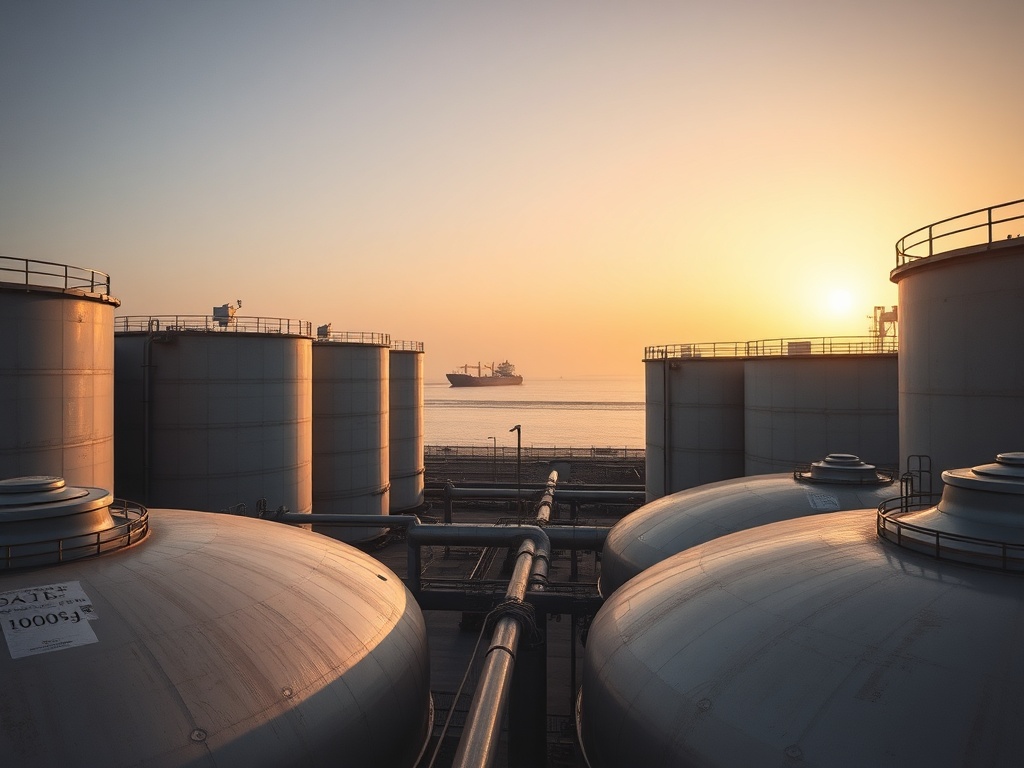

The IEA's Release of Reserves: An Expensive Bridge
On March 11, 2026, the International Energy Agency (IEA) announced the largest coordinated release of strategic reserves in its history: 400 million barrels from 32 member countries. The Executive Director, Fatih Birol, described it as an action of “unprecedented scale” aimed at alleviating the immediate impact of disruptions in the markets, following negotiations led by the G7. The individual contributions made public underscore the operational magnitude of the decision: France 14.5 million, Germany 19.5 million, United Kingdom 13.5 million. The political message was clear: if the Strait of Hormuz does not reopen, the system will try to “replace it with oil from elsewhere.”
The intention is rational. The execution is complex. The financial effect on energy-consuming enterprises, carriers, refineries, and any model sensitive to crude costs relies on an uncomfortable reality: reserves are inventory; production is a flow. When the flow is cut, the inventory merely buys time. Buying time can be a strategy, but it is rarely a solution.
The IEA Puts 400 Million on the Table, Prices Remain Above $100
The first executive reading is simple: the market did not calm down. Following the announcement, Brent crude prices rose above $100 per barrel by the morning of March 12. This movement matters because it reveals psychology and mechanics simultaneously. If a measure the size of 400 million doesn't anchor expectations, operators assume that the supply gap is larger, longer, or more uncertain than a “shot in the arm” can address.
The IEA did not initially detail the exact pace, but available briefing indicates that it seeks to stretch the 400 million over two months, which implies 6 to 7 million additional barrels daily. That’s the operational number any CFO should keep in mind: it's the “flow” intended to be added to the system.
The problem lies in the comparison to the shock. The Strait of Hormuz normally channels around 15 million barrels daily of crude and 5 million of products. The disruption linked to the war with Iran has curtailed Gulf production by at least 10 million barrels daily, with the risk of further expansion if traffic is not restored. In a world consuming “just over 100 million barrels daily,” the elasticity to absorb a gap of this magnitude is low.
From a financial point of view, a reserves measure is akin to financing a business with accumulated cash to withstand a sales slump. It works if the slump is short, if cash can be deployed on time, and if the “client” (in this case, logistics infrastructure and refineries) can absorb the supply without bottlenecks.
Inventory Against Flow: The Arithmetic That Explains Fragility
The most useful comment to understand the structural limits of the measure comes from the distinction that several analysts emphasize and which Christof Rühl articulates clearly: a stock is being used to compensate for the lack of a flow. In corporate finance, that difference defines almost everything.
If the plan is executed at 6-7 million barrels daily over two months, the system presents a temporary “crutch” equivalent to a fraction of the potential disruption associated with Hormuz. When the blocked channel represents around 20 million barrels daily between crude and products, the comparison is unavoidable: the bridge doesn’t cover the entire river.
Now, the market does not just discount volume; it also discounts duration. Capital Economics models a “less severe” scenario of a few weeks of conflict that would pull around 350 million barrels off the market. In that case, 400 million looks sufficient on paper. But if the conflict drags on or escalates, the lost volume could be four to six times greater. In planning terms, this changes the board: going from covering weeks to trying to cover months leaves the system with a replenishment issue.
The IEA reports that even with conflict resolution, the return of production to pre-crisis levels may take “weeks and in some cases months.” That detail has direct implications for any corporate purchasing strategy: a ceasefire alone is not enough to normalize energy costs; normalization has latency.
In energy-intensive business models, the typical error is to assume volatility is a question of “price” and not of “continuity.” At $100 a barrel, the cost is high; without availability, the cost is existential. Thus, the market penalizes supply uncertainty more than it does the absolute price level.
Logistics, Quality, and Bottlenecks: Why 400 Million Does Not Equal 400 Million
In a balance sheet, inventory is inventory. In the physical oil supply chain, not all barrels are equal. The news leaves explicit the questions the market considers crucial: pace in the early weeks, speed of arrival at destinations, quality mix, who manages logistics, and whether refineries can absorb a sudden increase.
This list is not a technicality; it translates to financial risk. If the released barrel arrives late, the economic value shifts. An “available barrel in the system” that cannot be processed on time due to refining or transport restrictions does not reduce the price risk premium. If the crude mix does not fit the configuration of specific refineries, conversion to final products stalls right where the consumer feels inflation.
There’s also a layer of operational governance: the IEA stated that each country will implement the release according to its own operational, temporal, and logistical arrangements. Political coordination does not always equate to physical synchronization. For a company, this resembles reliance on multiple suppliers promising delivery “as per their availability.” The risk isn’t in the promise; it’s in the variability.
The current release represents approximately one-third of public emergency reserves, as member countries maintain over 1.2 billion barrels in emergency stocks, plus another 600 million in industry under government obligations. In terms of country balance management, it’s an aggressive use of the asset. In terms of market signal, it’s ambivalent: it reassures about available muscle but also confirms severity.
The Signal May Raise the Barrel Price: When Intervention Increases the Risk Premium
There’s a communication risk that is almost always underestimated by executives outside of trading: an intervention can raise the price if interpreted as confirmation that the scenario is worse. The briefing recognizes this through a specific psychological mechanism: some investors read “they’re using strategic reserves” as “the disruption is not marginal.” That effect was observed in 2022; the first wave did not halt the rise and, in some cases, reinforced the crisis narrative.
This does not render the release a mistake. It turns it into a crisis management tool, not a production substitute. In business strategy, this is equivalent to a bridge credit line: it stabilizes cash, avoids destructive short-term decisions, but does not create demand or rebuild margin on its own. If the underlying business does not resume generating flow, the bridge ends.
The most actionable part for business leaders is how to translate this into pricing decisions and cost structure. If your P&L has direct exposure to energy, you’re looking at a variable with two components: (1) the average price over the quarter and (2) the risk of extreme events disrupting supply. The first is managed with commercial discipline and hedges when they make sense. The second is managed with operational redundancy: contracts, tactical inventories, diversification of routes, and the ability to adjust product mix.
The release also leaves another lesson: the market rewards those who can convert uncertainty into operable plans. If your strategy relies on the input returning “soon” to previous levels, your budget is not a budget; it’s a wish. Under supply shocks, price becomes a thermometer of confidence in continuity.
A Sound Corporate Strategy Starts by Measuring the Time Bought
From my financial architecture perspective, the question that matters is not whether 400 million “is a lot.” It is. The operational question is how many days of continuity that inventory buys against a daily deficit that could fluctuate between 10 million barrels and larger figures if the Hormuz blockage persists.
The political communication itself helps gauge the dimension: it was mentioned that the volume equates to “about 20 days” of what is normally exported via Hormuz. That’s a clock metric, not a solution metric. And the clock runs faster when the market perceives that replenishment will take months.
For a CEO or CFO, the translation is immediate. Any 2026 plan that depends on cheap energy must incorporate a band of scenarios. A short scenario makes it plausible that the bridge will work. A multi-month scenario converts energy costs into a tax that eats margins, and forces a reevaluation of pricing, discretionary CAPEX, and working capital exposure.
The IEA was created after the 1973 shock for these kinds of moments. Its reserve system is designed to cushion, not to replace. In that sense, the measure is consistent with the mandate. The risk for companies arises when cushioning is confused with normalization.
In the end, business models survive when they convert uncertainty into cash and cash into operational continuity. No strategic reserve substitutes for that discipline: the only validation that ensures survival and control remains consistent customer cash inflow.