
Geely Bets on Methanol as Electric Vehicles Get Heavier
On April 12, 2026, at the China Smart Electric Vehicle Development Forum, Li Shufu, chairman of Geely Holding Group, made a statement that unsettled many in the global automotive industry: battery electric vehicles are too heavy for the transport of the future. He was not making a provocative remark; he backed it with specific arithmetic: a methanol vehicle weighs about half that of its battery electric equivalent, and methanol offers more than ten times the energy density of lithium-ion batteries.
This comment did not come out of nowhere. Geely has been developing methanol technology for over twenty years, and in the weeks leading up to the forum, it had presented a plug-in hybrid methanol variant for its Galaxy Starshine 6 sedan to regulatory authorities, equipped with a 1.5-liter engine producing 93 kW. It also developed a racing engine compatible with pure M100 fuel. This isn’t just an idea lab; there are real assets, product registrations, and an export strategy that delivered more than 200,000 units in the first quarter of 2026, boasting a year-over-year growth of 126%. This prompted the group to raise its annual target from 640,000 to 750,000 vehicles.
The important question is not whether methanol is better than lithium in thermodynamic terms. The question is what market segment Geely is targeting, what costs it is willing to redistribute, and which actors in the value chain capture the benefits if the bet scales.
Weight Is Not an Engineering Problem, It's an Economic Issue
When Li Shufu states that electric vehicles weigh twice as much as their methanol equivalents, he is not simply making an aesthetic comment about automotive design. He is pointing out a distortion in the operating costs of heavy transport that becomes unsustainable at scale.
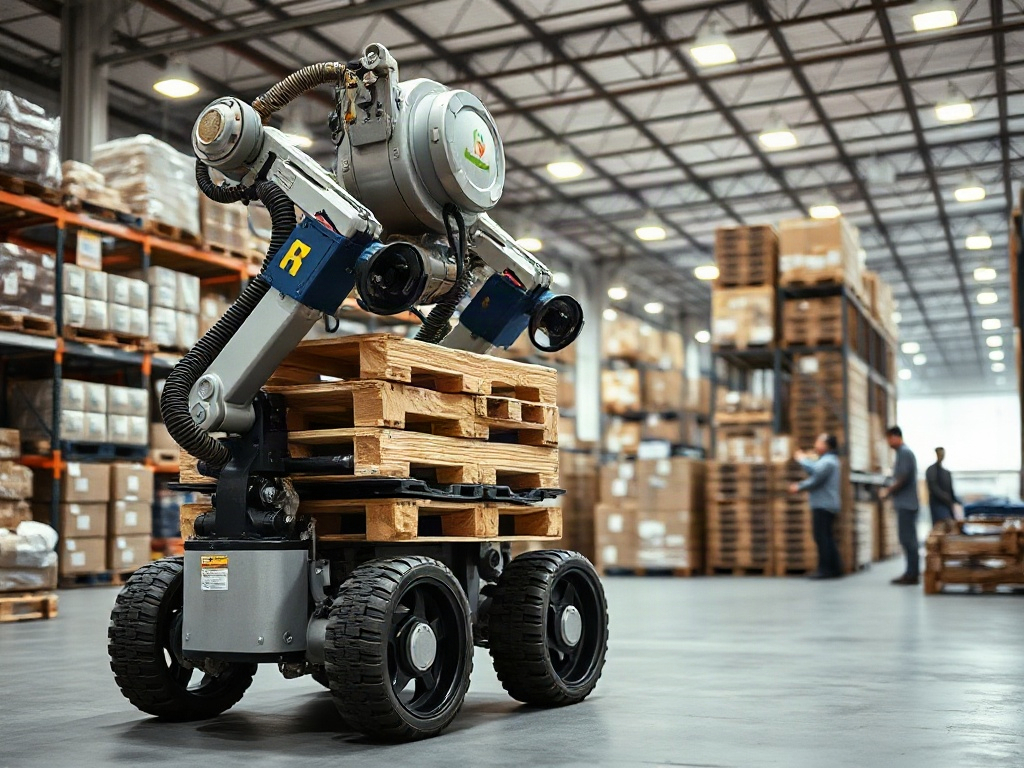
A truck or bus powered by lithium-ion batteries—whose energy density hovers around 200 to 300 Wh/kg in current commercial configurations—needs to carry a significant mass of cells just to reach the minimum operational range on long-distance routes. That extra mass consumes energy merely through movement, which erodes the vehicle's efficiency proportionally to its weight. For cargo transport, where each kilogram of weight is a kilogram less of goods transported per trip, the impact on revenue per kilometer traveled is direct and measurable.
Methanol, with a volumetric energy density of about 15.6 MJ/L compared to the battery equivalent of around 0.7 MJ/L, allows for more energy to be loaded in less mass and volume. For a fleet operator in heavy transport, that difference doesn’t translate into a technical headline; it translates into more tons per trip, fewer stops, lower maintenance costs related to the vehicle’s structural weight, and greater utilization of the asset over its lifespan.
Geely is not competing in the urban electric sedan market where Tesla and BYD dominate with decades of advantage in software, charging infrastructure, and brand recognition. Instead, it is positioning methanol where the cost of operation per kilometer is the metric that determines an operator’s survival, and where vehicle weight has concrete financial consequences in each operational cycle.
The Methanol Supply Chain and Who Captures the Value
Geely’s technical argument makes sense, but what deserves more rigorous analysis is the incentive structure surrounding methanol as a fuel. This structure determines whether the value generated by vehicle efficiency remains in the fleet operator’s hands, with the methanol producer, the state, or the manufacturer.
China has been building the regulatory infrastructure for this approach for over a decade. The Ministry of Industry and Information Technology launched the first methanol vehicle pilots in 2012. In 2019, eight central agencies issued joint guidelines to promote its adoption, and today 39 cities in 20 provincial regions have over 80 active policy measures in this direction. In July 2024, a government directive accelerated the transition toward green energies with explicit mention of methanol; in October of the same year, six ministries published a plan to integrate renewable energy sources combining wind, solar, hydrogen, ammonia, and methanol into a single production cycle.
This context matters because it defines who absorbs the risk of the transition. When the state subsidizes the distribution infrastructure for methanol and establishes preferential regulatory frameworks, it reduces entry costs for manufacturers and allows the vehicle's efficiency differential to translate into margins for the operator. If that infrastructure is funded with public money but methanol production is concentrated among a few industrial suppliers, the operator captures less of that differential than they should.
Geely has first-mover advantage in the entire chain—vehicle, engine, compatible fuel—but the scale of benefit for its end customers directly depends on how much competition exists upstream in green methanol production. A concentrated methanol market with a few producers wielding price-setting power could quickly neutralize the efficiency gains that the vehicle offers on paper.
What Lithium Still Needs to Answer
Geely's analysis would be clearer if lithium were static. However, it is not. The company itself is developing solid-state batteries with an energy density of 400 Wh/kg, aiming for production by 2027. If that technology scales with competitive costs—something that remains a major manufacturing challenge, not just a chemical one—part of the weight argument that supports the methanol proposal starts to compress.
But that horizon has a significant temporal trap: heavy transport operators making investment decisions in fleets today are not buying what will exist in 2027 or 2028. They are purchasing what is currently available and proven, with a supply infrastructure already functioning and operational costs they can model with real data. In this timeframe, methanol holds a concrete advantage that battery electric vehicles have yet to neutralize in the heavy segment.
The risk for Geely is not that lithium will improve, but that it improves faster than the methanol infrastructure can scale. If the green methanol distribution network does not grow at the pace required by heavy transport demand, the operator gets trapped between an efficient vehicle and a scarce or expensive fuel, destroying the entire proposition.
Heavy Transport Chooses the Lowest Cost per Kilometer, Not the Best-Sounding Solution at a Forum
Geely exported over 200,000 units in the first quarter of 2026, a year-over-year growth of 126%, and raised its annual target to 750,000 vehicles. These numbers confirm that the company has manufacturing capacity and expanding global distribution channels. However, methanol still represents a niche fraction of that volume, concentrated in specific segments of the domestic Chinese market.
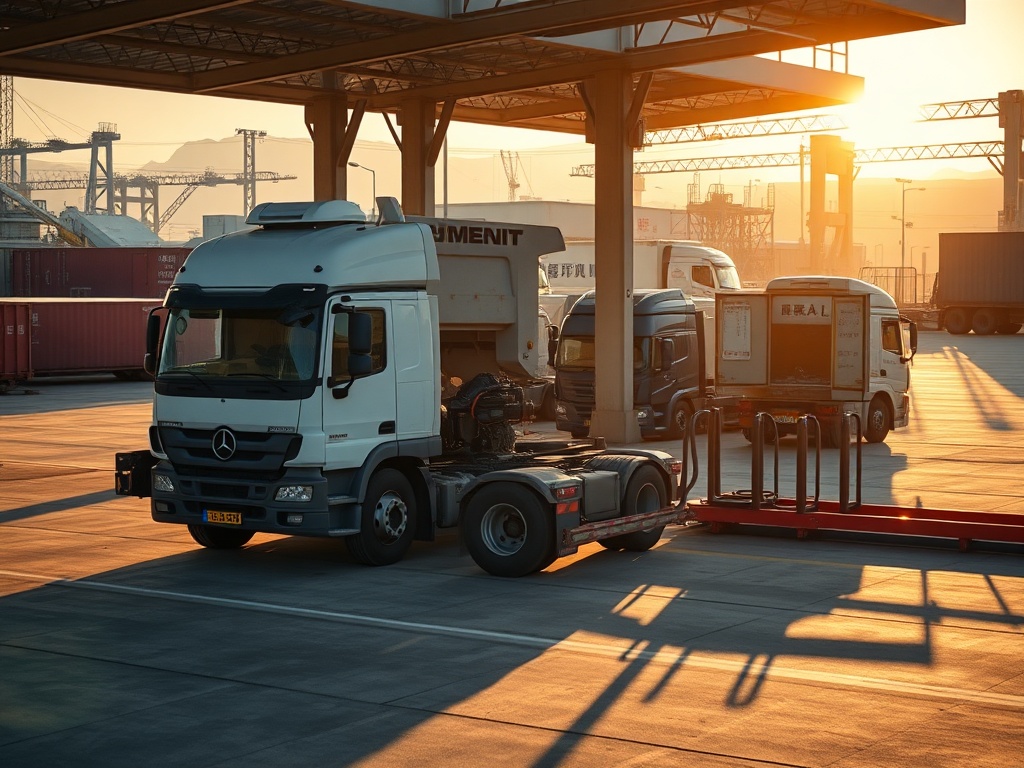
Li Shufu’s bet is that heavy transport—trucks, intercity buses, long-distance logistics—has a different adoption logic than the passenger market. In that segment, the winner is not the one with the most advanced technology in absolute terms but the one that offers the lowest total cost of operation with the most reliable supporting infrastructure. If methanol is produced at scale from renewable sources and its distribution network matures at the rate suggested by Chinese policies, it could meet that condition before solid-state batteries reach competitive manufacturing costs in commercial vehicles.
The distribution of value in this bet is concrete: fleet operators capture the efficiency differential in their costs per kilometer; Geely retains margin on the vehicle and differentiation compared to purely electric manufacturers; and the Chinese state captures a reduction in dependence on lithium imports and progress in its energy diversification agenda. The only actor that loses relative position if methanol scales is the one that bet everything on lithium without covering the heavy segment. The only competitive advantage that does not depreciate in this equation is having designed the model in such a way that each actor prefers to stay within it.