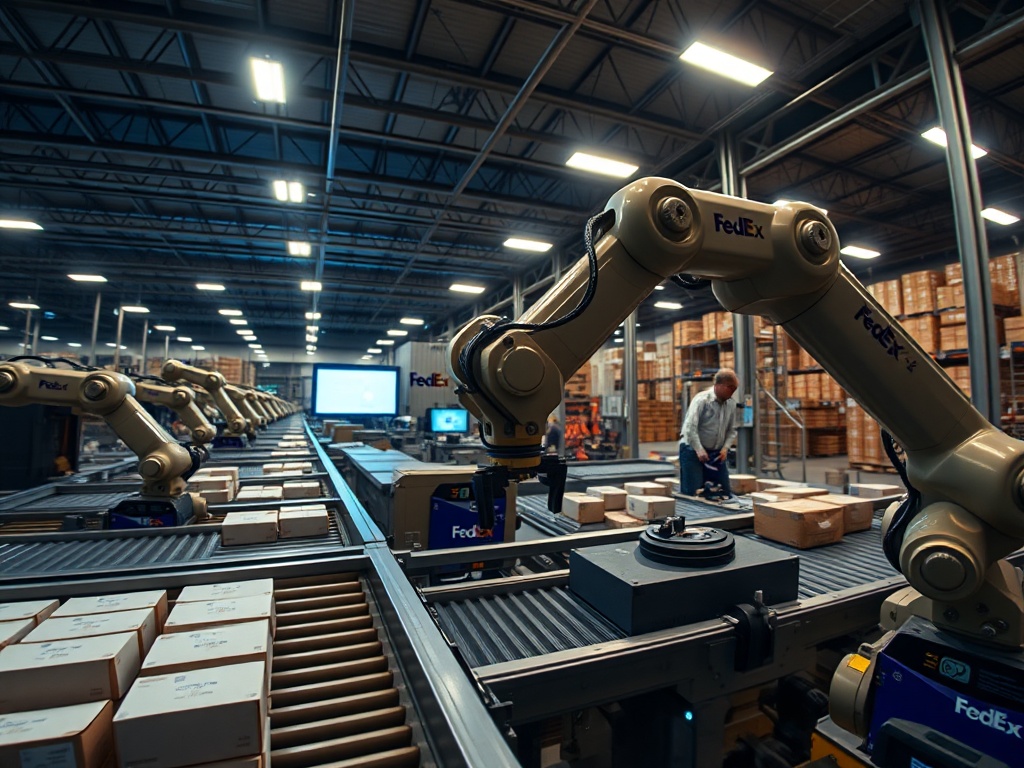

FedEx Chooses External Partners and Abandons In-House Automation Technology
FedEx has made a bold decision that few companies of its scale dare to announce publicly: the relinquishment of proprietary control over its automation technology. The company recently announced a partnership with Berkshire Gray, a firm specializing in robotics and automation for logistics, as part of a deliberate strategy to collaborate with external players rather than developing its own technological capabilities. For a company that moves millions of packages daily and operates in dozens of countries, this choice is no minor operational detail. It is a statement about how it understands value creation and where it believes its competitive advantage lies.
The question that has not been asked with sufficient precision is: who does this model truly benefit, and under what conditions could it collapse?
The Hidden Cost of Building Everything In-House
For years, the dominant narrative in logistics has been that large networks—UPS, DHL, FedEx—must internalize every layer of their value chain to protect margins. The logic seemed sound: those who control technology control cost. Those who control cost control price. And those who control price control the customer.
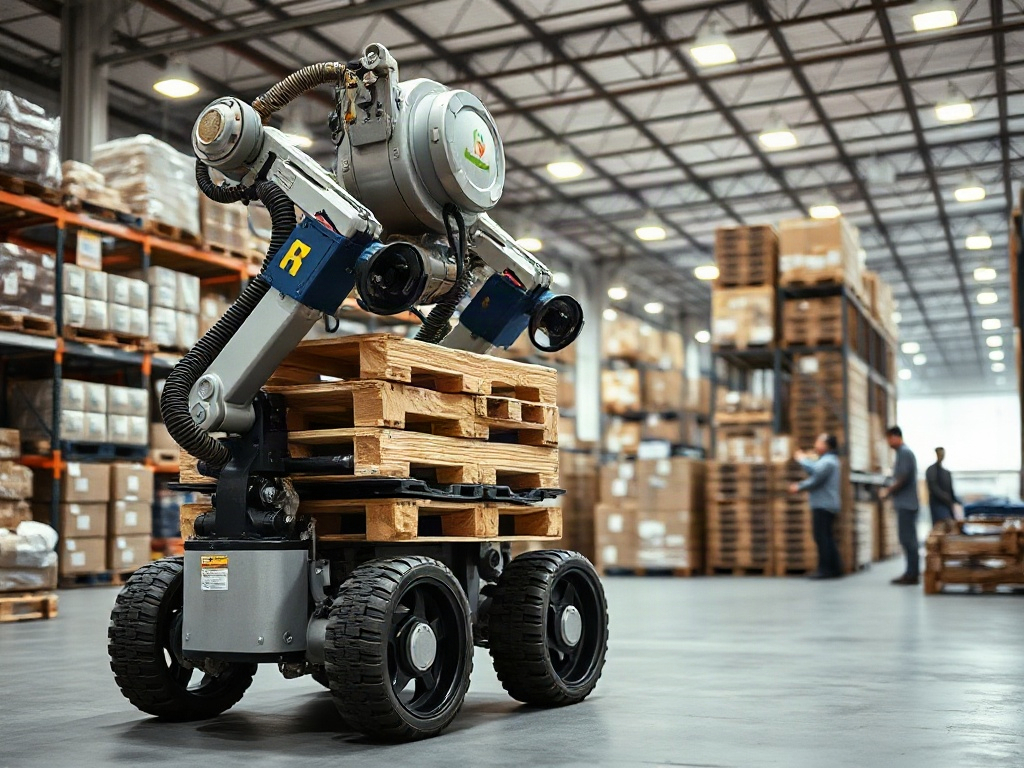
The problem with this narrative is that it overlooks the capital cost of building technological capabilities from scratch in domains where there is no structural competitive advantage. Developing sorting robotics and warehouse automation is not adjacent to FedEx's business; it is an entirely different industry, with its own R&D cycles, scarce talent, and economies of scale that favor specialists. When a company outside its domain tries to compete with specialists in that domain, it usually loses in speed, learning costs, and output quality.
The proprietary model is not just costly; it is slow. An internal automation project in a logistics company typically takes between three to five years to scale from pilot to full implementation. A partnership with a provider that already has the product in production can shrink that timeline to months. That speed difference has an opportunity cost that rarely appears in build-vs-buy analyses.
By choosing Berkshire Gray, FedEx is buying both time and technology. In logistics, implementation time directly translates to responsiveness during demand spikes, which is precisely where margins can tighten or expand.
What the Alliance Reveals About the Value Distribution Model
Now, choosing external partners instead of building in-house does not automatically ensure a healthy model. The architecture of the alliance matters as much as the decision to enter it.
The central risk in such relationships is the asymmetry of dependence. If FedEx concentrates its automation infrastructure among a small number of tech providers and those providers gain sufficient bargaining power, the outcome could be the same as the failed proprietary model, but with fixed costs externalized and negotiating power eroded. In terms of incentives, a provider that knows it is difficult to replace has no structural reason to share productivity gains with its customer.
What makes a long-term alliance viable is not the signing of the initial contract but the design of governance mechanisms that determine how benefits are distributed when technology performs well. Does Berkshire Gray charge by license, by robot deployed, or by package processed? Each of these pricing models produces a radically different distribution of generated value. A model based on packages processed aligns incentives: if FedEx processes more, Berkshire Gray earns more. A fixed license model decouples incentives and makes the provider indifferent to the customer's operational performance.
The details of this agreement are not fully public, but the strategic direction FedEx indicates—multiple alliances with specialized players instead of reliance on a single source—suggests that the company understands this risk. Diversifying the portfolio of technology providers is, in practice, a way to maintain bargaining power without incurring the cost of building technology.
Automation that Destroys Value vs. Automation that Redistributes It
There is a distinction that analyses of automation in logistics tend to overlook: the difference between automation that cuts labor costs in the short term and automation that expands the capacity of the entire system.
The first model is the most common and the most fragile. It involves displacing workers to reduce the cost line, with the expectation that savings will translate to margin. The issue is that this margin tends to transfer to the end customer through price competition, rather than accumulating on the company’s balance sheet. In the process, the company destroys social capital—tacit knowledge, operational flexibility, team loyalty—that does not appear on any financial statement but is extremely costly to rebuild when the system faces disruption.
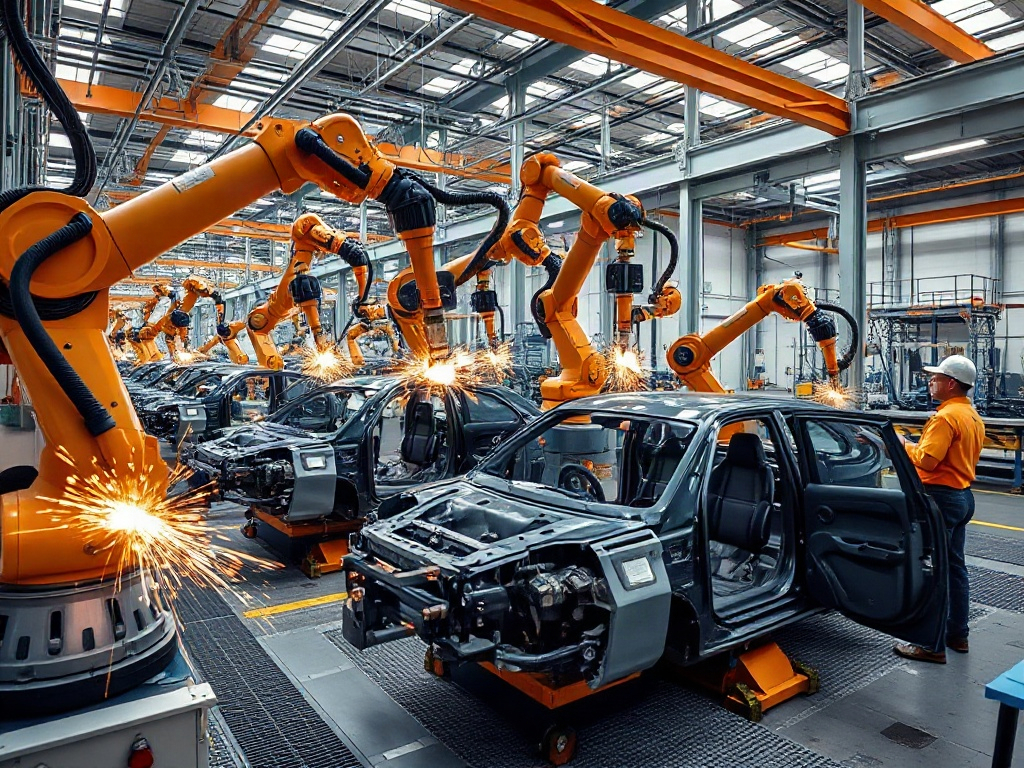
The second model is more complex but more stable. It automates tasks that are highly repetitive and low-judgment—sorting, transport, inventory—to free up human capacity for the tasks where judgment matters: exception management, customer service in complex situations, real-time route optimization. In that framework, technology does not compete with the worker; it redefines what the worker does.
FedEx's alliance with Berkshire Gray, at least in its public formulation, seems to lean more toward the second model than the first. The focus is on the efficiency of distribution centers, not on massive workforce reductions. If this orientation is maintained during implementation, the value generated is more likely to be distributed among various players in the chain: the company that processes faster, the customer who receives sooner, the worker who operates under safer conditions, and the technology provider that has a proven use case to scale with other clients.
The Model FedEx Is Choosing Has a Precise Name
What FedEx is building with this strategy is not simply a network of suppliers. It is an architecture where competitive advantage does not reside in owning technology but in being the best integrator of external technologies at a global scale. That is, in strategic positioning terms, a long-term bet much harder to replicate than having a patent or a proprietary system.
A patent eventually expires. A proprietary system can be copied with sufficient investment. But the ability to select, integrate, and manage a portfolio of technological alliances with aligned incentives is an organizational competency that takes years to develop and cannot be bought with a financing round.
The real risk does not lie in the decision to ally; it resides in the execution of governance. Companies that have failed with this model did so not because they chose external partners, but because they did not design contracts, evaluation mechanisms, and exit conditions with sufficient precision to maintain negotiating power when partners became indispensable.
In the value distribution that FedEx is configuring, Berkshire Gray gains visibility, scale, and a top-tier global reference case. FedEx gains implementation speed and capital flexibility. The worker benefits to the extent that automation targets hazardous or repetitive tasks without workforce reductions. The customer benefits if greater efficiency translates to shorter delivery times or more competitive prices. The only party that loses in this framework is the alternative model: the long-term internal bet that FedEx chose not to make, and with it, the risk of being trapped in R&D costs that do not generate a differential advantage. The competitive advantage that cannot be bought or replicated arises when all actors in a network prefer to stay within it because it is more profitable than leaving.