
What Uber Never Had: Time to Build Before Selling
On March 13, 2026, Travis Kalanick—the co-founder who exited Uber amid a corporate scandal in 2017—made a public return to present Atoms, an industrial robotics company with three operational divisions: food, mining, and transport. This was not a funding round or a press conference with flashy animations; it was a systematic unveiling of eight years of quiet work, during which the company employed thousands of people, none of whom could mention their employer on LinkedIn.
The story has an obvious hook: the return of the tech sector’s favorite villain. But the financial angle is even more intriguing. Kalanick built Atoms from City Storage Systems, his post-Uber holding company, which included CloudKitchens, a ghost kitchen operator leasing cooking infrastructure to food delivery brands. In other words, even before pivoting to robotics, he had a business generating cash flow through real operations with real customers. This fundamentally alters the narrative of the launch.
There are no published revenue figures. No disclosed valuation. No celebrated Series A round. What exists is a company that spent nearly a decade building products, testing operations, and—presumably—funding part of its existence through the revenues of CloudKitchens. For any financial leader who has witnessed the typical cycle of tech companies, this pattern warrants attention.
The Math Behind the Silence
There’s a very specific numerical logic in operating quietly for eight years. When a company has no media coverage, there’s no pressure to demonstrate quarterly growth in front of venture capital funds. Without that pressure, the incentives shift: instead of hiring to appear large, the hiring is focused on producing. Instead of spending on brand positioning marketing, funds are allocated to engineering. The cost of reputation acquisition falls to zero because no one knows you exist.
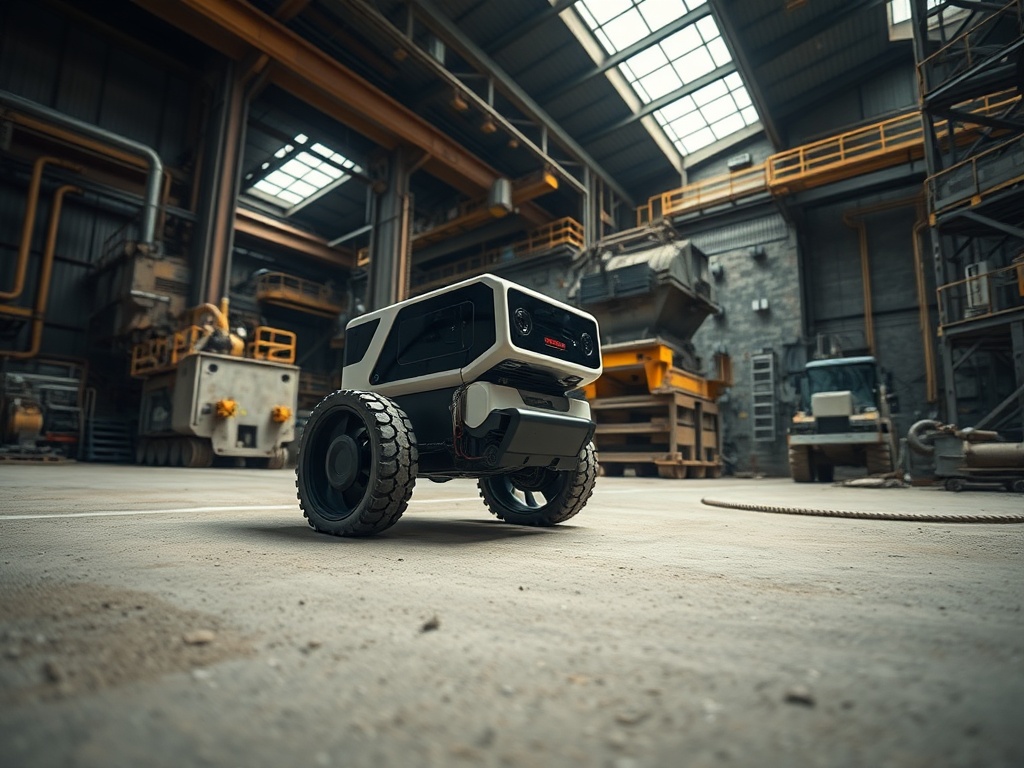
The Atoms Transport division is built upon what Kalanick describes as a "base chassis"—a platform with energy, computing, and sensors serving as the foundation for multiple variants of wheeled robots tailored to specific tasks. The parallel the company draws is to automotive platforms: a single structural base that supports a sedan, a truck, or a cargo vehicle. Translated to unit economics, this means that the cost of product development is spread across multiple revenue streams. If the chassis costs X to develop, but it serves mining, food logistics, and industrial transport, the cost amortized per unit sold in each vertical significantly decreases.
That’s margin architecture before there’s a single customer. It’s not magic; it’s platform design with financial prudence from the engineering stage. And it’s precisely what Uber never managed in its autonomous vehicle division, which spent billions developing technology for a single use case (passenger transport) before clarifying the product's unit economics.
The ongoing acquisition of Pronto, the autonomous vehicle startup for industrial and mining sites founded by Anthony Levandowski—Kalanick’s former colleague at Uber and an ex-Googler—fits into this logic. Kalanick was already the largest investor in Pronto before the announcement. Buying what you already know, rather than building from scratch, mitigates execution risk and shortens time to first revenue in the mining division. It’s a vertical integration move with the acquisition cost partially funded by the buyer themselves.
Why Wheels Triumph over Humanoids in the Spreadsheet
Kalanick was straightforward in his public interview on March 13: humanoid robots have their place, but specialized wheeled robots operate more efficiently in large-scale industrial environments. He humorously commented that after watching a marathon of humanoid robots in Beijing in 2025, he couldn’t help but think how much better everything would work if they had wheels.
That’s not merely an aesthetic preference. It’s a decision about operational cost structure. A humanoid robot requires dynamic balancing systems, complex joints, higher sensor density, and coordination software that still consumes a substantial portion of the available computational resources. A wheeled robot in a controlled environment—a mine, an industrial kitchen, a logistics warehouse—operates on predictable surfaces, with defined routes, in repetitive cycles. The cost of failure per unit is lower. Maintenance costs are minimized. The learning curve for navigation software is shortened.
The competitors that Atoms faces are formidable on paper: Amazon’s robotics programs, Tesla’s efforts with Optimus, Aurora Innovation in autonomous transport. But none of them concentrate on the wheeled robotics segment for industrial environments unrelated to passenger transport. Atoms is not competing in the same ring; it's defining a narrower ring where its eight years of quiet development represent a real-time advantage over rivals who split their focus across multiple markets.
The operational question that remains open—highlighted even by TechCrunch in its coverage of the launch—is how exactly Atoms plans to execute in mining and transport beyond the acquisition of Pronto. The food divisions are supported by CloudKitchens’ infrastructure. The mining and transport divisions depend on successfully validating the base chassis in field conditions, through real work cycles, under adverse weather conditions, and with industrial clients who do not tolerate failures in availability.
The Only Number That Validates Eight Years of Silence
There’s one metric Atoms must present before any external analysis can be definitive: the first volume contract signed with a paying client in mining or transport. Not a pilot. Not a letter of intent. A contract with unit pricing, committed volume, and penalties for non-compliance.
CloudKitchens provided something valuable during these years: the opportunity for operational revenues from a kitchen leasing business to partially subsidize robotics development without needing to report losses to an external fund. That stands in stark contrast to the hypergrowth model financed by venture capital that Uber perfected—which ultimately cost its investors and its founder control over the company’s direction.
If Atoms has revenues from CloudKitchens flowing into its treasury, every robot leaving its production line already has part of its development cost amortized. If the base chassis functions as a multi-vertical platform, each new customer in mining reduces the unit cost of robots in food. And if Pronto brings in existing contracts from industrial sites from day one post-acquisition, Atoms will have purchased its first revenue base instead of building it from scratch.
Eight years of silence do not prove the product works. But they do demonstrate something much harder to fabricate: that the company survived without needing market applause to continue existing. The market applause that really matters comes with a signed purchase order, and that’s the only validation that turns a robotics platform into a business.