
Cybersecurity: From Insurance to Operational Cost in an Armed Internet
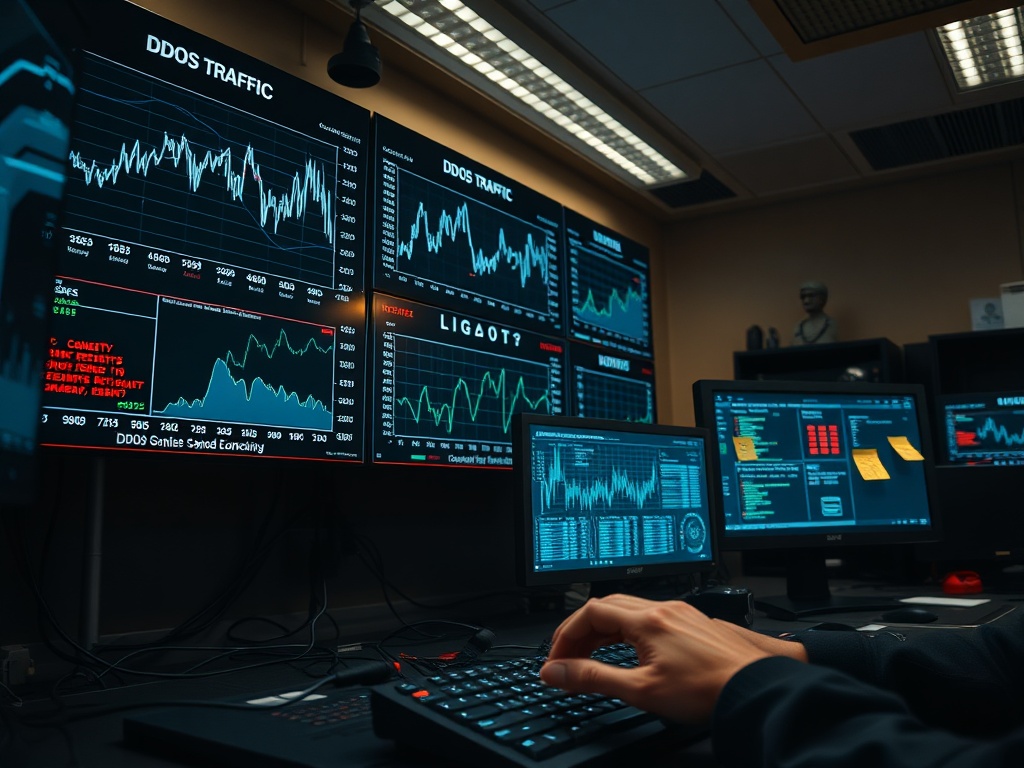
Cloudflare has quantified a sentiment many technical teams witness daily but which is often treated as a contingency in boardrooms: attacks have become industrialized. It’s not just that there are more incidents; the economic unit of digital crime has evolved. According to their 2026 Threat Report, the company blocks 230 billion threats daily, records a baseline of 31.4 Tbps in DDoS attacks, and notes that 94% of login attempts come from bots. Simultaneously, 63% of logins in the past three months involved credentials leaked elsewhere.
This combination explains why the pertinent conversation has shifted from "how do we prevent the next big attack?" to "how do we design a digital operation that functions under constant siege?" The Internet, practically speaking, is becoming "armed": its scale, automation, and speed are being used as weapons. When the marginal cost of attempting an attack nears zero, defenders stop competing with individual talent and begin competing with process engineering.
The Industrialization of Attack Changes the Risk Economy
In the corporate world, a manageable threat is typically episodic: it arises, is addressed, and resolved. What Cloudflare illustrates is something else: a production system. 230 billion blocked threats daily does not describe a wave; it describes an assembly line where volume does the work.
This scale leap is evident in DDoS attacks. A baseline of 31.4 Tbps normalizes a type of aggression that was once considered extreme. The business consequence is direct: downtime and service degradation are no longer rare; they turn into an operational variable that needs to be modeled just like demand or fraud.
Access is also being industrialized. If 94% of login attempts are bots, logging in ceases to be a gesture of trust and becomes an inevitable friction zone. And if 63% of logins rely on credentials already leaked, customer identity becomes a "reused" data point exploited by third parties at scale. The relevant takeaway for a CFO is not technical; it is accounting-focused: costs associated with fraud, support, chargebacks, reputation, and compliance are bound to grow if a business insists on treating authentication as a screen rather than a system.
The most revealing detail in the report is the time factor. Cloudflare documents a case where a vulnerability was exploited 22 minutes after its proof of concept was published. This insight undermines a common assumption in medium-sized organizations: the idea that there is "margin" to get informed, prioritize, and then patch. With windows of just minutes, the advantage lies not in intent, but in defensive automation and preparedness.
AI Doesn't Just Accelerate: It Lowers the Cost of Digital Crime
The report highlights that malicious actors use generative AI for tasks like network mapping, exploit development, and deepfakes, enabling high-speed operations with less skill required. The market implication is uncomfortable: by lowering the barrier to entry, the number of potential attackers increases, and “attempts” multiply, even if the individual success rate is low.
Cloudflare also claims to have recorded the “first AI-based attack” observed by the company, where an actor used AI to locate high-value data and compromised hundreds of corporate "tenants,” characterizing it as a highly impactful supply chain attack. Beyond the individual case, the pattern is what matters for strategy: AI acts as a cost compressor. It reduces exploration costs, customization costs, and iteration costs.
In digital businesses, almost all conversion improvements come from reducing friction. Applied AI for crime does the same, but on the other side: it reduces friction to attempt and repeat. This asymmetry forces companies to abandon artisanal defenses and shift towards default defenses.
Here emerges a typical management mistake: treating security as "technology to purchase" rather than "behavior to redesign". With bots dominating access, any growth KPI based on registrations, logins, or traffic becomes contaminated. If the business monetizes ads, its audience metrics degrade; if it monetizes subscriptions, its pipeline fills with noise; if it monetizes transactions, verification costs increase as do fraud costs. AI doesn’t just create a new adversary; it creates a new environment where traditional indicators cease to be reliable unless they are instrumented against malicious automation.
When Login Becomes the Product: Consumers Hire Continuity and Control
My professional obsession is understanding what "advantage" the user buys when paying for a service. And in this report, the advantage is clear: the customer is not buying "security" as an abstract attribute; they are hiring continuity, control, and absence of friction.
Cloudflare's data regarding compromised credentials and bots transforms identity into a daily battlefield. The paradoxical consequence for customer experience is: to defend, friction is added; but that friction punishes legitimate users. This is the dilemma that separates scalable companies from those that become cost-prohibitive and slow.
The best business responses aren’t about blindly adding more authentication steps; they involve designing defenses that are aggressive against bots and smooth for humans. If the organization fails to make this distinction, the consumer experiences the service as unstable or hostile. And when trust erodes, the customer doesn’t analyze architecture: they migrate.
This industrialization also shifts the competitive landscape. Sectors highlighted by Cloudflare as particularly targeted by DDoS—Gaming and Gambling, IT and Internet, Cryptocurrencies, Software, Marketing and Advertising—tend to operate with traffic spikes, high exposure, and latency sensitivity. If attacks become "normal," resilience turns into a commercial differentiator. It’s not just marketing; it’s survival. At the edge, availability is part of the value proposition.
For digital startups and SMEs, the risk is dual. First, because they can’t absorb the complexity of a traditional security program. Second, because as they grow, they attract malicious automation before building internal muscle. This opens space for winners who package defense as a service, with simple implementation and variable costs. Not as a trend, but because the market is forcing a change in financial architecture: moving from fixed costs of specialists to variable costs of platforms and automation.
The Geopolitical Board Enters Infrastructure: Security as an Operational Condition
The report also mentions activities of Chinese state actors, including groups like Salt Typhoon and Linen Typhoon, with priority targets being North American telecommunications and commercial, governmental, and IT services sectors, having a “grounded” presence for long-term geopolitical advantage. The prudent interpretation of this in business terms is that the threat is no longer just criminal and transactional; it can also be strategic and persistent.
When there is “pre-positioning” in critical infrastructure, the cost of an interruption is not merely downtime. It entails operational uncertainty. For regulated industries or those with essential infrastructure, this necessitates elevating the minimum standards of resilience and monitoring.
Cloudflare describes a shift from stealth exploitation to attempts at blackout scenarios, with DDoS as a potential precursor to more damaging operations. In terms of corporate governance, this compels the movement of cybersecurity from IT reporting to a transversal capability: business continuity, vendor management, and response preparation.
The hard lesson is that the weak link is often the third party. The case cited by Cloudflare about a supply chain attack affecting multiple corporate "tenants" illustrates systemic risk: a compromised vendor becomes a multiplier of damage. At a contractual level, this drives the need to review minimum requirements, shared monitoring, and contingency plans. At a product level, it pushes to reduce reliance on fragile integrations and to design segmentation to prevent cascading failures.
What the C-Level Must Accept: Continuous Defense, Not a "Security Project"
The pattern emerging from the report is operational: automated attacks, massive attempts, compressed exploitation windows, and traffic contaminated by bots. In this context, treating cybersecurity as a project with a defined start and end yields the same result as treating accounting as a project.
For a CEO, the relevant decision is which part of the business becomes “trust infrastructure.” If the company relies on accounts, login and session management become assets. If it thrives on transactions, verification is an asset. If it operates on availability, DDoS mitigation is an asset. Investment is justified not out of fear but in terms of revenue protection, fraud reduction, lower operational support burdens, and brand preservation.
For a CFO, the useful language isn’t “more tools,” but avoided costs and converted costs: automating detection and mitigation to reduce human hours; standardizing controls to decrease repeated incidents; and, above all, making security a component of the cost of serving a digital customer.
Cloudflare's report does not describe a hypothetical future. It outlines the present of an Internet where attacks have processes, scale, and automation. The business that survives will be the one that translates this reality into design.
The success of the next winners will depend on a simple truth about consumer behavior: users are hiring continuity and control of their digital identity and will penalize any service that shifts the invisible cost of an armed Internet to them.