
ChartHop Embraces Autonomous Execution in Human Resources
A pattern recurs with almost comical regularity in the human resources technology market: a company launches a new layer of artificial intelligence, the press release speaks of "actionable insights," and HR operations teams continue to drown in the same old spreadsheets. Diagnosis arrives on time. Execution, never.
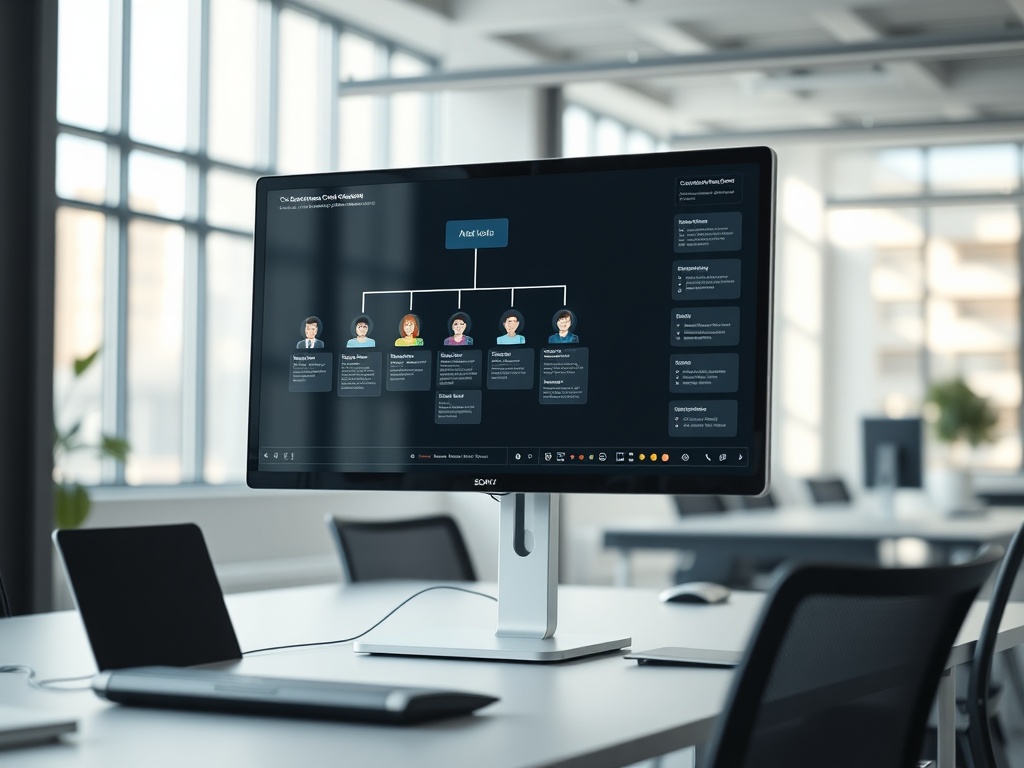
ChartHop has just done something different. On March 24, 2026, from New York and with a live demonstration at the Transform 2026 conference in Las Vegas, the company launched ChartHop AI Pro, a suite that not only tells HR teams what they should do but executes it directly: approving headcount requests, synchronizing records between entities, generating executive briefings by unifying data from revenues, customer satisfaction, marketing pipeline, and personnel metrics. Ian White, the company's founder and CEO, articulated it with a clarity rarely heard in these launches: "The bottleneck isn’t the insight; it’s the execution."
That statement merits financial analysis, because behind it lies a business thesis with concrete implications about margins, implementation costs, and, above all, about who bears the bill for growth.
What the Market Has Ignored for a Decade
The global human resources technology market is valued at $47.51 billion in 2026 and is projected to reach $77.74 billion by 2031, growing at a compound annual rate of 10.35%. It’s a large market with enormous institutional appetite for automation. Yet the dominant proposal in recent years has been exactly the same: prettier dashboards, smarter alerts, and more sophisticated recommendations. All converge on the same deadlock: a compensation analyst or HR operations director who continues to make decisions manually after reading the report.
The cost of that deadlock is not abstract. Every manual process remaining in human hands after a strategic decision—updating employee records, notifying managers, synchronizing organizational structures in legacy systems—represents person-hours that don’t appear in the technology budget, but on the payroll. These are the invisible costs that inflate the real cost of operating an HR function, and no software vendor has had clear incentives to eliminate them because, paradoxically, that friction justified service contracts and implementation consultants.
ChartHop AI Pro introduces the so-called Agentic Actions: autonomous execution modules that reduce the burden of full-time equivalent (FTE) roles dedicated to operational tasks in legacy systems. This has a direct financial translation. If a people operations team of 10 conservatively dedicates 30% of their time to post-decision execution work, we are talking about 3 FTEs consumed by tasks that generally don’t require human judgment. At an average cost of $80,000 annually per FTE in markets like North America, those 3 FTEs represent $240,000 annually in costs that could transform into strategic capacity or simply be freed from the operational budget.
Product Architecture and Pricing Logic
No pricing figures have been disclosed for AI Pro, which is a deliberate and financially smart decision at this stage. Early access is managed through customer success managers, a move that allows ChartHop to calibrate the willingness to pay of its installed base—Airbnb, Mitsubishi, Headspace, 1Password, among others—before setting a list price that might undervalue it.
Integration with the Model Context Protocol (MCP), an open standard for connecting with financial and CRM systems, is the component that interests me most from a revenue architecture perspective. So far, custom integrations between HR platforms and finance or sales systems have been six-figure consulting projects with timelines of 6 to 18 months. With MCP as an interoperability layer, ChartHop can reduce that integration cost—which today is borne by the customer—and transfer some of that value to its own subscription price. The mathematical result is straightforward: the customer pays more for the software but spends less overall. That’s what allows a value proposition to survive a CFO’s scrutiny.
A 4.3 out of 5 rating on G2 with 161 reviews is the most honest data available about the product’s maturity. Users appreciate the interface and the visualization of organizational data, but point out frictions in integrations with HRIS and maintaining data quality. That second point is critical: an agentic system that autonomously acts on poor-quality data does not reduce costs; it amplifies them. If an agent approves a headcount request based on outdated records, the cost of error far exceeds the cost of the manual process it intended to replace.
This does not invalidate ChartHop’s bet, but it defines the perimeter where product execution matters more than concept.
Who Wins, Who Loses, and When
For ChartHop’s current customers in the high-growth segment—companies with between 200 and 2,000 employees whose organizational structures change frequently—AI Pro presents a reasonable economy. The investment in upgrading the platform can be justified by reducing operational hours in the first 12 months, without needing to build a complicated business case.
For legacy HRIS providers that have relied on maintaining manual processes as a justification for their service fees, the threat is more structural than immediate. ChartHop does not yet have the scale to displace them in the enterprise market of 10,000 employees or more, where purchase cycles are long and multi-year contracts create inertia that no demo in Vegas can overcome in 18 months. But the market direction is set.
The piece the announcement does not address, and which will determine whether this bet is funded by self-revenue or continues to depend on external capital, is the speed of conversion of the installed base to the new tier. ChartHop AI Pro is sustainable only if the price increase captured per customer exceeds the incremental cost of operating the agents and keeping the MCP integrations active. Without that positive delta at scale, the most sophisticated product in the portfolio becomes the company’s most expensive cost center.
The Metric That Matters When Agents Make Decisions
The debate in the sector has centered around whether artificial intelligence can think like a human. That is the wrong discussion for a CFO or COO evaluating a People Operations platform.
The metric that matters is different: how much does each decision executed automatically cost versus how much it cost to execute manually, and with what error rate. If ChartHop AI Pro can demonstrate that a headcount approval processed by an agent costs $4 in compute and supervision time, versus $47 in person-hours of the previous process, with an error rate below 2%, the conversation with the budgeting committee becomes trivial.
That’s the language that closes contracts in the enterprise market. And that demonstration does not happen at a conference in Las Vegas; it occurs in the first 90 days of real use with customers who have clean data, documented processes, and teams willing to cede operational control to an automated system.
Companies that learn to fund their technological growth with the operational savings that the same system generates do not need a funding round to justify product expansion. They pay for themselves, client by client, decision by decision executed.