
California Wine is Losing Not in the Vineyard, But in the Consumer's Mind
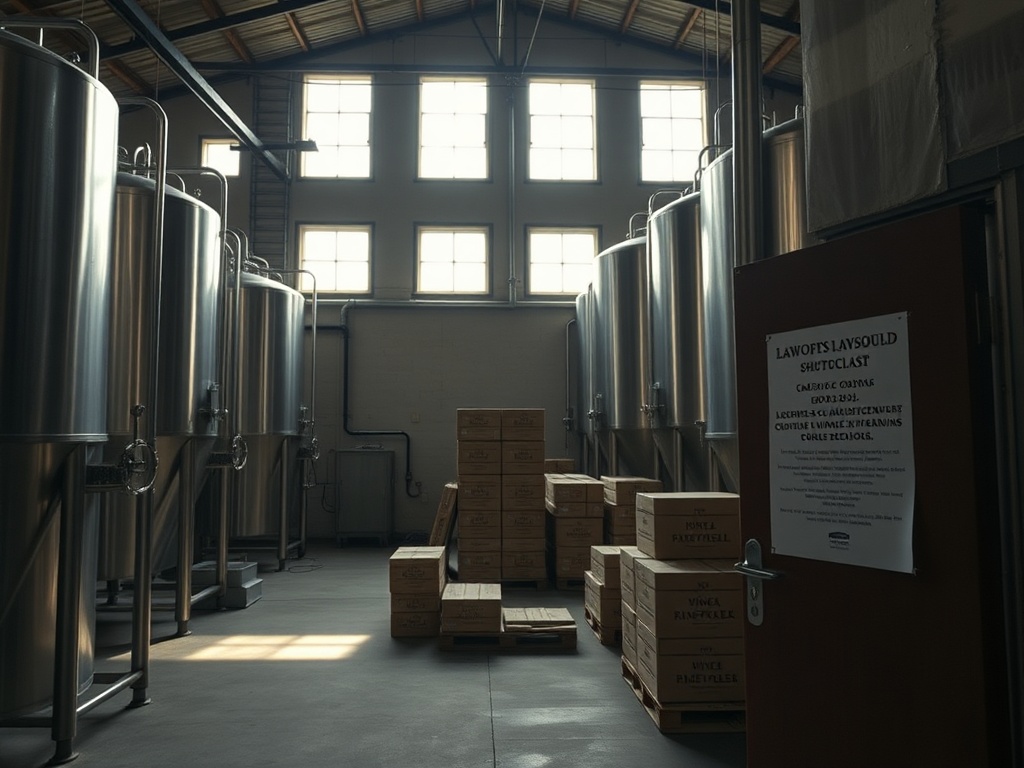
The California wine industry is entering a phase that, due to its speed and symbolism, resembles less a smooth correction and more a forced restructuring. By early 2026, three heavyweight names—E & J Gallo Winery, Jackson Family Wines, and Constellation Brands—reported closures of facilities and layoffs that, in total, exceed several hundred jobs. The most visible case is Constellation's closure of Mission Bell Winery in Madera, resulting in 212 layoffs effective March 31, 2026. Gallo, the largest wine supplier in the U.S., announced the permanent closure of Ranch Winery in St. Helena along with additional cuts across various locations, accounting for a total of 93 layoffs. Jackson Family Wines shut Carneros Hill Winery, an underutilized facility, resulting in 13 layoffs effective in April. All this occurs as the U.S. market experiences a revenue drop of over $1 billion in 2025 and a production contraction of around 6 million cases, alongside a phenomenon that, in any other industry, would be read as a capitulation sign: 38,134 acres of vineyards uprooted between October 2024 and August 2025.
The straightforward reading is operational: oversupply, unmanageable costs, and industry consolidation. The useful reading for marketing—the one that separates the surviving teams from those that merely cut back—is psychological. Wine is not competing against other beverages solely on price or distribution. It is competing for a place in the mental script of everyday consumption. And that script is changing.
Industry Contraction is the Symptom; the Disease is the Loss of "Consumption Moment"
Corporate press releases often wrap themselves in language of efficiency, capacity, and "market dynamics." In this crisis, the facts are strong enough to stand on their own. Constellation is closing a winery that has been in operation for over 100 years after losing a contract with Gallo and in line with its goal of $200 million in savings by 2028, while redirecting focus towards beer. Gallo is adjusting production and capacity, although it keeps its tasting rooms in Napa, Sonoma, and Paso Robles open. Jackson Family Wines describes its closure as a consolidation of a facility that functioned as "overflow," not tied to a specific brand.
The pattern that ties these decisions together is not only financial. It is a response to a consumer who no longer "hires" wine as frequently to solve specific situations. Demand is indeed falling. But what declines first—and subsequently drags down volume—is the mental availability of the product.
For years, wine was a culturally accepted solution for various tasks: accompanying dinner, gifting something "tasteful," signaling sophistication effortlessly, or building an evening ritual. If those tasks migrate to beer, ready-to-drink cocktails, or even occasional abstinence, the industry doesn't just lose a purchase; it loses a habit. And when the habit erodes, marketing that is limited to "telling the story of the terroir" becomes an expensive luxury.
Data from IWSR cited in the coverage indicates a double whammy: Baby Boomers are drinking less, and younger consumers aren’t strongly entering the wine market, preferring beer and spirits. The result is a broken funnel from both ends. In that context, oversupply is not an agricultural accident; it is a strategy that presumed cultural continuity.
Wine Has Become Cognitively Costly: Too Many Decisions for Increasingly Casual Consumption
In my experience analyzing behavior, one point that companies consistently underestimate is this: when consumption becomes more casual, the customer’s tolerance for thought decreases. And wine, especially in the mass and mid-market segment, has accumulated cognitive friction by design.
To buy the "right" bottle, the average consumer feels they must decode varietal, region, vintage, sugar levels, tasting notes, pairing, social prestige, and also navigate a price that often seems to say, "if you don’t know, pay more to avoid making a mistake." That burden is acceptable when the wine is anchored to a special occasion. It is toxic when the occasion is a Tuesday.
Meanwhile, beer and many spirits have managed to reduce mental work. The packaging and branding make the promise, the ritual is simple, and the experience is predictable. The wine industry, in contrast, tends to reward complexity as if it were synonymous with value. For the young consumer—and for a growing segment of adult consumers—complexity reads as risk: risk of purchasing poorly, of being socially exposed, or of overspending.
Here a paradox arises: major producers, due to scale, can standardize and simplify the experience; but they also tend to multiply portfolios, sub-brands, and messages to capture micro-segments. In a contracting market, that portfolio architecture becomes noise. Consumers do not engage more due to having 40 options; they engage less out of fear of making the wrong choice.
In this scenario, keeping tasting rooms open—as Gallo plans to do—makes sense, but as a tool toward a clear objective: reducing anxiety, providing certainty, converting an abstract product into an accessible ritual. Tourism and experience can function as a "psychological crutch" to sustain the category but do not replace the daily battle on the shelf.
When Balancing Act Rules, Marketing Becomes Surgery: Cutting Capacity Without Cutting Trust
The current cuts are rational from a spreadsheet perspective. With declining revenues, reduced production, and closures, fixed costs become the enemy. But there is a strategic risk: the industry might confuse operational adjustment with market solution.
Constellation is seeking savings and leaning toward beer, where Modelo and Corona have been strong performers. That move is coherent with demand, but it communicates something to the wine consumer, even without saying it: "the future lies elsewhere." In categories with cultural identity, those signals matter. The closure of a century-old winery is not just a labor event; it is a symbol of retraction.
Gallo and Jackson, on the other hand, are consolidating capacity. Jackson explicitly states that Carneros Hill was underutilized capacity. This type of consolidation is logical; the challenge is the second step: preventing the consumer from perceiving that wine is becoming a defensive category, pushed by discounts and liquidation sales.
The industry is already facing an oversupply context so severe that, according to the coverage, grapes are being left to rot because the cost of harvesting exceeds the market price. Additionally, the loss of $360 million in exports to Canada due to boycotts related to tariff tensions adds pressure. In such an environment, the easy route is to flood the market with promotions. The correct path is more uncomfortable: rebuilding perceived value while reducing the fear of making mistakes.
For marketing, this requires a near-surgical discipline. The brands that endure tend to do three things without explicitly stating them:
1. Reframe wine as a simple solution: less technical jargon, more clarity about occasion, flavor, and outcome. Not “notes of cassis”; “fruity, easy, for pasta.”
2. Lower the entry cost: formats, prices, and narratives that don’t penalize the novice. If the first sip feels like an exam, there’s no second.
3. Protect consistency: in a crisis, changing the experience too much for savings can break trust. The temptation to “optimize” inputs is high; the cost of consumers detecting variability is greater.
None of this is incompatible with quality. It is incompatible with accidental elitism, which arises when a category designs its communication for experts and then wonders why beginners don't engage.
Recovery Will Not Come From the Product; It Will Come From Reestablishing the Habit with Less Anxiety
There’s a phrase that haunts me every time I see mature industries clashing with cultural changes: customers do not abandon products; they abandon frictions. The crisis of Californian wine—measured in layoffs, closures, uprooted acres, and lost millions—is the result of failing to protect the habit.
That habit is protected by making the choice easy, ensuring the outcome is predictable, and minimizing social risks. When young consumers choose spirits or beer, they are not necessarily "betraying" wine; they are buying peace of mind. They are opting for an experience that requires less interpretation and context.
The industry still has extraordinary assets: national branding, tourism, tradition, production capacity, and a base of loyal consumers. But these assets are not automatic defenses. They are tools that must be directed toward a behavioral goal: reinstating wine's clear place in the routine with messages and formats that reduce mental loads.
The cuts and closures of 2026 are a brutal reminder that strategy cannot be limited to aligning capacity with demand. That is necessary but insufficient. The market is already voting with its attention and its habits.
C-Level teams that emerge strengthened from this phase will be those that accept an uncomfortable truth: in contracting categories, growth is not bought by making the product shine more; it is bought by deliberately investing in turning off the fears and frictions that make consumers shy away.