
The Basmati Rice IPO Revealing How an SME Funds Its Growth Without Borrowing
When a family-run business with over four decades processing basmati rice in North India decides to go public, the story isn’t just about the IPO itself. It's about what this IPO reveals regarding the sustainable path for SMEs to finance growth: turning buyers into a source of capital.
Amir Chand Jagdish Kumar (Exports) Ltd, based in Haryana, manufactures and exports basmati rice under the brand "Aeroplane" to over 37 countries across four continents. For the nine months ending December 2024, the company recorded operating revenues of ₹1,421.3 crore and a net profit of ₹48.77 crore. Compared to ₹123.17 crore total revenues in 2022 and a mere ₹1.67 crore profit that same year, these numbers demonstrate a trajectory of rapid growth achieved through operational volume and working capital, not by mere chance.
The challenge, however, is that working capital in the basmati rice business is not just an accounting detail. It's the lifeblood of the model.
Why Working Capital is the Lifeblood of the Agro-industrial Model
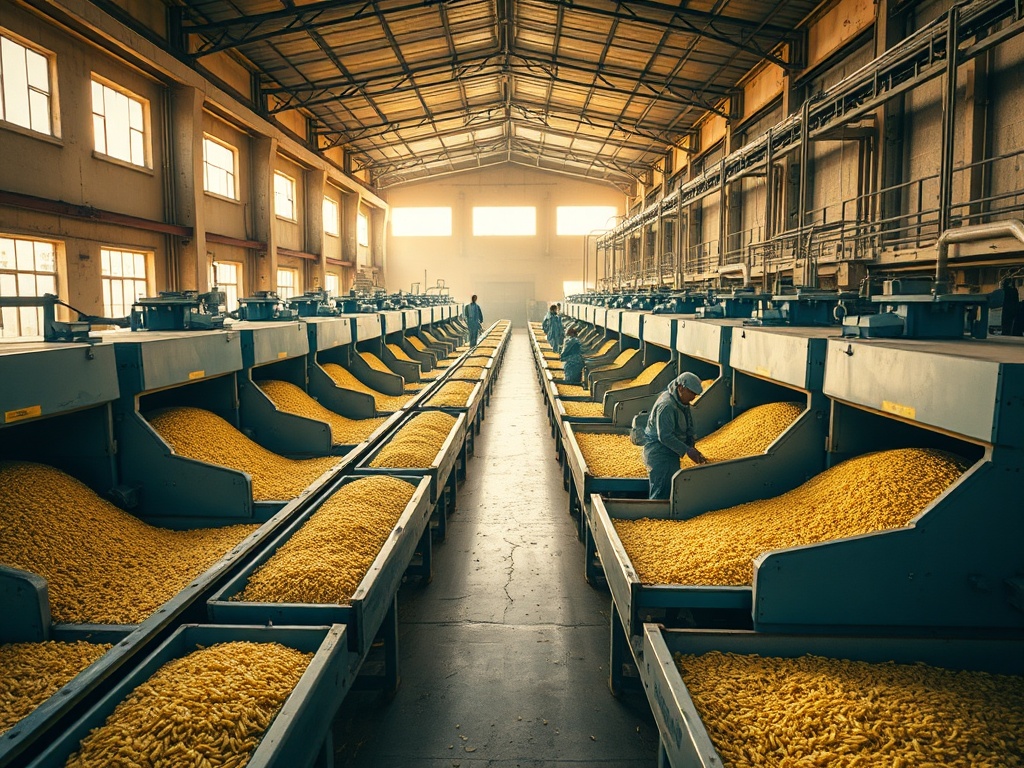
Basmati rice is a seasonal crop, purchased during specific windows throughout the year, stored, processed, and distributed over several months. For a company with 550,800 metric tons of installed capacity, 325 buying agents spread across agricultural markets in North India, and 425 domestic distributors plus 50 international ones, this operational cycle requires a massive amount of money tied up in inventory before a single income is realized.
This is not merely a management issue; it’s the structural mechanics of the sector. Here lies the crux of the financial decision made by this company. Of the ₹440 crore it aims to raise through its IPO, ₹400 crore is earmarked exclusively for working capital. The remainder, along with ₹13 crore from a pre-IPO round, will cover general corporate purposes.
This allocation is not conservative. It’s brutally honest about what the real bottleneck of the business is. Many companies going public present documents where funds are earmarked for "expansion," "technology," or "new markets"—categories that sound appealing but often obscure a lack of clarity regarding actual fund use. Amir Chand puts 90% of the capital raised directly into the revenue-generating engine. That, in terms of financial architecture, is a statement of operational coherence.
The structure also removes the component of an offer for sale: there are no promoters or existing shareholders stepping back. 100% of the offering consists of new shares, meaning all the money goes into the company. This decision has direct implications on institutional investors' willingness to pay, highlighting that the founders trust the company will continue to generate value post-listing and are not using the IPO as a personal exit mechanism.
The Brand as a Silent Price Perception Multiplier
Another angle that IPO analyses often overlook, as it doesn’t appear on the balance sheet, is the brand architecture of "Aeroplane." The company does not sell basmati rice under a single reference. It operates over 40 sub-brands under the same umbrella and has diversified into consumer products like wheat flour, gram flour, salt, and sugar.
This strategy addresses one of the structural problems faced by agro-industrial SMEs competing against giants like KRBL Ltd (India Gate brand) or LT Foods Ltd (Daawat brand): the inability to capture various price segments with a single offering. With 40 sub-brands, the company can reach from the mid-range segment to the premium one, attuning perceived value without cannibalizing its own margins.
The perceived certainty a well-established brand conveys over four decades directly affects its capacity to charge more than unorganized competitors. In India, the basmati rice sector still has a significant share of operators without branding or certification. In contrast, having ISO 22000:2018 certification and HACCP accreditation is not merely decorative; it justifies a higher price and reduces purchasing friction for both domestic distributors and international importers operating under food safety regulations.
The venture into the Middle Eastern market, highlighted as a strategic focus in the offering documents, reflects this same logic. International certifications lower the entry barrier to markets with stringent import requirements and where institutional buyers need auditable suppliers. That positioning isn’t a soft advantage: it reduces the cost of acquiring distribution contracts and increases the average size of each order.
What the IPO Cut Reveals About Financial Maturity
The company initially filed a draft prospectus in June 2025 for an IPO of ₹550 crore. The final document reduced this figure to ₹440 crore. This ₹110 crore difference is not a market failure; it is a calibration exercise that few SMEs have the discipline to execute.
Raising less capital than initially projected, when there’s sufficient demand to justify it, usually responds to one of two logics: either the primary market showed signs of lower investor appetite during that specific window, or the company adjusted its operational needs projection based on more recent data. In either case, the decision to reduce size rather than maintain it for the sake of appearance reflects financial management prioritizing efficiency over ambition for headlines.
For an SME that has grown from ₹123 crore to over ₹1,400 crore in revenues relatively quickly, the temptation to raise as much capital as possible during the initial public offering is understandable. Resisting this temptation requires recognizing that the cost of excess capital, when there aren’t clear destinations for deploying it, translates into unnecessary dilution and pressure to yield returns before the operational cycle allows.
This is precisely the lesson that most agro-industrial SMEs do not learn until they have diluted their founders or accumulated structural debt that stifles organic growth.
The Path Many SMEs Fail to See in Time
This case of the basmati exporter illustrates a thesis applicable to any SME with capital-intensive operations: the optimal moment to access capital markets is not when the business is in a liquidity crisis, but when you already have the brand, certifications, distribution network, and financial history that mitigate perceived risk for investors.
Companies that reach that stage in a position of strength can structure the offering on their terms: no OFS, with surgical fund allocation, with a validated issuance price from a pre-round. Those that arrive late or weak must accept market conditions, dilute more than necessary, and finance through equity what should have been funded from revenues.
In concrete numbers: the pre-IPO of ₹13 crore at ₹172 per share was not just a capital round. It was a price signal with strategic function. It established a valuation anchor before the public offering, reducing institutional investor uncertainty and demonstrating real demand at that price prior to opening the order book.
Long-term business and financial success in this sector does not depend on how much capital is raised, but on how well structured the offering is to reduce perceived risk for the investor, maximize certainty about fund use, and eliminate friction that inhibits capital commitment. When these three elements align, the issuance price does not need to compete downwards.