
The Bankruptcy of Umbrella Armory: It's Not a Black Swan; It’s What Happens When Price Doesn't Guarantee Certainty
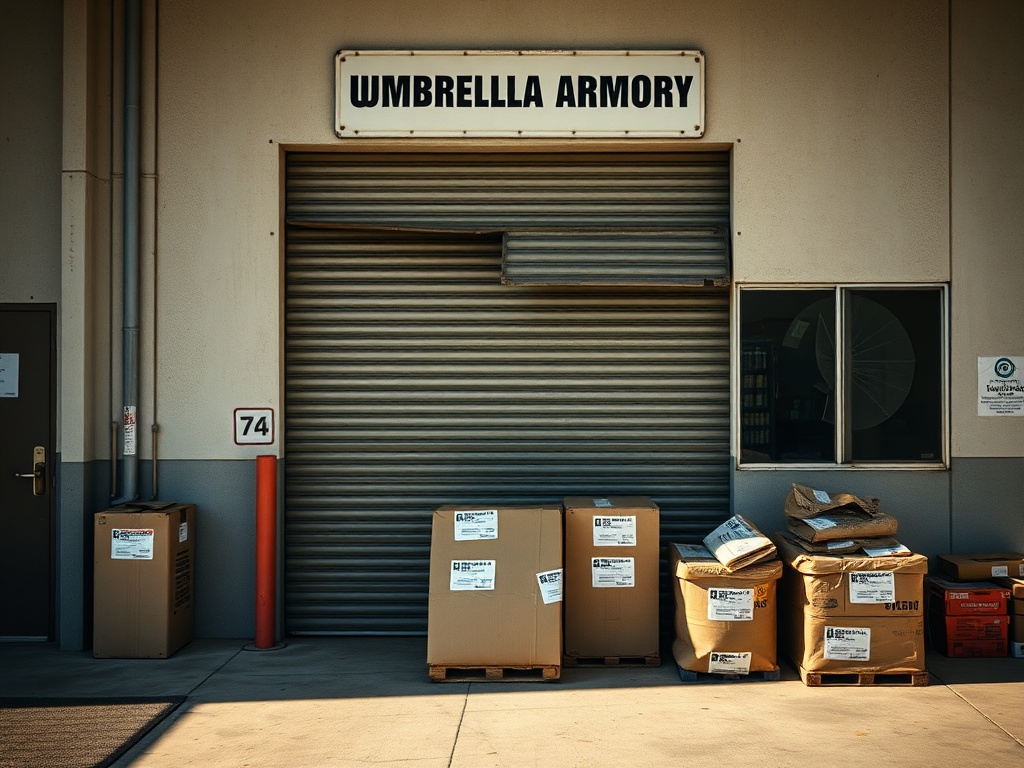
Umbrella Armory LLC, a California-based manufacturer of high-end airsoft equipment, filed for Chapter 7 bankruptcy on March 3, 2026, in the U.S. Bankruptcy Court for the Central District of California. Chapter 7 is not a restructuring to buy time; it's liquidation. When a business reaches this stage, the market has already rendered its verdict, and the balance sheet confirms it: total reported assets of $4,880.63 against liabilities of $148,986.59. The available cash was $1,880.63, split across two checking accounts, and the remaining equipment, furniture, and tools were estimated to have a resale value of around $1,500.
This figure does not depict a mere rough patch; it describes an organization operating without a cushion and with little capacity to absorb a downturn. Its primary creditors include a secured SBA loan of $94,601.40, credit card debt with Bank of America totaling $45,000, and outstanding balances to California tax authorities. The document itself anticipates that, after covering administrative costs, no distribution is expected for unsecured creditors.
This bankruptcy is being read as just another chapter in the post-pandemic adjustment in the recreational firearms industry and related sectors. This perspective is correct but insufficient. For an SME, the useful lesson does not lie in the headline; it lies in the mechanics: what part of the model leaves a company gasping for air when volume drops and consumers stop impulse buying.
When the Market Cools, Cash Becomes Judge and Party
The macro context helps to understand the impact. The industry related to weapons and recreation experienced a surge in demand during the pandemic followed by a strong normalization. The logic is simple: many people bought “once” and stopped purchasing. Political cycles also influence demand sensitivity. This pendulum does not forgive costly structures.
The issue for an SME is that normalization does not come with a heads-up email. It arrives as a drop in orders, increased returns, average tickets under pressure, and competition attempting to compensate for volume with discounts. If your company does not convert a significant portion of its fixed costs into variable costs, it’s not the “strategy” that absorbs the blow; it’s the cash flow, week by week.
In the case of Umbrella Armory, the presented balance suggests an uncomfortable operational reality: very little capacity to monetize assets if sales halt. With less than $5,000 in reported assets, there is no large inventory to save, nor a base of machinery with significant resale value. While this might sound efficient, it also implies fragility: a company dependent on current income to pay off past obligations.
And when liabilities are dominated by secured debt (SBA) and high-interest consumption (credit cards), the priority of claims leaves little room for maneuver. In a liquidation, cash does not suffice, the order of precedence prevails, and the SME is left without a narrative: only numbers.
The Silent Mistake: Charging "High-End" Without Selling Risk Reduction
Umbrella Armory operated in a niche that, in theory, tolerates high prices: custom airsoft rifles and premium parts. This type of product lives or dies by a very specific equation: the customer pays more when they believe they are buying a result, not just an object.
Here emerges a point many founders avoid because it sounds less romantic: high prices are not justified by “quality” in the abstract. They are justified by certainty. Certainty of delivery, performance, support, availability of spare parts, clear warranties, and a frictionless experience. In specialized products, that certainty is the real product.
The report reveals a detail that is dynamite for sales: the company had already stopped selling rifles on its website, while still selling small parts, according to the report. When a customization business is left selling parts, it typically indicates that the core of the model (large sales, high margins per unit, associated services) has lost traction or has become risky to operate. The customer perceives uncertainty, delays their purchase, and migrates.
The secondary effect is immediate: if the large ticket falls, the company attempts to compensate with smaller tickets. This increases transaction volume, attention, logistics, and complexity without ensuring sufficient margins. Friction rises just as cash flow diminishes.
Meanwhile, the advice noted in the report about consumers paying with cards to dispute charges if they don’t receive the product highlights the climate of trust: when the customer feels the risk of non-fulfillment, they do not pay “on faith.” They protect themselves. And when the customer protects themselves, their willingness to pay decreases, even if the product is technically superior.
Chapter 7 as a Symptom: There Was No Bridge Between Demand Cycle and Financial Structure
A Chapter 11 restructuring indicates that there is still an expectation of continuity. Chapter 7 indicates that the bridge has already broken. In the records, Umbrella Armory reported between 1 and 49 creditors and a mix of obligations that combine public banking (SBA), credit card debt, and tax liabilities. This trio is common among SMEs that grew during a demand spike and later found themselves trapped in the aftermath.
The pattern is often the same: during the boom, the company takes on debt to finance operations, inventory, tools, marketing, or expansion. This is not irrational; it’s a response incentivized by the market when orders come in easily. The error occurs when that debt becomes structural and the business does not build defenses: reserves, more favorable payment terms, pre-sales with conditions, or an offering that maintains margin even with reduced volume.
The presented balance sheet is particularly harsh due to the contrast between debt and assets: $148,986.59 against $4,880.63. This leaves two operational interpretations.
First: the company did not have sufficient liquid or realizable assets to renegotiate from a position of strength. Negotiating without assets and without cash means asking for patience with empty hands.
Second: even if intangible value existed (brand, design, know-how), in liquidation, that value is poorly captured if it is not packaged in contracts, licenses, or demonstrable cash flows. Reputation is an asset only when it continues to produce cash.
The report also mentions the presence of potentially hazardous materials at the operating site (lithium-ion batteries, compressors, propane tanks, and high-pressure air tanks). This is not a trivial detail: in liquidation, any factor complicating closure (handling, transportation, compliance) adds friction and administrative cost. In a case with such low cash, every friction weighs heavily.
What This Bankruptcy Teaches an SME Selling Specialized Products
The typical temptation when facing a demand drop is to “sell cheaper” to maintain volume. This response often destroys margins, erodes positioning, and, worse, does not solve the central issue: the customer was not just paying for price; they were paying for trust.
For an SME specializing in products, the strongest defense is to design the offering so that the high price seems low when the customer adds up avoided risks. This is achieved through architecture, not slogans.
Operationally, this architecture often includes conditions that elevate predictability and reduce friction: committed and accurately communicated delivery times; warranty policies that are not ambiguous; availability of spare parts and services; payment processes that protect both parties; and, where applicable, service packages that turn a one-time sale into a maintenance relationship.
Financially, the lesson is equally concrete: an SME cannot afford to fund itself with expensive debt if its demand is cyclical. If the model relies on a peak to meet fixed obligations, the business is not designed for survival; it is designed to rely on luck. A large secured loan against minimal realizable assets leaves the company without levers at the worst moment.
Umbrella Armory also fits into a wider trend: several companies in the sector have ended up in court in recent years, according to the same report. The point for the C-level of an SME is not to fear the cycle; it is to accept that the cycle always arrives and to design the business in such a way that the shock is not existential.
Business success is determined when the offering reduces friction, elevates the perceived certainty of results, and increases the willingness to pay with verifiable arguments, not when the market is euphoric and buying indiscriminately.