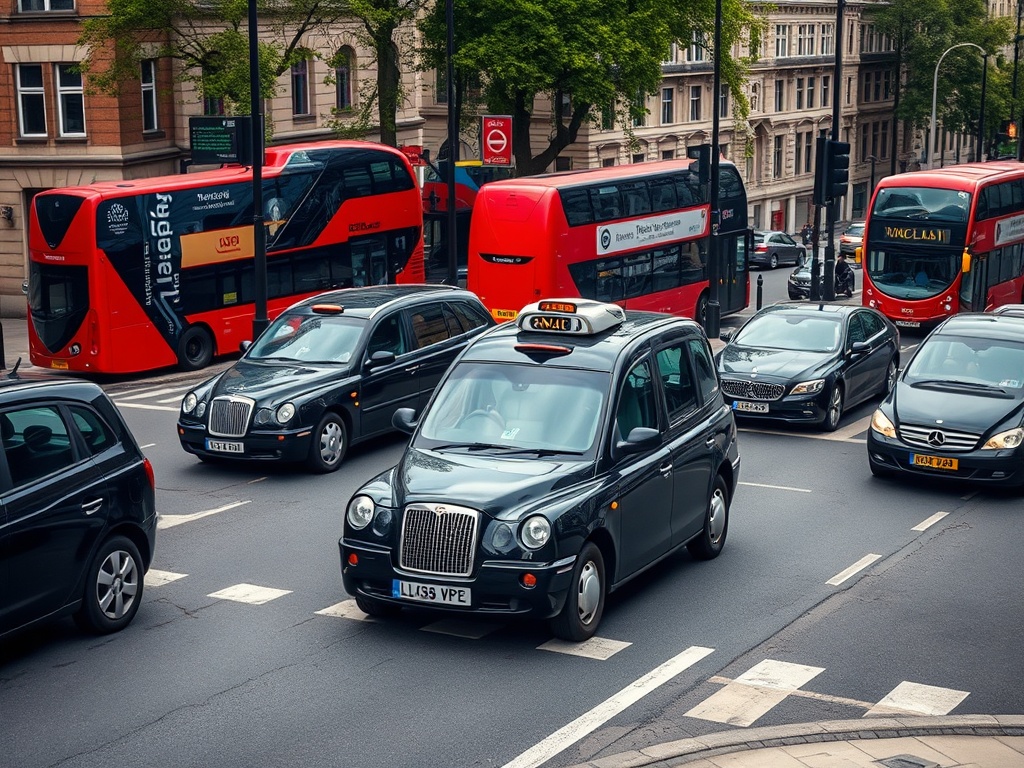

# The Complexity of London and the Autonomous Challenge
London, a city renowned for its maze of streets, faces a new challenge: the introduction of autonomous taxis. Although the technology promises to revolutionize transportation, its implementation in such a complex urban environment reveals not only technical limitations but human ones as well.
The famous 'Knowledge,' an exam that takes years for taxi drivers to master, is a testament to the geographical and cultural intricacy of the British capital. In this context, autonomous taxis are not just trying to navigate streets but also the intricate web of human expectations and regulations.
The Ego Trap in Innovation
The advancement of autonomous taxis in London seems more like an exercise in corporate ego than a pragmatic solution. The statement by Steven McNamara of the Licensed Taxi Drivers' Association resonates with an uncomfortable truth: technology, without a real problem to solve, becomes more of a display of power than a tool for change.
Organizations tend to fall into the ego trap, presenting innovations as trophies rather than solutions. Here, the challenge is not just technical but one of leadership. The lack of vulnerability to admit that the technology is not yet ready for such a complex environment reveals a crucial blind spot.
Missing Conversations and Leadership
The implementation of this technology in London is not merely an engineering issue. At its core, it reflects the missing conversations in boardrooms. Have leaders addressed the uncomfortable questions about the real viability and social impact of autonomous taxis?
The decision to push forward with such ambitious projects without a comprehensive understanding of the environment reveals a lack of unconditional accountability. Leaders must take on their roles not just as executors of technology but as architects of the culture surrounding its implementation.
Towards an Authentic Purpose
Organizational culture mirrors the conversations that are avoided for comfort. In the case of autonomous taxis, the purpose must be more than showcasing technological capability; it must genuinely address a real problem.
The advancement of autonomous taxis in London offers a valuable lesson: effective leadership is not measured by the ability to introduce technology, but by the skill to integrate solutions into the social and cultural fabric of a community.
True leadership emerges when pursuing an authentic purpose and having the courage to tackle the difficult conversations that the ego prefers to avoid. Thus, organizational culture becomes a reflection of a genuine purpose or a symptom of the conversations that were never had.