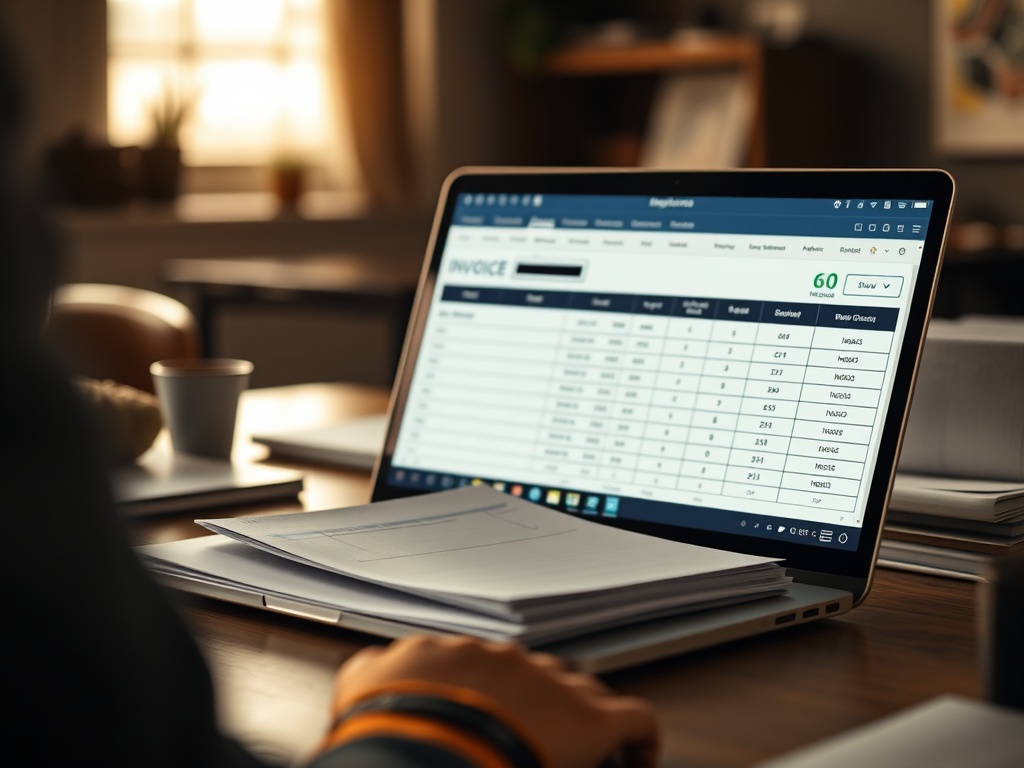

The Friction No One Audits Until It Hurts
Lush UK, the British cosmetics chain known for its ethical stance and rejection of unnecessary packaging, has just closed a deal with Quadient to automate its accounts payable operations. The news quickly circulated through financial channels, and in most media, it was filed away as yet another corporate tech decision. A misdiagnosis.
What Lush did wasn’t just purchase software. It made a financial architecture decision that has direct implications for any business with suppliers, invoices, and a finance team that still moves paper, whether physical or digital. For SMEs, which often operate with treasury teams of two or three people and margins that don’t forgive delays, the implications of this move should be unsettling.
The accounts payable process, in its most common version, works like this: an invoice arrives, someone reviews it, someone approves it, someone enters it into the system, and someone pays it. Each "someone" represents time. Each unit of time is cost. Each transcription error is a potential dispute with a supplier. And each day of delay in payment silently erodes a business relationship. For a company the size of Lush, with hundreds or thousands of active suppliers, that chain of accumulated friction is not an operational inconvenience: it is a measurable value leak.
The important question isn’t how much Quadient’s software costs. It is how much inefficiency that software is replacing.
Why SMEs Have Been Paying the Price for "Temporary Solutions" for Years
A pattern recurs with surgical precision among companies with 20 to 200 employees: the accounts payable process was built during the initial operation months when volume was manageable and a simple spreadsheet sufficed. Then the company grew, the volume of invoices increased, and suppliers multiplied. But the process stayed static, patched with more human hours and follow-up emails.
This has a technical name: hidden opportunity cost. The finance team that should be analyzing cash flow, identifying early payment discounts, or renegotiating terms with strategic suppliers is occupied with manual invoice processing. Not due to incompetence, but because the system was never redesigned to scale.
When Quadient describes its proposal for Lush, the central argument isn’t the technology itself, but the reduction of cycle time and the elimination of manual input errors. Translated into operational numbers: fewer days between invoice receipt and payment, fewer discrepancies requiring human intervention, and a flow of approvals not reliant on a specific person's availability on a given day. For an SME negotiating payment terms of 30 or 60 days with its suppliers, compressing that cycle might mean the difference between keeping a prompt payment discount or losing it. In margins of 15% or less, that discount isn’t a marginal benefit: it is part of the model.
The other factor rarely mentioned in these conversations is compliance risk. A misprocessed invoice, a duplicate payment, or an unresolved discrepancy doesn’t just affect cash flow: it can become a legal issue with a supplier or an accounting irregularity that complicates an audit. SMEs operating without automation in this area aren’t saving on software costs; they are accumulating unquantified risk on their balance sheets.
What Lush’s Decision Reveals About Willingness to Invest in Invisible Processes
There is a specific cultural resistance in many medium-sized organizations to investing in what isn’t visible. Accounts payable doesn’t generate direct income. It doesn’t appear in pitch decks. No one mentions it in sales meetings. It is financial infrastructure, and infrastructure tends to only be funded when it fails spectacularly.
What makes Lush’s move strategically interesting is that it didn’t wait for a spectacular failure. It chose to intervene in the process before scale rendered it unmanageable, or at least that’s what the logical sequence of the deal suggests. That foresight has a name in financial architecture: transforming a fixed cost of human error into a variable cost controlled by volume. With automation, the cost of processing 500 invoices a month isn’t five times that of processing 100. Without it, it usually is, because it implies hiring more people or demanding more hours from the existing team.
For a growing SME, that inflection point arrives sooner than expected. And when it does, the decision isn’t easy: investing in automation has a visible upfront cost and a return that takes months to materialize in the income statement. Inertia favors the manual process because its cost is distributed and normalized. No one signs an invoice that says "cost of accumulated inefficiency for the month".
What Lush’s case brings to the table for any CFO or SME owner is a lesson in financial timing: the window to automate a process with low organizational trauma closes as volume grows. Implementing an invoice management system when processing 50 a month is surgical. Implementing it when processing 2,000 and having five people with different workflows is major surgery.
Quadient’s argument, implicit in the agreement with Lush, is that automating accounts payable isn’t a technology expense: it’s a cost structure decision. And this reframing completely changes the feasibility analysis for a medium-sized company. It’s not about whether you can afford the software. It’s about whether you can afford to keep operating without it while your transaction volume grows and your margin for error tightens.
The Moment When the Process Becomes the Offering
There is a secondary consequence in this story that directly affects Lush’s relationship with its suppliers and, when extrapolated to any SME, changes the value argument.
A supplier who knows they will be paid on time and without friction doesn’t negotiate the same as one who has to chase their payments. Payment predictability, in itself, is a form of differentiation as a client for your suppliers. Better commercial terms, priority production runs, flexibility in moments of scarcity all go to clients who pay well and on time. A company that automates its accounts payable process doesn’t just reduce its internal costs: it improves its negotiating position across the supply chain.
That’s the mechanic that rarely makes it into ROI analyses for these types of projects, and it’s precisely what matters most. The return isn’t just in the man-hours freed or errors avoided. It’s in the accumulated value of being the client that your suppliers want to keep happy.
Companies that reduce friction in their internal processes not only operate better: they create structural conditions for better buying, better negotiating, and growing with less tension in their supply chain. That is not just operational efficiency. It is a competitive advantage built from within, and it is precisely the type of value proposition that justifies investment before the pain becomes visible on the balance sheet.