
Airport Security Cannot Be Funded by Personal Debt: DHS Shutdown as a Test of Operational Leadership
The funding shutdown of the U.S. Department of Homeland Security (DHS), which began on February 14, 2026, is once again exposing an uncomfortable truth: the country can label an entire workforce as "essential" and yet treat their paychecks as a political lever. According to available reports, approximately 92% of DHS employees—including agents from the Transportation Security Administration (TSA), Coast Guard personnel, FEMA workers, and others—are working without pay because their roles are deemed critical for protecting lives and property. The human cost soon turns into an operational cost.
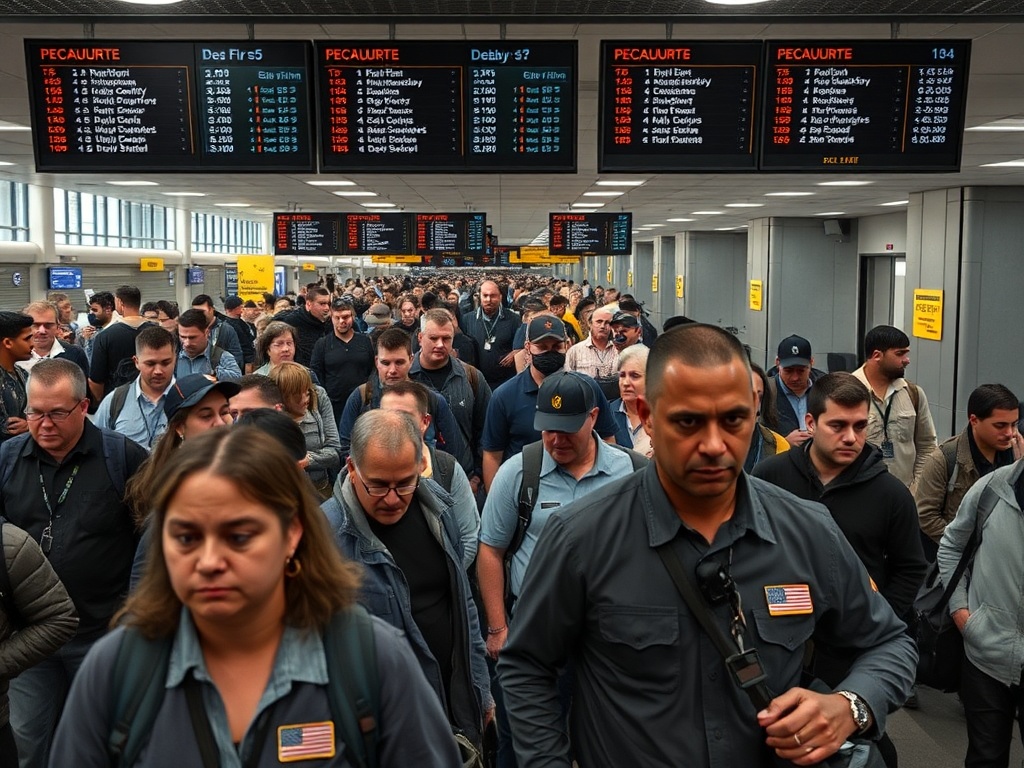
In TSA, union representatives report that some workers are considering calling in sick or quitting, adding to the debt from the previous shutdown. In other DHS units, survival adaptations already appear: rotating voluntary leave days, emergency telework to cut commuting costs, and an explicit wear-and-tear on morale that erodes productivity. Meanwhile, the travel sector watches the board nervously: the very dynamics of airport security rest on a steady, predictable rhythm. When that rhythm is interrupted by employees' financial stress, the impact does not remain confined to baggage checks; it ripples out to airlines, airports, tourism, and passenger trust.
This shutdown is the third of fiscal year 2026, and although there is a legal guarantee of back pay based on recent precedents, the tension does not dissipate with future promises. Daily operations happen in the present: rent, gas, daycare, bills. In leadership, that difference between "someday" and "today" defines whether the system holds up or breaks down.
The Design Flaw: Declaring Operations Essential While Viewing Payroll as Disposable
The DHS shutdown is not merely a budget dispute; it is a stress test of operational continuity design. The state is attempting to sustain a critical function—transport security, disaster response, maritime operations—through a mechanism that undermines the basic performance incentive: paying people.
The qualitative evidence emerging from coverage is sufficient to diagnose the pattern. A DHS worker describes rotations of voluntary leave days and adjustments for emergency telework, with the explicit aim of cutting commuting costs, including one case of 80 miles of travel daily. A Coast Guard civilian employee admits they hadn’t recovered from the previous shutdown before entering this one, and that relying on family and friends for food is becoming part of their support. This is not an isolated anecdote; it is a typical symptom of a system outsourcing its financing onto the employee’s back.
In TSA, the risk is even more direct: the service depends on on-site staffing, rigid shifts, and an operational chain that does not tolerate gaps without affecting lines, wait times, and passenger tension. Should mass absences due to reported illness or resignations occur, the immediate impact will be delays and bottlenecks. The most likely outcome is not a total collapse but what destroys brands and trust: gradual, inconsistent, and visible degradation.
From a leadership perspective, a crucial resignation was not made. If the political goal was to push for negotiations, the choice was made not to protect the continuity of the front lines. Conflict was prioritized over operational design. And in critical systems, that choice incurs interest.
What the Travel Sector Learns the Hard Way: Reliability is an Asset, Not an Assumption
The travel sector often treats airport security as a "given" infrastructure. Negotiations with the TSA are not like negotiating with a vendor, nor can it be quickly replaced like an outsourced service. Precisely for this reason, the impact of the shutdown becomes systemic.
The American Travel Association has quantified in past episodes economic losses exceeding $6 billion associated with shutdowns and disruptions linked to the workforce and operational slowdowns. There's no need to invent a new number for 2026: the mechanism is the same. When the airport loses fluidity, the airline absorbs costs from rebookings, overtime, and out-of-sequence operations; the airport manages congestion and complaints; hotels and tour operators suffer cancellations or deferred demand; the traveler reduces future trips due to accumulated friction.
This time, the shutdown is concentrated on DHS, while other federal agencies are expected to be funded until September 2026. This focus creates a dangerous illusion: since it's "only" DHS, the system should hold up. In reality, concentrating the impact on security and emergency services is akin to cutting maintenance on the very piece that bears the weight of it all. In aviation, delays are rarely linear; they turn into a cascade.
There is also a silent damage that C-level executives understand well: recruitment and retention. DHS has already testified that the shutdown harms hiring, morale, and long-term projects. Translated into business language: it increases the cost of turnover, lowers the average learning curve, and raises the likelihood of operational incidents. No airport or airline wants the “system” to become hostage to unpaid payroll. But that is precisely the real architecture when essential personnel work without salary.
Real Leadership in Crisis: Coordinate Coherent Decisions, Not Manage Heroics
Public debate often frames these shutdowns as a political standoff between the White House and Congress. In the cited coverage, White House Press Secretary Karoline Leavitt attributes the shutdown to Democratic obstruction; Craig Carter, of the Federal Managers Association, describes it as an unacceptable way of treating dedicated employees. Both statements are consistent with the usual script: mutual blame and appeals to sacrifice.
However, the operational question is colder: what decisions activate when continuity depends on people who stop getting paid? The DHS and its units are already improvising micro-solutions: voluntary unpaid days to save money, exceptional telework to avoid costs, training pauses, grounded aircraft, delayed recovery payments. These are understandable patches, but they also indicate that the system is entering rationing mode.
In leadership, rationing requires three things that rarely coexist in politics but do in well-managed companies: explicit prioritization, protection of the critical link, and discipline to cut what is unnecessary. In TSA, the critical element is staffing and presence. In FEMA, the ability to execute payments and coordinate recovery. In the Coast Guard, operations and preparedness, although training cuts are already being reported. When the adjustment becomes horizontal and diffuse, the worst scenario is created: everything is done half-heartedly, and the essential is left exposed.
The lesson for any C-level executive who depends on regulatory infrastructure or public utilities is uncomfortable but useful. Resilience is not "declared"; it is purchased with previous decisions: liquidity, redundancies, operational agreements, plans for peak delays, communication with customers, and budgets that account for friction. If an airline or a tour operator models their season under the assumption of constant fluidity of security control, they are betting against the evidence.
The Executive Decision that Separates Serious Systems from Fragile Ones
The DHS shutdown will continue until a budget agreement is reached, with Congress expected to return from recess next week according to available information. The first full payroll lost for many employees would arrive in early March 2026, which is likely to intensify absenteeism and resignations. That timeline matters because morale is not eroded abstractly; it breaks when the bank account hits zero.
For C-level executives in transportation, tourism, airport retail, or logistics, this episode reinforces an operational principle: reliability is the product, and its main input is the stability of those who provide critical service. If the public system decides not to fund its continuity, the private can only respond with design: time buffers, automated rebookings, proactive communication, commercial flexibility, and capacity plans for peaks.
For public leadership, the lesson is harsher. Political negotiations on immigration, reforms, and budgets can take place, but a critical function cannot be sustained by financing it through the precariousness of essential workers. That is not austerity; it is shifting financial risk to those with the least margin, and paying later with delays, turnover, and service degradation.
Executive discipline is measured by the resignations that are addressed in a timely manner: cutting what is not critical, protecting what sustains operations, and accepting the political cost of prioritization. Sustained success requires a firm choice of what not to do, because attempting to keep everything open while leaving the front line unpaid only accelerates fragility and edges toward irrelevance.