
AI-Driven Kiosks Transform Ordering into Software and Shift Margins to Algorithms
It’s uncommon for a small piece of news to contain significant macroeconomic signals. A project called ExpenseHut POS, a self-service system for restaurants featuring AI-driven kiosks, scored a 41 Proof of Usefulness Score at HackerNoon’s Proof of Usefulness Hackathon. This score is not merely a popularity contest; it’s a metric aimed at practical utility in the real world. Furthermore, the product is not showcased as a mere idea: it’s in pilot phase, with interests from restaurants whose names remain undisclosed.
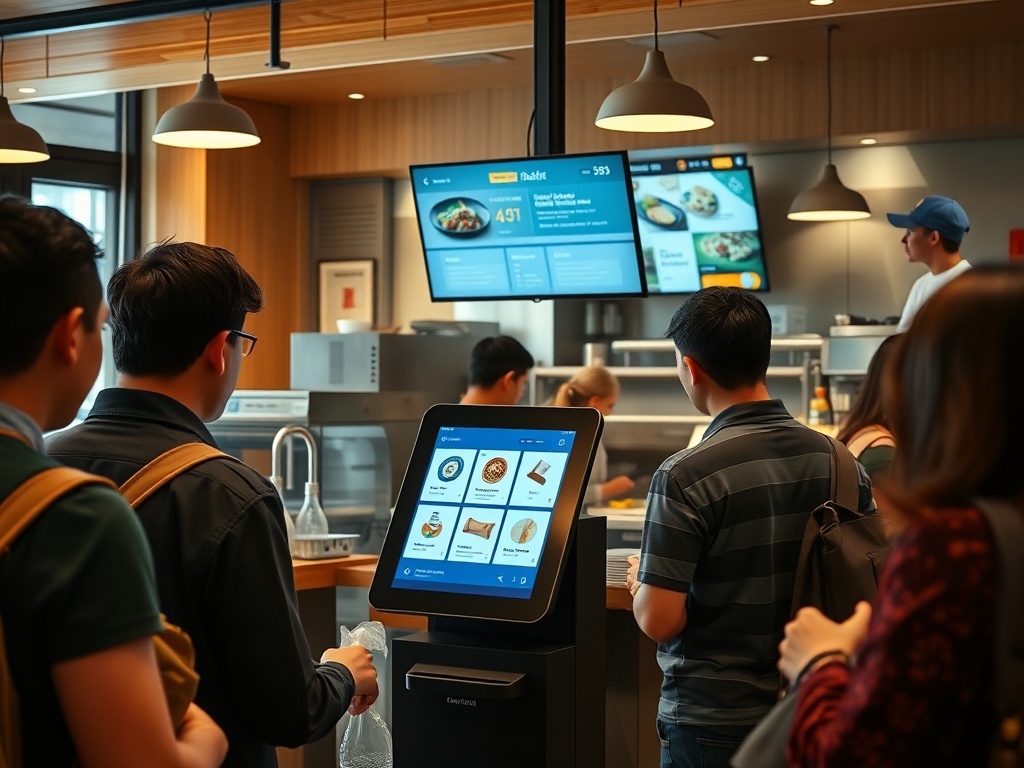
Functionally, ExpenseHut combines smart menu recommendations, integration with existing POS systems, real-time analytics, multi-terminal support, KDS integration, and recipe-based inventory management. The declared tech stack is also a sign of the times: PERN (PostgreSQL, Express, React, Node.js), React Native for mobile compatibility, and Google Analytics for performance tracking. In terms of their business offering, they emphasize no lock-in contracts, transparent costs, and 24/7 phone support, although exact pricing is not disclosed.
As a strategist, my analysis is detached: this isn’t about fancy screens in the dining room. It’s about a mathematical trend. In quick-service and fast-casual dining, the order is where variable costs and operational errors accumulate. When that friction is captured in software, the business starts to behave like software at its minimum unit: each additional order costs less to produce and becomes more predictable.
Utility as a Metric Displacing Charisma as Strategy
A 41 Proof of Usefulness Score may seem like niche data, but its importance lies in what it displaces. The restaurant technology market has been trapped for years between two poles: marketing and hardware. There’s been much narrative, much “experience,” and excessive reliance on heavy implementations. In contrast, the logic of the hackathon pushes a different hierarchy: value is proven by utility, not by storytelling.
ExpenseHut appears on HackerNoon as a product trying to solve a concrete equation: reduce labor costs and increase average ticket values through algorithmic upselling. In the same movement, it promises to accelerate service and reduce errors by connecting orders to KDS and through more automated recipe-based inventory. This is relevant for one operational reason: each minute in line and each kitchen correction are not “experience problems,” they are capacity losses and hidden costs.
Sabarish Narain, the representative interviewed by HackerNoon, frames the aim in terms of speed, personalization, and increased order value. This formulation reveals a commercial maturity: they’re not selling AI as a spectacle; they’re selling it as a cash mechanism.
The uncomfortable detail is the lack of public numbers: no revenues, no funding, no pilot names, and no timelines. In serious journalism, this is not overlooked with adjectives. What can be stated, based on available evidence, is that the project is positioned to capitalize on a structural phenomenon: the cost of capturing an order and turning it into data has fallen enough for small teams to build systems once reserved for dominant platforms.
When the Marginal Cost of Ordering Falls, Power Shifts Hands
The lens applied here is zero marginal cost. Not as a slogan but as a practical consequence. Once “taking an order” ceases to be a mandatory human interaction and becomes a digital flow, the cost of serving an additional order tends to decrease in its administrative component. It doesn’t fall to absolute zero because kitchen, supplies, and logistics still exist; however, the portion of cost associated with capturing, verifying, and transmitting the order does decline.
This decline has two direct effects on competitive power.
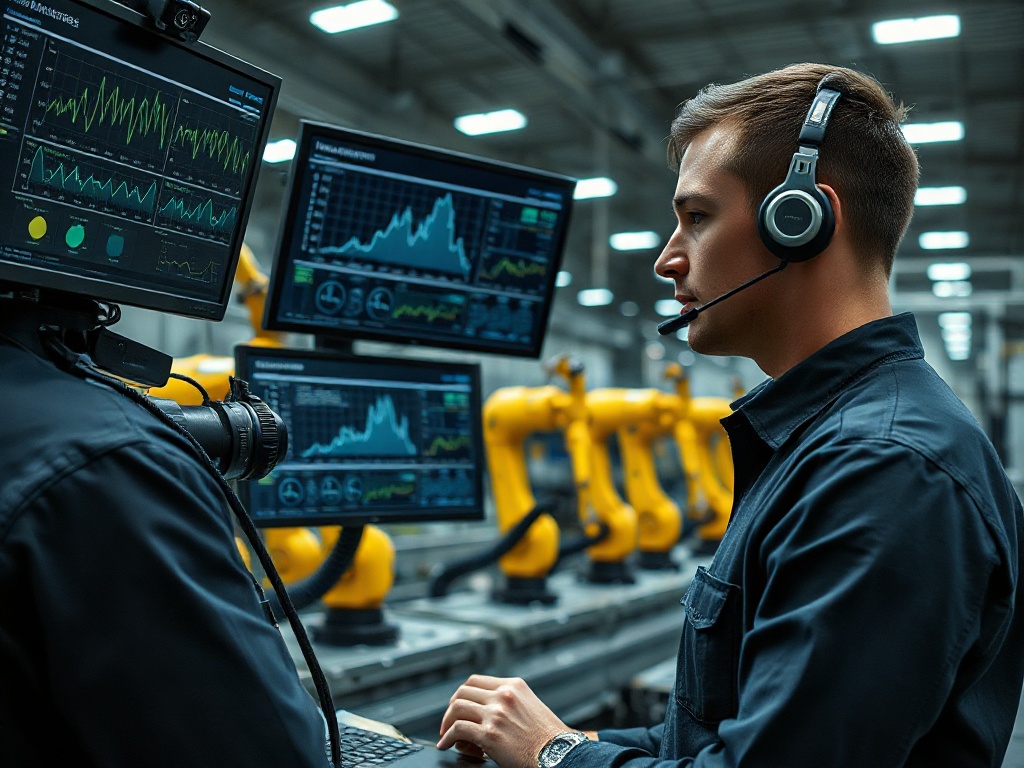
First, it shifts the advantage from having more trained staff to having better recommendation models and better data instrumentation. ExpenseHut makes this explicit by centering its proposition on intelligent recommendations, real-time analytics, and Google Analytics tracking. In the modern dashboard, a restaurant sells not just food but executes a rapid decision-making system regarding product mix, turnover, peak times, and friction points.
Second, it lowers barriers to entry for suppliers. The fact that it is built on a standard stack (PERN + React Native) suggests more manageable development and deployment costs than proprietary hardware-focused systems. This doesn’t guarantee success, but it does change the “threat map” for incumbents such as Toast or Square (mentioned as leaders in alternatives and rankings). Competition is no longer simply over terminals and payments; it’s over who can turn an order into a continuous learning asset.
Here lies the decisive point: upselling ceases to depend on the cashier's skill and comes to rely on patterns. A model can suggest combinations, adjust recommendations by hour, availability, or behavior, and do so consistently. In a business with tight margins, consistency often holds more value than flash.
The Unit Economics of Self-Service: Less Waiting, More Throughput, Less Error
The promise of ExpenseHut is best understood when translated into unit economics without fabricating numbers. An AI kiosk aims to impact four levers.
1) Throughput: if order-taking and payment times are reduced through self-service and POS integration, the venue can process more orders per time slot or maintain volume with less operational pressure. This effect is especially relevant during peak hours, where the bottleneck isn’t demand but the capacity to absorb it.
2) Accuracy: with KDS integration and a digital flow of the order, the typical human “noise” is reduced: repetitions, improperly captured modifications, incomplete tickets. Fewer errors mean less waste and less time reworking in the kitchen.
3) Product Mix: intelligent recommendations aim to elevate the average ticket. Not by manipulation but through convenience and discovery: add-ons, sizes, extras. Financially, this is an increase in income per transaction without opening new locations.
4) Inventory Management: recipe-based inventory, if well implemented, connects sales with ingredient consumption and reduces shortages or over-purchasing. This is less glamorous than AI but is often where margins are hidden.
The strategic part is that these levers are cumulative. A marginal improvement in accuracy reduces costs. A marginal improvement in throughput increases potential revenues. A marginal improvement in product mix raises income per client. Together, they drive the same result: more margin per unit of time.
The no lock-in contract business model is also a message to small and medium operators: lower the risk of adoption. In an industry battered by demand volatility and costs, the ability to convert fixed costs into variables determines survival. If the provider reduces exit friction, they bet on retaining clients based on performance, not a contract.
The Next Battle is Not Display Technology, but Integration and Proprietary Data
The restaurant POS market is fierce, and the leaders have distribution, brand, and payment systems. Thus, the differentiator for a player like ExpenseHut cannot rest on “having kiosks.” The real differentiator plays out on two fronts.
The first is integration. ExpenseHut promises “frictionless” integration with POS and KDS, but the details matter: how quickly it implements, how many exceptions it supports, how it handles complex menus, taxes, modifiers, promotions, and connectivity failures. In practice, the success rate of an implementation defines the rate of expansion. Many products fail not due to lack of features but because of excess friction in the first establishment.
The second is proprietary data. Intelligent recommendations improve when they learn. In a restaurant, behavior changes by hour, weather, availability, price, and even menu design. The provider who captures that variation and turns it into actionable decisions becomes part of the nervous system of the business. This is the point where software stops being a tool and becomes infrastructure.
HackerNoon’s reference to the hackathon distributing over $150,000 in prizes adds another layer: the seed capital for these solutions can come from non-traditional mechanisms that don’t require a formal round to reach pilots. This accelerates competitive pressure on established suites, as the time between prototype and field shortens.
Nonetheless, the risk is evident: without public cases, without deployment metrics, the narrative remains in its early stages. The market does not forgive those who do not convert pilots into repeatable rollouts. And the restaurant doesn’t buy AI; it buys stability during peak hours.
The Mandate for Leaders: Convert Operations into Measurable Systems or Resign Margin
What I see behind ExpenseHut isn’t a hackathon anecdote but an economic direction: a restaurant that doesn’t convert ordering, kitchen, and inventory into measurable flows will be competing with one hand tied behind its back. As the marginal cost of capturing, recommending, and routing orders continues to fall through software, margins will shift toward those who control integration, data, and execution in the field.
Industry leaders who survive this decade will treat operations as a quantifiable and audited system, with technology that reduces friction without compromising service. The next advantage will not be having more locations, but having locations that learn faster than their competition and translate that learning into revenue.