
Lucy Rieger and Andy Rieger made a decision that is anything but common for corporate profiles: they quit their jobs at the age of 26, moved, and opened a whiskey distillery, reviving a brand with historical significance in Kansas City. And they did so with clarity that interests me more than the entrepreneurial epic: Andy Rieger does not expect his children to take over the business.
That statement, viewed as a CFO, serves as a reminder of financial design. If succession is not guaranteed, the asset must sustain itself by its own ability to generate cash flow, not by the patience of a family willing to endure long cycles. In the spirits industry, long cycles are literal: inventory ages, capital is tied up, and the cost of waiting accumulates.
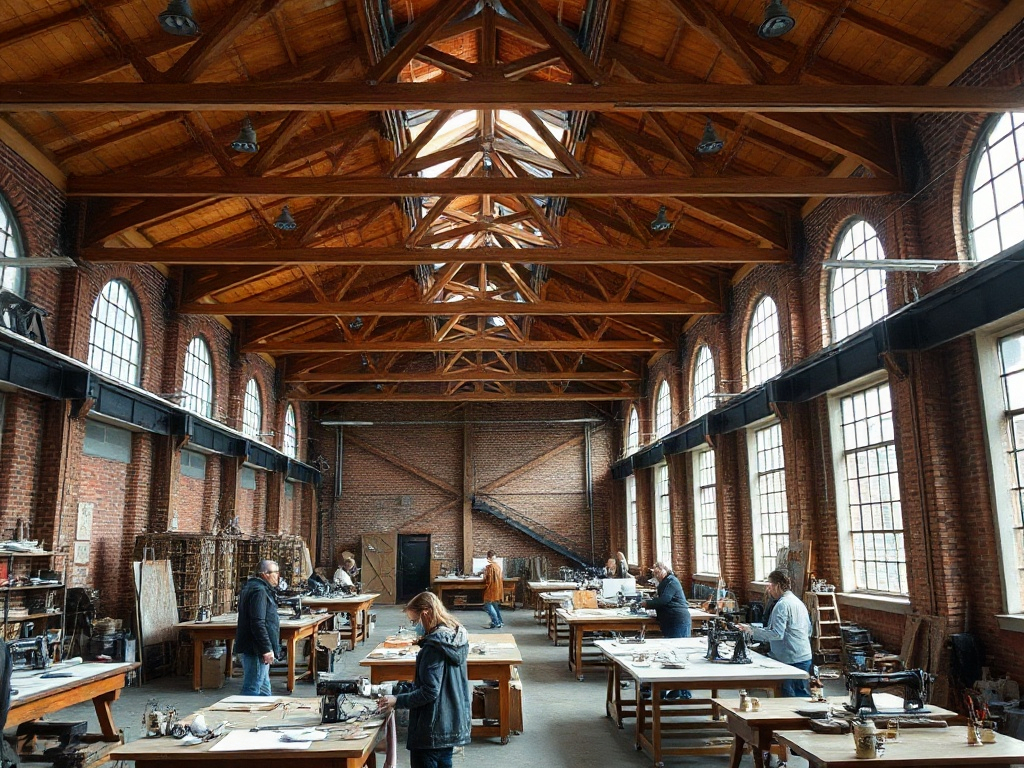
The business story behind the headline is J. Rieger & Co., founded in 1887 by Jacob Rieger and closed in 1919 due to Prohibition. The modern operation was relaunched in 2014 under Andy Rieger, a descendant of the founder, alongside bartender Ryan Maybee. Today, they operate a 60,000 square-foot facility in Kansas City, offering daily tours and an unusual layer of hospitality for a distillery: several bars, event spaces, historical exhibitions, a shop, and even a 40-foot slide. The most relevant hard data available is traction: 200,000 visitors a year. That number, more than whiskey, is the engine that allows the model to operate without relying on promises of sales.
Business Is Not Just About Distilling: It's About Turning Square Feet into Revenue
When an SME opens a distillery, the classic mistake is to think it competes solely based on product. In reality, it competes based on income structure. A distilled product can be excellent and still drown in financial calendars: raw materials are purchased today, energy and labor are paid today, barrels are invested in today, and part of the product is sold years later.
J. Rieger & Co. tries to address that asymmetry with a pragmatic decision: to transform the distillery into a destination. With 60,000 square feet, it’s not a small craft workshop. It’s a real estate-operational asset that, if not filled with activity, becomes a cash drain. Each day without visitors is a day where fixed costs run the same: maintenance, staff, services, and insurance.
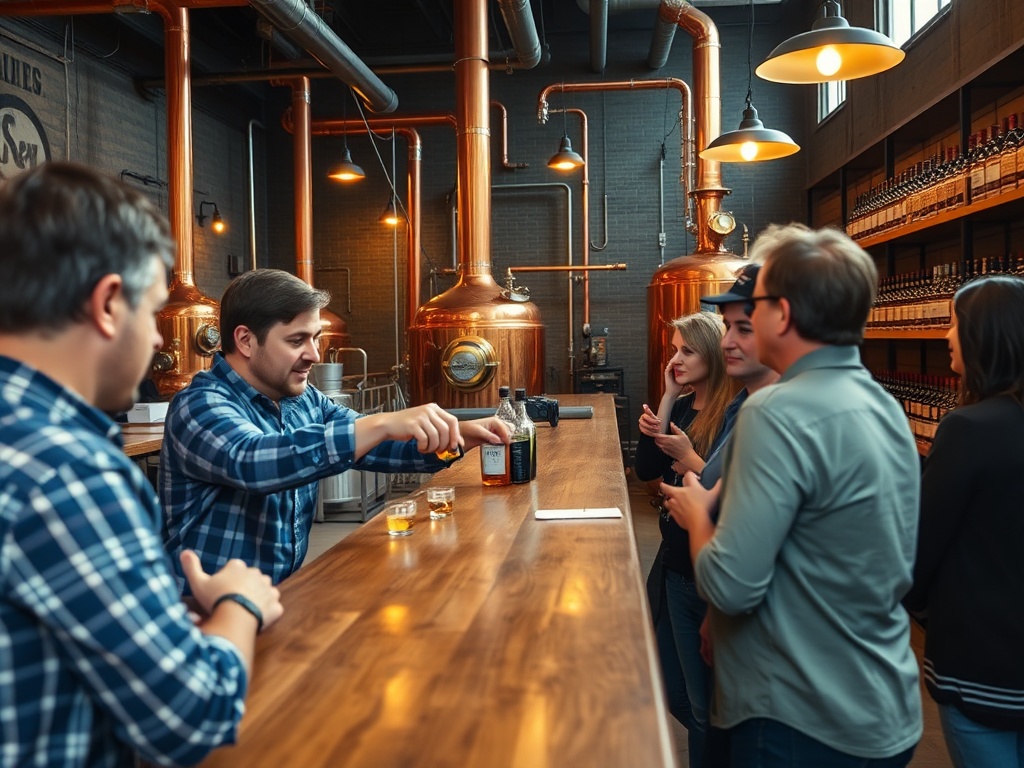
Tourism here is not ancillary; it’s the buffer for maturation. The guided one-hour tours end with a tasting of four main products. Added to this are “Signature Tour” experiences lasting two hours, featuring seven tastings, snacks, a gift bag, and the hand-filling of a 200ml single barrel bottle, guided by senior staff on specific dates in 2026. Beyond the specifics, the essential point is the mechanics: the company charges up front for the experience, and that cash flow is immediate.
In a business where part of the inventory takes time to monetize, visitor flow operates like customer financing. Charging for entry, tastings, and premium experiences isn't marketing; it’s financial architecture designed to avoid relying on long waits at an implicit interest rate.
Simple Math Behind 200,000 Visitors Per Year
We don’t have public financial statements from the sources. There’s no revenue, EBITDA, production volume, or employee count. So serious analysis requires working with what is observable and with ranges, without inventing figures.
The data point of 200,000 annual visitors allows for the construction of a sensitivity framework. If a portion of those visitors pays for a tour and another portion consumes at the bars or shops, the distillery is diversifying its income per visitor. That’s the operational KPI closest to “unit economics” for this type of SME: average revenue per visitor multiplied by volume, minus the variable cost of serving the experience.
The standard tour includes a tasting of four products and lasts one hour. This structure has two financial advantages:
1. The marginal cost of serving a tasting is generally low compared to the ticket price when visitor scale is achieved. The main input is liquid in small quantities, and staff can rotate groups if the flow is organized.
2. The tour serves as a direct conversion channel to store sales and bar consumption. The company doesn't need to "convince" a distributor to monetize that initial relationship; it monetizes in-house.
Premium experiences add another layer. When a two-hour session with seven tastings, snacks, a gift, and the action of filling a 200ml bottle is offered, what’s being sold is margin on controlled complexity. The product cost rises, staff time cost rises, but the price usually grows disproportionately if perceived value is well-designed.
This is particularly relevant in spirits since the margin on bottled liquid can be high, but the cycle is long. The experience, however, converts the same inventory into immediate cash without sacrificing much future volume. And if the distillery can get a fraction of visitors to end up in memberships, repeat purchases, or private events, it reduces monthly volatility.
Growing in 2026 Without Burning Cash Depends on Mix and Timing
Andy Rieger plans for aggressive sales growth in 2026, leveraging the expected boost from the World Cup. This intention is rational if the business already has the operational muscle to absorb demand without fixed costs skyrocketing.
Here lies a fine point. Growth in distilleries has two clocks that aren’t always synchronized:
- The business clock can speed up with tourism, events, cocktail competitions, and presence in high-visibility venues.
- The production clock is limited by installed capacity, aging inventory, and barrel planning.
The Rieger case shows an attempt to align both with a portfolio of activations: from daily tours to specific events like the “Road to Jerez Cocktail Competition,” with regional semifinals and a national final in June 2026. These initiatives not only generate content and brand; they also create professional demand among bartenders and bars that can push rotation in on-premise channels.
The company also appears as a supplier for high-profile establishments in Kansas City, including a steakhouse linked to Travis Kelce and Patrick Mahomes according to the original article. For an SME, that type of client has a less glamorous and more useful financial effect: social validation that lowers acquisition costs at other sales points.
The risk is classic for any expansion based on an external spike like a World Cup: overestimating fixed costs for a temporary event. If the distillery overhires, extends hours, or commits recurring expenses to capture a peak, there’s a hangover in the P&L. A healthier exit is to use the peak as a variable revenue accelerator: more tours, more premium experiences, more private events, more direct sales. That mix protects because it scales with demand, not necessarily with permanent structure.
The Absence of Succession Necessitates Designing a Sellable Business
Andy Rieger's lack of expectation that his children will take over alters the strategic analysis. Many family SMEs accept slower returns or make decisions prioritizing continuity over efficiency since the reward is multigenerational.
Without that expectation, the business needs another form of continuity: a professional team, replicable processes, and accounting that shows the asset functions without the surname. It also pushes thinking about reasonable exit scenarios: selling to a beverage group, integrating with a hospitality chain, or remaining an independent company with solid governance.
The distillery, as described, already has the ingredients to be "understandable" to a potential acquirer: a historical brand, a large facility, a flow of 200,000 annual visitors, and a strategy around experiences. This creates an asset that does not rely solely on the whiskey distribution market, which tends to be more competitive and involves more intermediaries.
But there is an unnegotiable financial condition in this sector: aging inventory is money that’s locked up. If the company accelerates sales without fine planning of barrels and turnover, it may run out of mature products or be forced to sell younger stock, eroding price and brand. Thus, the tourist component is more than just a revenue source; it’s a way to monetize the brand while the inventory does its job.
At the SME level, the operational message is clear: when the product requires time, the company must charge for something today. Rieger achieves this through tours, bars, shops, events, and premium formats.
The Discipline That Distinguishes an Iconic Distillery from a Fragile SME
The media appeal lies in the abandonment of 26 and the family history. The business discipline is in cash design.
A distillery may have heritage, awards, and well-known partners in the industry, as evidenced by the initial backing of technical figures mentioned in the sources, but it remains a business with high fixed costs and tied-up capital. The only way to reduce that financial stress without relying on external capital is to convert demand into pre-paid or immediate cash flow.
J. Rieger & Co. is built around that idea: making the place a product. A visitor doesn’t just buy a bottle; they buy an hour, a tasting, a historical narrative, a bar, a premium experience. That doesn’t guarantee profitability but improves the likelihood of sustaining operations while the whiskey ages.
The lesson for any SME in food and beverage is brutally quantitative. If the business only monetizes when the product is ready, cash flow dictates. If the business monetizes in multiple layers from day one, control remains within the company. Ultimately, the validation that decides who survives isn’t the patient capital or the history; it’s the customer’s money coming in regularly and sufficiently to cover costs, inventory, and growth.