
The Impressive Number and the Missing Data
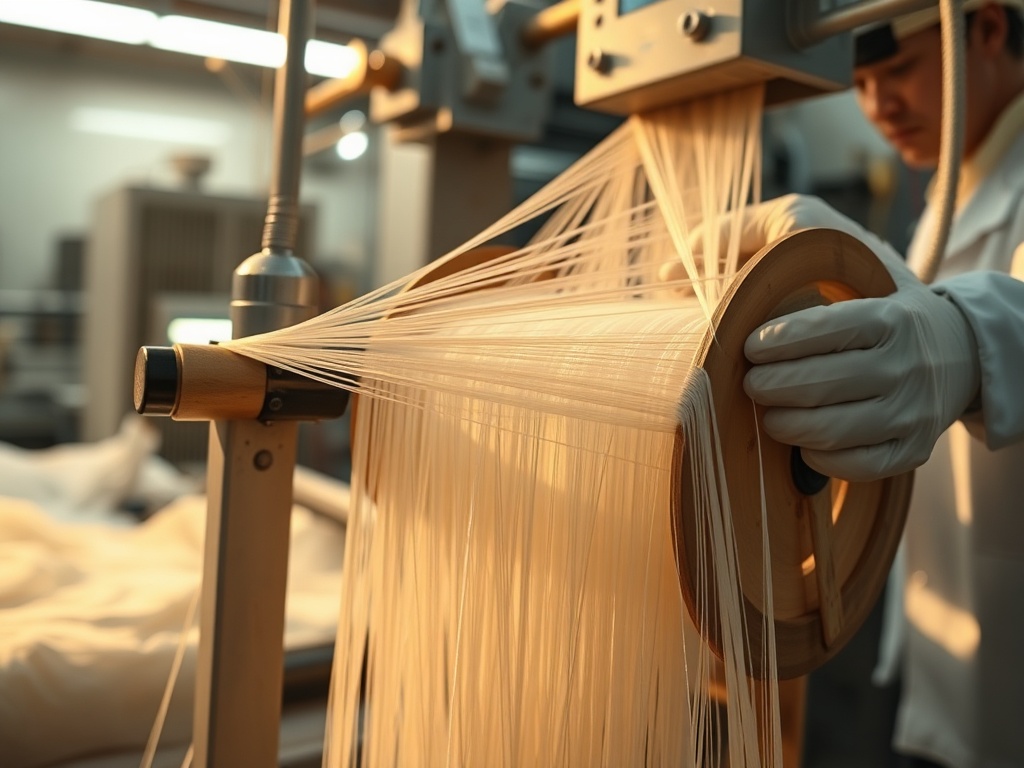
On March 30, 2026, Kraig Biocraft Laboratories announced from Ann Arbor, Michigan, that it had deployed over 700,000 BAM-1 Alpha hybrids from a stock of one million eggs, all in active production. CEO Kim Thompson described it as "disciplined, structured, milestone-focused execution." The company has a declared aim: to produce recombinant spider silk at metric ton scale.
This is an engineering achievement worthy of recognition. Years of work have gone into genetically modifying silk worms to express spider silk proteins, organisms that nature has never been able to domesticate due to spiders being territorial and cannibalistic. Kraig has solved the biological production problem. What isn’t mentioned in the press release, and what I am keen to diagnose, is the behavioral problem that follows: who will they sell this to, how will they convince them to change from what they already use, and what mental friction does that buyer face the day they have to sign a purchase order?
The company is publishing supply metrics. The market that truly matters measures in demand metrics.
The Extraordinary Product Trap
Spider silk has documented properties that no current synthetic material fully replicates: a combination of tensile strength comparable to high-quality steel and elasticity that conventional polymers do not achieve simultaneously. Potential applications range from medical sutures and lightweight armor to high-performance textiles. The material's "magnetism," to borrow the language of my trade, is genuine.
However, here’s the pattern I have observed repeating in dozens of advanced materials innovations: technical teams and corporate leaders systematically overestimate how much the performance of the product weighs in the purchasing decision of the industrial buyer. They assume that a buyer in aerospace, pharmaceuticals, or defense will read specifications, compare them with their current materials, calculate the improvement, and switch suppliers. That is not how the institutional buyer’s mind works.
The industrial buyer does not operate in a vacuum. They function within approval chains, supplier qualification protocols, long-term contracts with current suppliers, and—most notably—within an organizational culture where recommending a new and unproven material at industrial scale is a personal professional risk, not just an operational risk. If the new material fails, the recommending buyer bears the reputational cost. If the old material continues to perform, no one questions why they didn’t change. The asymmetry of incentives massively favors inertia.
This is not irrationality. It is perfectly calibrated rationality to the institutional environment. And it is precisely the type of friction that is not resolved by producing more worms.
Scaling Supply Without Scaling Trust
Kraig Labs’ plan, according to its statements, is to increase production to metric ton levels. The implicit logic is that greater available volume equates to greater market penetration. This logic works when the product already has established demand and the only bottleneck is supply. When the product is new and the buyer hasn’t redesigned their processes to accommodate it, producing more does not solve the adoption issue: it amplifies it.
Think about it from the perspective of the materials director at a medical device company. They receive an offer for recombinant spider silk. The properties are attractive. But to incorporate it, they need: regulatory validation of the material in their specific application, lot-to-lot consistency testing with the new supplier, partial redesign of the manufacturing process, quality team approval, and potentially communication with the FDA or other regulatory entities if the material enters an implantable device. That process takes between 18 and 36 months in favorable scenarios. The anxiety isn’t in the price of the material. It’s in everything that has to be moved internally to purchase it.
What analytically strikes me is that none of the milestones reported by Kraig Labs mention adoption metrics from the demand side: signed contracts, active industrial pilots, clients in the process of qualifying the material, or partnerships with companies that already have access to those institutional buyers. The milestones are all production-focused. This doesn’t mean that commercial progress doesn’t exist; it means that the public narrative is built on supply, not on market traction.
And that narrative choice reveals where the leadership's attention is concentrated.
What 700,000 Hybrids Cannot Do Alone
There is a structural difference between demonstrating that you can produce something and demonstrating that the market is ready to receive it. Companies that have successfully crossed that gap in advanced materials—documented cases in industrial carbon fibers or bioplastics in packaging—did so with a specific strategy: they identified a buyer segment whose "push" was strong enough to absorb the cost of transition.
The "push" refers to the magnitude of pain with the current situation. A military equipment manufacturer facing weight restrictions on personal protection systems has a measurable push in human lives and government contracts. A surgical suture manufacturer losing market share to more predictably absorbed materials has a measurable push in avoided medical litigations. Those buyers have concrete incentives to absorb the friction of change. The buyer who already has a solution that "works well" lacks that push, and no technical argument will artificially generate it.
The problem isn’t that spider silk isn’t better. The problem is that "better" is a technical category, while the purchasing decision is a psychological category. Kraig Labs leaders have spent years investing in making their product shine brighter: more strength, greater elasticity, more production consistency. That work is required. But it is insufficient while there isn’t an equivalent investment in understanding what prevents their target buyer from taking the first step and actively reducing that transition cost.
The company that reaches a metric ton of production before resolving the adoption architecture will not have built a business. They will have built a very sophisticated warehouse.
Leaders looking at this story and seeing only an engineering achievement are making the most costly mistake in any advanced materials commercialization process: investing all available capital into making the product shine, while leaving unfunded the work of alleviating fears and reducing the friction that prevents their customer from buying it.