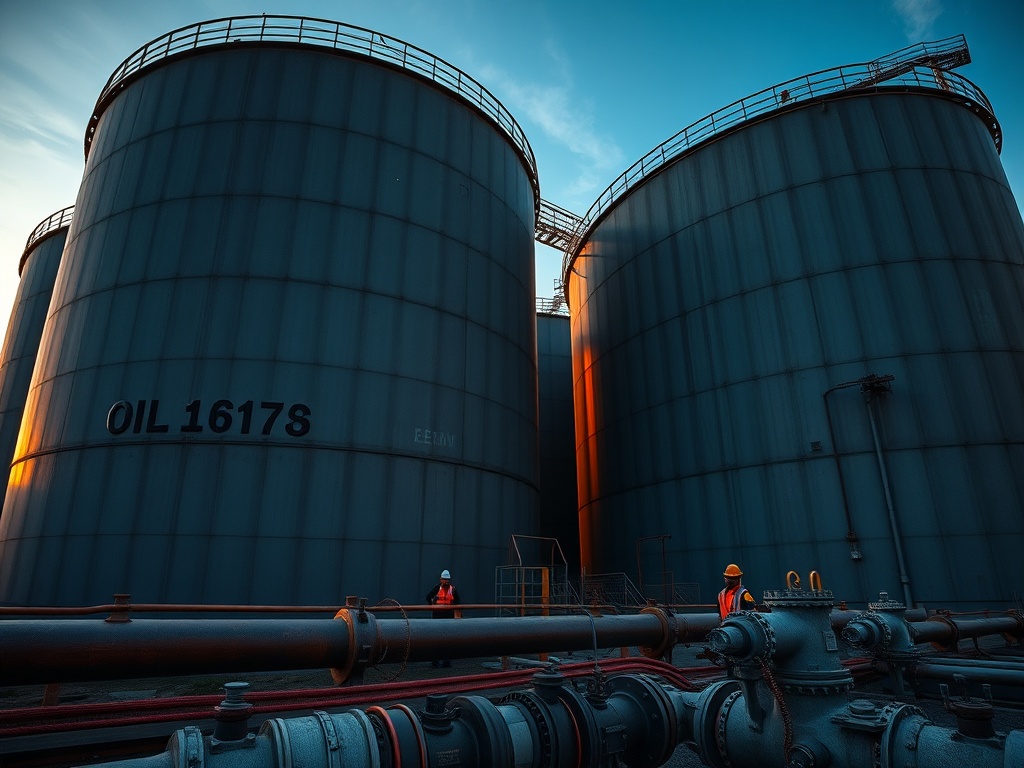

400 Million Barrels That Solve Nothing
On March 10, 2026, the 32 member countries of the International Energy Agency (IEA) unanimously voted to release up to 400 million barrels from their strategic reserves. Without a single abstention. Without a formal objection. The announcement came the following day from Paris, and oil prices, which had nearly reached 120 dollars per barrel just 72 hours earlier, fell to a range of 90-92 dollars. Financial press covered it as a coordinated victory. I see it as a signal of how much structural fragility has silently accumulated over years of oil at 70 dollars.
The Strait of Hormuz, through which 20 million barrels daily usually pass —25% of the global crude supply— is effectively blocked due to the conflict between the United States, Israel, and Iran. There’s no easy bypass. Saudi Arabia can redirect some through the Red Sea pipeline, but the volume is marginal compared to the magnitude of the cut. Iraq and Kuwait have halted extraction in some fields because their storage facilities are full and they cannot export. That particular detail did not receive enough coverage: the issue is not only that oil cannot get out, but that there’s no place to put it at the source anymore.
The 400 million barrels correspond to about 20 days of flow interrupted by Hormuz. That’s not a solution. It’s a bridge to something that no one knows how it will end.
Why Prices Fell Before Any Barrel Arrived
The first thing to understand is that the market did not react to physical oil. It reacted to the signal. When the IEA announced the release on Wednesday, prices had already fallen on Tuesday —from 100 dollars to less than 87— because futures markets anticipated the move as soon as reports of the consensus from the emergency meeting emerged the day before.
This has a direct implication for any CFO modeling energy costs for the second quarter: the price you see today incorporates expectations, not operational reality. The physically released oil from strategic reserves has not yet reached any refinery. Japan plans to start its own releases —equivalent to 80 million barrels— from March 16, as confirmed by Prime Minister Sanae Takaichi. The United States, which maintains its Strategic Petroleum Reserve at around 415 million barrels out of a total capacity of 715 million, will likely contribute the majority of the coordinated total, according to analysts at JPMorgan Chase. However, details on timing, daily volumes, and sequence by country have not been disclosed by the IEA.
This means that between the announcement and the barrel in the market, there is a temporal gap that short-term energy hedging models are not designed to absorb. Companies with energy contracts lacking adjustment clauses for extraordinary geopolitical events —and there are many— are operating under assumptions that have already expired.
The price drop due to signaling is useful. It lasts until the market updates its expectations again, which could be in days if the conflict escalates or if the blockade extends beyond the horizon covered by the 400 million barrels.
Strategic Inventory as a Financial Crutch
Macquarie analysts said it bluntly: strategic reserves are not a permanent solution. They are right, but it’s worth dissecting why that matters at a business architecture level.
The IEA was created precisely after the crises of 1973 and 1979 so that consumer countries would have a counterbalance against producers organized in OPEC. The mandate is clear: each member must maintain reserves equivalent to 90 days of net imports. This release —the sixth coordinated in the agency’s history, and by far the largest, surpassing the 182 million barrels released in two actions during 2022 following the invasion of Ukraine— consumes a significant portion of that cushion.
After this release, the United States could reach the lowest levels of its Strategic Reserve in 44 years. That’s not an alarmist headline. It’s a data point of systemic resilience that changes the risk calculation for the next shock, which could arrive in six months or six years.
For energy-intensive companies —aviation, heavy manufacturing, logistics, petrochemicals— the bottom line message is not that the price dropped. The message is that the global buffer mechanism has less absorption capacity than it did three years ago, and the cost of replenishing those reserves in a volatile price environment may end up being higher than any savings captured today. Airlines not managing staggered hedges or diversifying their geographical exposure to routes that avoid Gulf fuel dependency are operating with a cost structure that assumes normalcy in a context that no longer has it.
The fact that Gulf producers like Iraq and Kuwait have halted extraction in certain fields due to overflowing storage adds another layer. When the conflict ends —if it ends— and Hormuz reopens, the physical market could flood with suppressed supply plus the strategic reserves that have yet to be placed. That downward correction could be as severe as the rise.
The Structure That Survives Geopolitical Noise
There’s a recurring pattern whenever an external shock of this magnitude hits commodity markets: companies that fare better are not necessarily those that made the best geopolitical predictions. They are the ones who built cost structures that do not depend on a world that operates without jolts.
The concrete operational difference lies in the variabilization of energy exposure. Companies that negotiated contracts with prices indexed to market references with cap clauses, diversified their energy suppliers by incorporating local or renewable sources for the base part of their consumption, and reduced their energy intensity per unit of production over the past three years are absorbing this shock with a quantifiably smaller impact. Not because they are smarter than the market, but because their operational architecture does not amplify external shocks; it cushions them.
Those that arrived in March 2026 with long-term fixed energy contracts negotiated when oil was at 70 dollars, without hedges, and with supply chains concentrated on routes dependent on the Gulf, are now managing a crisis that, for them, has no quick exit regardless of what the IEA does. The average price for this quarter may be manageable. But the intraday volatility of 30 dollars between the peak and the valley this week destroys any financial planning model that does not have explicit scenario ranges.
The release of 400 million barrels stabilizes prices for weeks, possibly months, depending on how long the Hormuz blockade lasts. It does not change the structural risk geometry of the global energy market. Companies that interpret this event as the end of the problem, rather than a confirmation that the problem persists, will repeat this conversation the next time a strait, pipeline, or extraction field goes offline.
The global strategic cushion has just measurably thinned, and the available buffering capacity for the next shock is objectively lower than it was before March 11, 2026.