
When Stocks and Bonds Fall Together, Managed Futures Are Right Again
A key assumption underpins the architecture of nearly every institutional portfolio across the globe: when stocks drop, bonds rise. This cushion, this negative correlation, forms the mathematical foundation of the 60/40 portfolio that manages trillions of dollars in pension funds, university endowments, and private portfolios. In 2022, that assumption collapsed. Stocks and bonds fell simultaneously for the first time in decades, and the investors who managed to keep their wealth intact did so not through traditional diversification, but through a class of assets that most CFOs don’t even consider: managed futures.
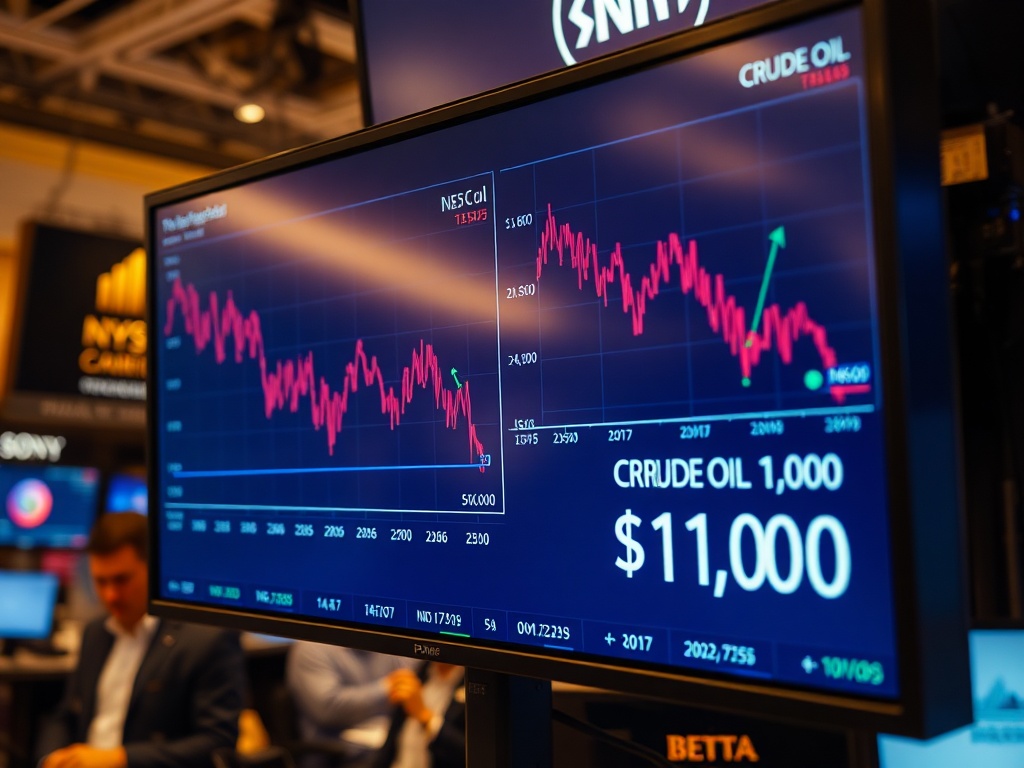
Now, with oil creeping up again towards $100 per barrel and fixed income under sustained inflationary pressures, that scenario threatens to repeat itself. The question is not whether the markets will correct. The operational question, one that matters to a CFO with real responsibilities, is which hedging mechanism holds up when traditional assets move in the same wrong direction.
Why the 60/40 Portfolio Fails Just When It’s Needed Most
The logic behind the 60% stocks / 40% bonds portfolio operates under a specific condition: that inflation is controlled and that central banks have room to maneuver. When inflation skyrockets, central banks raise interest rates, which simultaneously hits stocks — due to the discount effect on future cash flows — and bonds — because bond prices fall when rates rise. The result is a positive correlation between both asset classes, which undermines the premise of diversification.
In 2022, this dynamic resulted in losses of 16% to 20% in 60/40 portfolios, according to various market estimates. It was the worst year for that strategy since World War II. What many diagnosed as an exceptional event was actually the predictable outcome of decades of financial repression that artificially compressed interest rates. When that repression ends, assets that had been inflated by cheap liquidity adjust, and they do so in parallel.
Structurally relevant is this: the risk was not in the individual assets, it was in the correlation between them. A CFO who understands this does not seek better stocks or better bonds. They look for assets whose logic of profitability is orthogonal to that of traditional markets.
What Managed Futures Do That Conventional Diversification Cannot
Managed futures — strategies that take long and short positions in futures contracts on commodities, currencies, interest rates, and equities — operate under a radically different logic. They do not bet on whether an asset will rise or fall; they bet that a macroeconomic trend will persist for weeks or months. When oil rises steadily because geopolitics tightens supply, a futures manager can be long on crude. When rates rise because inflation won’t relent, they can be short on Treasuries. The direction matters less than the persistence of the movement.
That’s what made 2022 their year. While traditional portfolios lost between 15 and 20 percentage points, representative indices of managed futures — like the SG CTA Index — posted gains exceeding 25%. The asymmetry was nearly 45 percentage points relative to the standard portfolio, in the same market environment, with the same macroeconomic data available to everyone.
The mechanism is not magic. It is algorithmic discipline: trend-following systems identify momentum in prices and maintain positions while the signal is consistent. In high-inflation environments, high volatility, and prolonged monetary policy decisions — exactly the environment that characterized 2022 and threatens to resurface now — such signals tend to be more persistent and pronounced than in normal cycles.
The practical implication for any CFO is straightforward: a 10% to 15% allocation of the portfolio to managed futures would have absorbed nearly all of the loss from the 60/40 portfolio in 2022, without sacrificing expected return in normal environments, as the historical correlation of these strategies with stocks and bonds is close to zero.
Oil at $100 Is Not an Anomaly, It’s an Architectural Signal
When oil approaches $100 per barrel, the impact is not limited to energy sector companies. It transmits throughout the cost chain: logistics, manufacturing, food, transportation. This feeds second-round inflation, putting pressure on central banks to keep rates high or raise them further. Sustained high rates compress the valuation multiples of growth stocks while eroding the value of existing bonds. The loop closes: expensive oil is, ultimately, simultaneous pressure on stocks and bonds.
This is not a speculative projection. It is the mechanics that occurred between 2021 and 2023, and current data suggest it could repeat. A CFO who analyzes this loop honestly may come to an uncomfortable conclusion: the protective architecture that worked during 40 years of declining rates is not designed for the environment ahead.
Managed futures are not a gamble. They are a structural hedge against scenarios where dominant macroeconomic premises cease to hold. And at this moment, several of those premises are being questioned simultaneously: inflation is not dead, oil is not capitulating, and central banks do not have the same room to maneuver they did a decade ago.
The lesson that the market delivered in 2022 was costly and clear. The portfolios that survived did not do so because their managers predicted the future with greater accuracy. They did so because they had in their architecture assets that generate returns precisely when conventional assets fail. That is the only form of hedge that does not depend on the world behaving as academic models assume it should. The money that generates cash flow when the environment deteriorates is the only capital that preserves the operational capacity of a business without needing to rely on refinancing rounds or the tolerance of an external investor to weather the cycle.