
The Strait of Hormuz Reveals the Operational Fragility of Enterprises
The oil market quickly stopped pretending to be calm. In just one night, prices surged to nearly $120 per barrel before retreating to close around $87, still significantly higher than the $72 seen before the conflict began. This fluctuation is not merely a trader's whim; it represents the reality of acknowledging that the physical map of global energy has an evident point of failure.
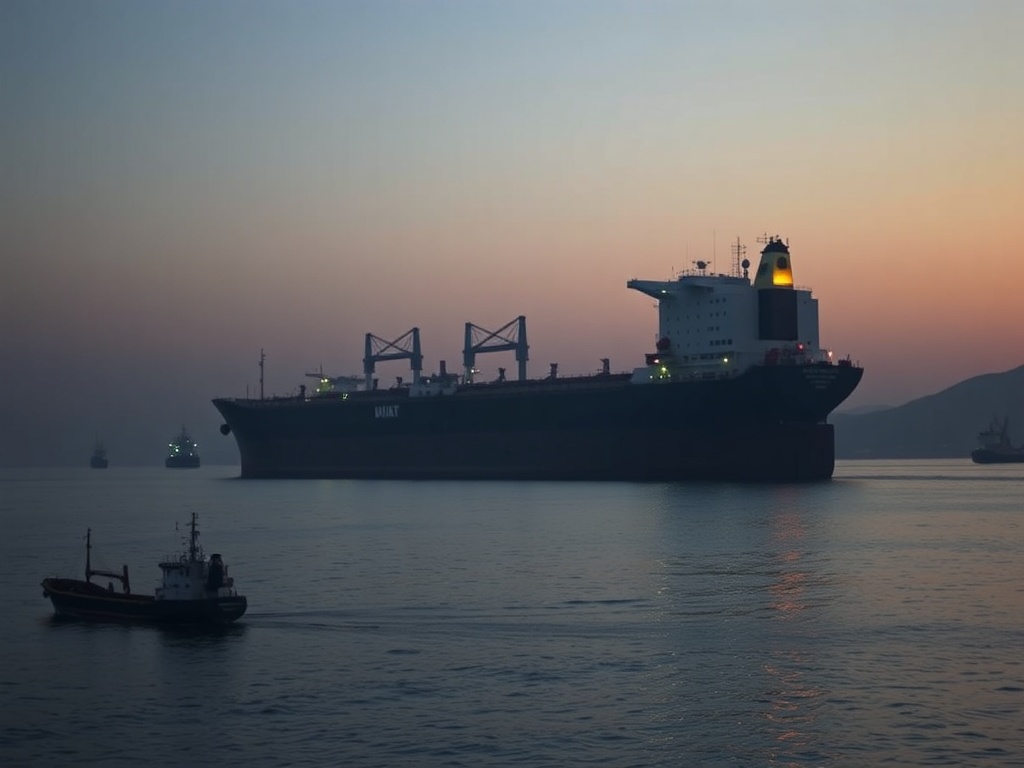
The trigger is concrete. Following a military escalation that included a U.S. and Israeli attack on Iran and Iranian responses in the region, the Strait of Hormuz was effectively closed. As a result, a bottleneck through which about 20% of the world’s oil and over 90% of liquefied natural gas (LNG) flows became a switch for global inflation. This has translated directly into daily life, with the average gasoline price in the United States rising by nearly 50 cents per gallon since the conflict began.
This episode is not solely about energy. It pertains to how business systems behave when a critical input shifts from being "guaranteed" to "contingent." In that transition, annual plans lose authority, and the only mandate is the ability to operate amid uncertainty without destroying margins or breaking promises to customers.
Volatility Is Not Just a Financial Data Point; It's a Design Flaw
Daniel Yergin, vice president of S&P Global, articulated this mechanism with uncomfortable clarity: the price reflects what people are willing to pay when the physical closure is mixed with the fear of attacks on infrastructure in the Gulf. This distinction matters because many companies still manage energy risk as if it were solely a financial hedging issue rather than a design problem.
When the price of a barrel jumps from 72 to 87 and threatens 120 within hours, the immediate concern isn't the exact figure but the impossibility of budgeting it seriously. In practice, this has cascading effects on transportation, materials, packaging, industrial heating, last-mile distribution, and notably, on any business with fixed-price contracts or slow updates.
Another detail already highlighted by the market is that prices stabilized somewhat after statements from the U.S. president suggesting that the war might end soon. In other words, part of the premium is driven not by scarcity but by narrative. For a business leader, this translates into an operational rule: if the critical variable depends on political and military events, the decision-making system cannot rely on a single forecast.
Companies that survive are not the ones that predict prices. They are the ones that turn uncertainty into routines: more frequent adjustment clauses, pre-negotiated alternative logistics routes, the ability to pass on costs without losing volume, and a customer portfolio segmented by price tolerance. All these strategies are built before the shock, not during.
The Center of Gravity Shifts to Asia, Pulling Global Demand
The energy flow through Hormuz has directionality. Approximately 80% of the oil that passes through goes to Asia, and over 90% of the LNG does too. This undermines a simplistic reading centered solely on the American consumer. While the U.S. does feel the pinch at the pump, the most severe impacts from physical shortages and competition for shipments occur where incremental demand is greatest: in Asian economies with high reliance on imports.
The implication for corporate strategy is direct. Many global companies sell growth in Asia while operating supply chains that depend on cheap and stable energy. If Asia faces a harsher shock in availability and price, two simultaneous effects emerge.
First, pressure on consumption. High energy costs eat into disposable income and affect entire categories. Second, pressure on manufacturing and exports, as energy is not just another "cost"; it often decides whether a plant operates at full capacity or cuts shifts.
Chatham House is already quantifying macro scenarios: if oil remains at 70-80 and the conflict resolves quickly, inflation in Europe and Asia could be about 0.5 points higher, with limited impact on GDP. But if it climbs towards 100 and sustains that level through 2026, inflation could rise by nearly 1 point, and growth might drop between 0.25 and 0.4 points. For a company, this difference defines whether the conversation is about "adjustment" or "portfolio reconsideration."
Here lies a typical boardroom error: treating this episode as a passing storm and continuing to allocate capital as if inputs will revert to normal out of inertia. When a physical bottleneck dominates the chessboard, the cost of being wrong is not marginal; it is losing the entire year due to a lack of operational elasticity.
From Geopolitics to P&L in Two Weeks
The transmission of the shock doesn't require months; we've already seen it at the pump: 50 cents more per gallon in the U.S. In energy-intensive industries, the impact on P&L can be even swifter than for the end consumer, as costs flow through fuel contracts, transport fees, and freight surcharges.
What worries me most isn’t the peak of 120; it's the mistaken organizational learning that often follows such events. Many companies respond with a crisis committee that produces daily reports and little ability to execute real changes in pricing, supply, and service. Useful evidence doesn’t emerge from PowerPoints; it arises from friction with the market.
In practice, the priority should be to run minimal experiments with three clear objectives.
The first is to validate tolerance to increases. Not through surveys, but with published pricing, contract renegotiation, and controlled tests by segment. The second is to redesign service promises to protect margins since fulfilling the same SLA with 20% higher costs is often an act of faith. The third is to convert fixed costs into variable ones wherever possible, because rigidity kills in commodity shocks.
There’s also a financial angle that is often underestimated. Chatham House warns that a sustained shock would make central banks less comfortable with cutting rates. In other words, the cost of capital may stop falling just when many companies are counting on cheaper refinancings to sustain investment and buybacks. High energy costs and less flexible money is a combination that punishes those who rely on optimistic budgets.
Winners and Losers on a Non-Neutral Board
Such crises do not distribute pain evenly. The analysis points to clear winners: net large energy exporters outside the Gulf like Norway, Russia, and Canada are likely to benefit from higher prices. Yergin explicitly notes that the geopolitical beneficiary of elevated prices is Vladimir Putin, as he can finance the war in Ukraine with increased oil revenues.
From a corporate perspective, this asymmetry compels a broader look beyond the energy sector. Morgan Stanley advises increasing exposure to defense, security, aerospace, and themes of industrial resilience due to public spending boosts. It’s not necessary to share that recommendation to grasp the essential: public demand becomes more predictable when private demand turns cautious.
Simultaneously, silent losers emerge: importing economies with energy subsidies. Chatham House warns that several emerging markets are cushioning the blow by subsidizing energy, protecting short-term consumption but straining their fiscal situation, with marked vulnerabilities in countries like Egypt, Tunisia, and Pakistan. For companies selling there, the risk is not just reduced demand; it's the discontinuity of payments, price controls, devaluations, and rushed regulatory changes.
And then there’s the particular case of the United States. The report mentions that it has shifted from being a large net importer to a modest exporter, with greater relative resilience. That word, "relative," is key. Households are paying more, but parts of the country gain through production. In strategic terms, this means some companies based in the U.S. will have a comparative advantage in cost and availability over competitors in Europe or Asia, even when selling to the same global customers.
The Executive Discipline to Operate When the Map Changes
Yergin spoke of the "nightmare scenario": an extended closure of Hormuz combined with significant damage to Gulf infrastructure capable of pushing the world into recession as seen in the shocks of the 1970s. This scenario is binary for many companies: either they have operational flexibility or they get trapped between costs and contracts.
The executive response cannot be bought through a giant project. It is built through concrete decisions validated within days.
A serious company does three things without drama. It rewrites its contracts so that energy and freight adjustments are frequent and verifiable, not just an annual negotiation. It reconfigures its portfolio so that not everything relies on clients demanding fixed prices and rigid deliveries. And it creates a learning cycle that connects sales, operations, and finance with data from orders, cancellations, renegotiations, and delays, not with opinions.
There’s no glamour in this. Most organizations would prefer to continue relying on a twelve-month Excel sheet and an internal note promising "constant monitoring." But Hormuz is not reminding us of a theory; it's demonstrating a fact: when a single physical point moves the price of the most transversal input in the economy, strategy is measured by continuity, not by narrative.
Business growth only comes when the illusion of the perfect plan is abandoned and constant validation with the actual customer is embraced.