
The $100 Barrel Isn’t the Problem: Operational Fragility Exposed by Hormuz
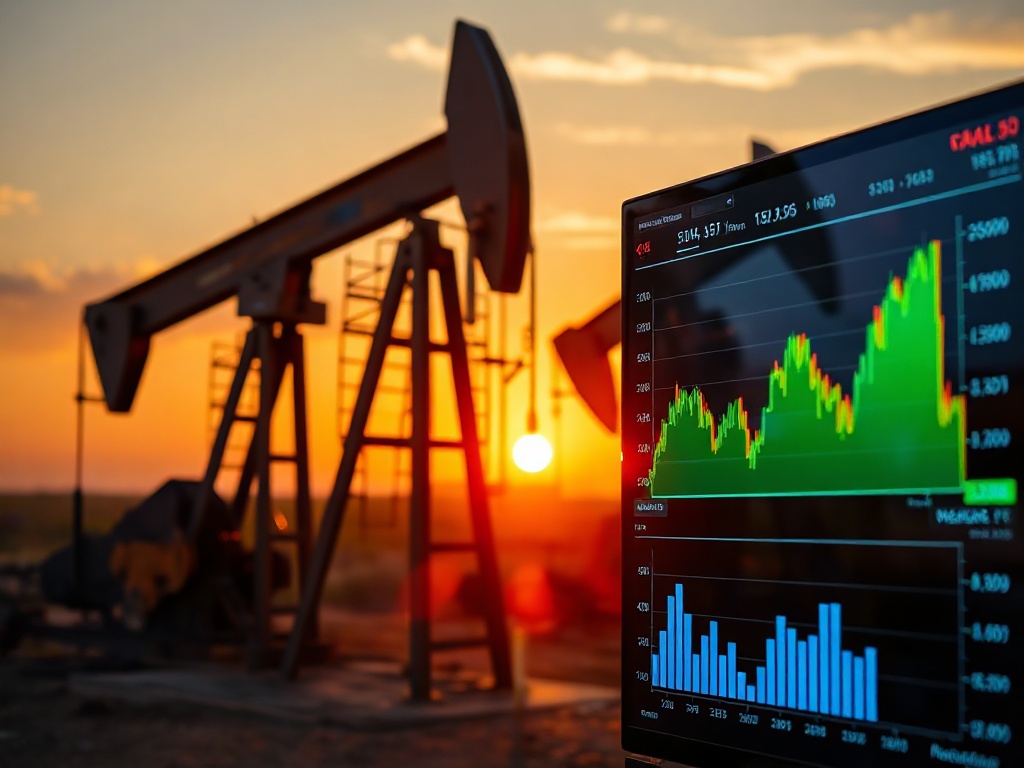
I’m Mateo Vargas, and I’m not interested in screen dramatics. What I care about are the mechanics. Last week, the market was reminded of something budgets tend to erasure: energy is not just another input; it is a risk multiplier. As the war with Iran escalated, oil surpassed $90 per barrel in the U.S. and Brent exceeded $92. In the same movement, Dow futures dropped sharply, with mentions of –800 points at the opening, and gasoline prices in the U.S. approached the narrative of $4 per gallon. The visible story is the price. The important story is the bottleneck.
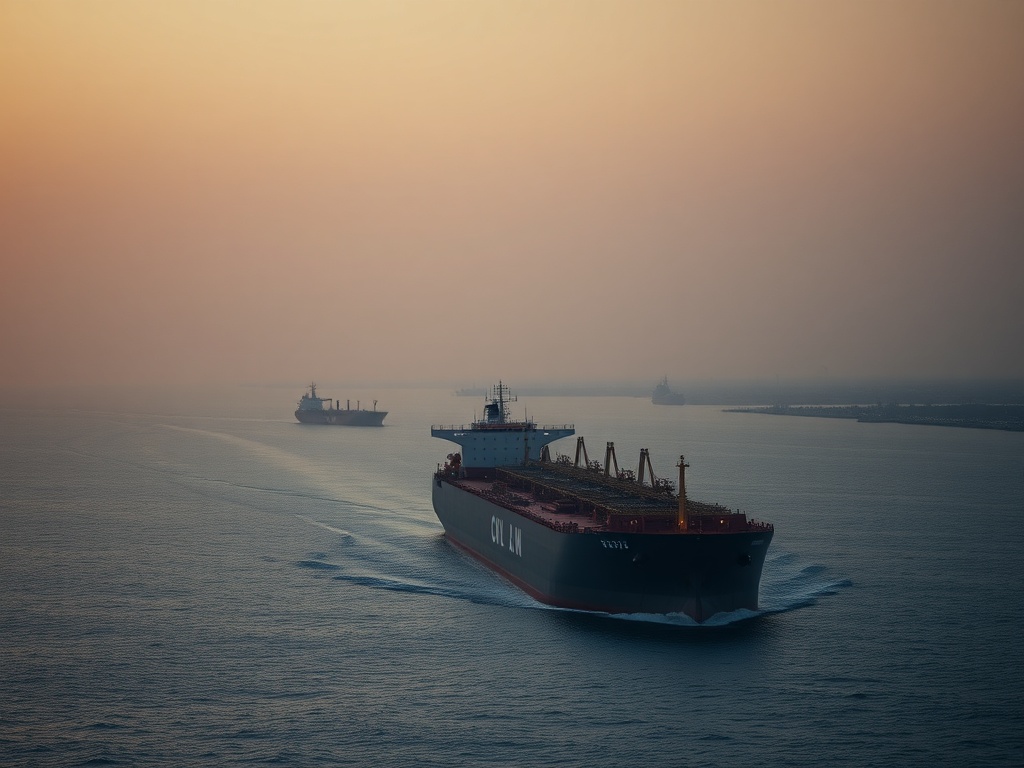
The Strait of Hormuz is a unique failure point: it accounts for nearly 20% of global oil and around 19–20% of the world's LNG trade. When traffic halts and exporters can’t move volume, it’s not just about “rising prices” in an abstract sense. Something far more operational and harmful occurs: producers shut down because inventories accumulate at home. This is already happening: Qatar has cut much of its LNG production, and Iraq and Kuwait have shut fields. The prospect of extensions towards the UAE and Saudi Arabia arises for the same logistical reasons, not due to a lack of underground reserves.
A CFO reading this calmly sees an uncomfortable truth: energy risk isn’t managed with an “assumption” in Excel. It is managed with modular structure, variable costs, and the ability to absorb shocks without breaking the core.
Hormuz as a Stress Test: The Market Fears Inactivity, Not Scarcity
The difference between a scare and systemic shock is the duration of the blockage and physical friction. The Strait of Hormuz transports around 20 million barrels per day, and much of that flow has no easy diversions. The briefing notes that 4.2 mb/d could be redirected through alternate pipelines, leaving a massive volume “at risk” if the disruption persists. The market is not reacting because it suddenly discovered that the Gulf exports energy. It reacts because the energy is trapped.
This immobility explains why production shutdowns occur: if you can’t export, domestic storage fills up, and operations halt even when international prices scream for “more production.” One analyst succinctly put it: crude gets “physically locked,” thereby pushing the price floor down. The financial implication is concrete: the marginal cost of energy for the rest of the world rises, but the blocked producer does not monetize that high price. In portfolio terms, it's akin to having the right asset, in the right market, at the right time, and still unable to sell due to an indefinite holiday.
Meanwhile, the futures curve tells another story: there’s a strong short-term premium (spreads have widened), but contracts for January 2027 hover around $70 according to the briefing. This combination usually indicates two things at once: (1) the market is paying for immediate coverage and (2) still believes that the event might normalize before the long-term “equilibrium price” is rewritten. That “still” is where rigid companies are erring.
Energy Inflation: It Doesn’t Destroy Everyone, Just the Poorly Structured
A more expensive barrel acts as a cross-sectional tax, but it isn’t uniform. At the consumer level, gasoline in the U.S. is already up by more than 60 cents from January’s lows, with reported weekly increases ranging from $0.34 to nearly $0.50 per gallon. This transfer hits logistics, distribution, mobility, and goods with high transportation intensity first. For many companies, the issue isn’t the increase; it’s the time it takes to pass it on.
Here’s the diagnosis that almost no one wants to hear in committee: if your business relies on “passing costs” but sells in monthly cycles, with fixed contracts or price-sensitive customers, you're essentially financing the shock with your margin. It's an involuntary line of credit to the market, with oil setting the interest rate. Companies with fragile structures experience this as a surprise; those with disciplined structural frameworks handle it as just another scenario.
In manufacturing and energy, the blow can come in two ways. The first is crude. The second is gas: with Qatar halting LNG exports, the briefing highlights figures that matter for Europe: TTF was at 31.6 EUR/MWh, with scenarios of 74 EUR/MWh if the cut lasts a month, and over 100 EUR/MWh if extended to two months or longer. That’s not “volatility”; it’s a regime change in costs for heat and electricity-intensive industries.
The market reaction (Dow futures under pressure) isn’t a moral judgment; it’s a flow discount: more expensive and uncertain energy elevates costs, pressures inflation, complicates interest rates, and reduces multiples. The most cynical part is that many companies were already stretched due to fixed structures; oil only accelerates the fall.
What Geopolitics Reveals About Corporate Design
The briefing mentions measures from the U.S. government: naval escorts for shipping, an insurance scheme via the U.S. International Development Finance Corporation, and notably, some easing of sanctions on Russian oil to India to mitigate the shock. This package has a simple reading: when the bottleneck is physical, policy attempts to buy time.
Buying time doesn’t solve the problem. For the private sector, the problem is operational: how much of your P&L is held hostage by weekly energy costs? In consulting terms, they would say it with jargon; I’ll reduce it to a quick test:
If your structure has a high proportion of fixed costs assuming stable energy (outsourced transport with rigid rates, inflexible input plants, contracts that don’t index, inventories without coverage), the shock catches you without buffers. If, on the other hand, you have operational modules that can be shut down or reconfigured without undermining your value proposition, you survive.
The typical blind spot is confusing “efficiency” with “optimization to the limit.” Optimizing to the limit is like managing a portfolio without liquidity: in good months it appears brilliant; during bad weeks, it forces you to sell the worst at the worst moment. The news from Hormuz is just that, but in the physical economy.
There’s also the corporate theater: there are industries that have spent years promising resilience while consolidating suppliers, reducing inventories, and solidifying routes. With expensive energy, the cost of that concentration emerges as service loss, urgent surcharges, and rushed decisions that are often the most costly.
Practical Scenarios: Price Matters Less Than Duration and Elasticity
Goldman Sachs, according to the briefing, assigns a risk premium that can amount to $14 per barrel in a four-week disruption scenario, with ranges of $10–15 under various combinations of pipeline diversions and releases of strategic reserves. What I take away is not the exact number, but the logic: the market is trying to price duration and compensation capacity.
For a company, the map translates into three operational scenarios.
In the short scenario, prices rise, spreads widen, and the shock resembles 2019 or episodes where the scare is brief. Here, companies with tactical hedges, indexing clauses, and price power win. Heroism isn’t needed; contracts are.
In an intermediate scenario, infrastructure damage and the normalization of transit take weeks or months, as analysts cited in the briefing warn. There, the problem becomes working capital: higher cost per unit, more pressure on inventory, more friction in procurement. The winner is not the one who “gets” the best spot price but the one who redesigns their operation to function within wide cost ranges.
In a long scenario, with prolonged cutoffs of LNG and crude, the advantage becomes structural: diversification of energy sources, substitution capacity, multi-region contracts, and an architecture that allows non-profitable lines to shut down without collapsing the company. Companies that bet everything on minimal costs during stable times discover that they bought fragility.
My reading of the forward to 2027 around $70 is that the market still believes in containment. That belief can be correct and still destroy companies. Just a few weeks of cash pressure can bankrupt a poorly financed structure.
The Sensible Direction: Financial and Operational Modularity as Coverage
Hedging isn’t just a derivative. It is also design. In a world where a strait can immobilize 20% of global oil, the “plan” isn’t to predict geopolitics. The plan is to ensure your survival does not depend on guessing it.
I’ve seen too many management teams treat energy costs as a minor line-item because it has historically been stable. It’s the same bias that leads to underestimating liquidity risk because “it always gets refinanced.” In the week when Brent crosses $92 and the market begins discussing $100, that illusion shatters.
The concrete measures that separate resilience from rhetoric are uncomfortable because they require giving something up: giving up rigid contracts, giving up single suppliers, giving up growth if that growth demands more fixed costs. They also require accepting a market truth: the company that withstands shocks isn’t the largest or the most famous; it is the one that can adjust spending without amputating itself.
In practice, this manifests in purchasing policies with price bands, in tariff structures reflecting energy when the business allows, in inventories defined by risk and not dogma, and in operations where a module can fail without taking the rest with it. The cost of implementing these measures often seems high until petroleum becomes a robustness test.
The Hormuz event doesn’t reward the one who hit the headline; it rewards the one who designed a structure that doesn’t collapse when the most cross-sectional input on the planet becomes uncertain.
Corporate survival in an energy shock depends on cost elasticity and the capacity to reduce operational exposure without sacrificing the profitable core.