
TerraPower and the Permit that Transforms Regulation into Competitive Advantage
The news appears, on the surface, to be an engineering triumph. On March 4, 2026, TerraPower, the nuclear startup co-founded by Bill Gates, received a construction permit from the U.S. Nuclear Regulatory Commission (NRC) for its Natrium reactor in Kemmerer, Wyoming. This is the first approval to build a commercial reactor in the United States in a decade and the first for a design that does not use light water in over 40 years. In the nuclear sector, this combination equates to a monumental shift—not due to technological romanticism, but because of a redistribution of risk.
The Natrium is designed to deliver 345 megawatts of base power and can ramp up to 500 megawatts during peak demand due to an integrated energy storage system. TerraPower estimates a total cost of up to $4 billion and aims to be operational by 2030. Its CEO, Chris Levesque, termed the permit a “historic” day for the U.S. nuclear industry. The NRC’s chairman, Ho Nieh, framed it as a significant step toward advanced nuclear energy and as evidence of “timely and predictable” decisions based on a rigorous and independent safety review. Meanwhile, local political figures—including Senators Cynthia Lummis and John Barrasso, along with Governor Mark Gordon—celebrated this advancement, linking it to an agenda for energy independence. According to a spokesperson for TerraPower, Sarah Young, construction would begin in the coming weeks, with an operating license application expected in 2027 or early 2028.
This is the visible narrative. What matters to a CEO, CFO, or investor is the invisible aspect: the permit not only allows for construction; it converts regulation into an economic asset. When regulation transforms into an asset, the market no longer rewards just those who “have the best technology” but begins to prize those who can sustain a complete value chain over years without breaking the trust of those providing capital, land, fuel, and legitimacy.
The Permit as an Asset: When the Timeline Dictates the Margin
In capital-intensive businesses, the variable that distinguishes a “bet” from a “project” is the timeline. TerraPower submitted the permit application in March 2024. The process was initially projected to take 27 months but concluded in just 18 months, accelerated by the Trump administration, cutting seven months from the previous plan. That difference, in a project costing up to $4 billion, is not merely an administrative detail: it represents a reallocation of temporal risk.
Time comes at a cost. Each month of uncertainty extends the period during which money is immobilized, contracts are renegotiated, inflation erodes budgets, and the public narrative can shift. Reducing the regulatory cycle does not lower the direct cost of steel or cement but does lessen the “cost of maintaining the project” as an organization: legal and technical teams, engineering hours on hold, commitments with suppliers not activated, and—most importantly—the implicit cost of capital for a project that yields no revenue yet.
Thus lies the strategic core of this milestone. TerraPower did not simply “win a permit”; it gained something scarcer: predictability. In energy infrastructure, predictability translates into a stronger negotiating position with all parts of the supply chain—from constructors to future operators—because it reduces the premium that each actor demands to protect themselves should the project remain in limbo.
Additionally, there's a sectoral signal: the NRC not only approved one reactor but set a precedent. In an environment with more applications for advanced reactors, the regulator is establishing a speed benchmark. For the industry, this lowers regulatory entry barriers in terms of timing but raises the execution bar: those who obtain permits and fail to build on time will transform the narrative of “agility” into that of “broken promises.”
Natrium as a Product: Electrical Flexibility and Data Center Demand
The most commercially significant feature of Natrium is not its nuclear component, but its integration of generation with a logic of flexibility: 345 MW stable and ramping capacity up to 500 MW during peak demand. In the electric economy, this difference is crucial, as value is determined not just by the megawatt-hour produced, but by when it is delivered.
The context pushing this proposal is explicit in the sources: the growth of data centers for artificial intelligence is escalating electricity demand, and Bill Gates has pointed out that nuclear can be a “huge contributor” in meeting that load. In other words, the product thesis is not solely decarbonization; it is supply quality for consumers who value continuity and power.
However, the value model does not stand solely on a technical promise. Flexibility also implies a different type of competition: Natrium is not measured only against other nuclear plants, but against any technology that delivers firm energy or response capacity: gas, independent storage, hybrid combinations, and advanced-grid management. Its competitive defense, therefore, will depend less on “being nuclear” and more on “being reliable, financeable, and buildable” within a timeline that aligns with load needs.
Here emerges a point of economic discipline: the project aims to finish by 2030. The demand for data centers is growing now. This temporal asymmetry creates pressure: the market that today pays premiums for firm capacity can reconfigure itself if alternative sources emerge. TerraPower needs its arrival window to remain valuable once the asset is ready. The permit reduces friction but does not eliminate the risk of a mismatch between demand pace and infrastructure pace.
Thus, the true “product” of TerraPower for corporate buyers is not merely future electricity but a package of guarantees: schedule, security, fuel supply, and operational license. If any of these components weakens, the corporate buyer does not debate ideology: they simply turn to another energy source that can sign today.
The Real Value Chain: Fuel, Territory, and Legitimacy
The Natrium reactor uses liquid sodium as a coolant and highly enriched uranium as fuel, according to available information. TerraPower has secured domestic and South African sources to replace Russian supplies. This point, often sidelined amid technological enthusiasm, is the essence of business sustainability: without fuel, the permit is just paper.
The project’s distribution economy plays out on three fronts.
First, fuel. By reconfiguring its supply, TerraPower shifts some geopolitical risk towards alternative contracts. This strengthens the narrative of energy independence, celebrated by Wyoming officials, but also sets a standard for the ecosystem: new suppliers will demand terms that mitigate risks associated with scaling and compliance. The company might try to push prices down, but in critical chains, that tactic is short-term gains and long-term hunger: if the supplier cannot invest in capacity and quality, the project delays, and the cost of delays eats away any marginal savings.
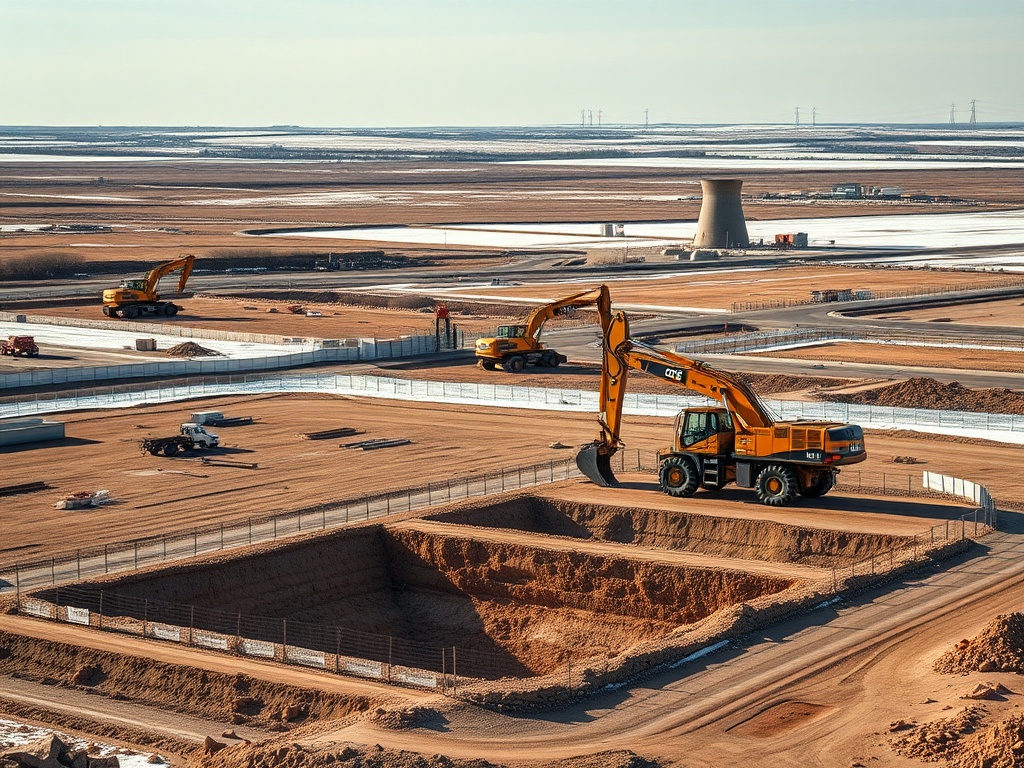
Second, territory. The site is about four miles from Kemmerer, a town of around 2,500 residents, next to a coal plant that is being converted to natural gas. This fact illustrates the real local exchange: the community and the state offer social license, infrastructure, and continuity of energy economy; in return, they expect jobs, taxes, and industrial permanence. If the project fails to anchor verifiable local benefits, the political support that currently cheers may turn into an operational cost.
Third, regulatory legitimacy. The construction permit does not equate to an operational license. TerraPower plans to apply for the operating permit in 2027 or early 2028. This means that risk is divided into phases: today construction expenditure is unlocked, tomorrow operation is validated. From a governance standpoint, it is a healthy mechanism: it reduces the incentive to “rush” more than the evidence permits. From a business perspective, it compels maintaining an impeccable relationship with the regulator for years.
Alongside this is the national elephant: spent fuel. Sources recall that the U.S. has accumulated thousands of tons without a permanent repository, and that there is state-level resistance to interim storage. The Department of Energy announced in January 2026 initial steps for partnerships with states on fuel cycle modernization, with responses expected by April 1, 2026. TerraPower claims its design produces relatively less waste than conventional reactors, but the systemic risk remains: even if the reactor generates less, the nation needs long-term solutions for the industry to scale without political friction.
This is where many startups fail: they confuse their balance sheet with the system’s balance sheet. Advanced nuclear does not scale if the political cost of waste is socialized without an explicit pact; it scales when the incentives are aligned such that no actor feels like they are subsidizing others with their reputation or territory.
The $4 Billion Bet: Who Captures Value if it Succeeds and Who Pays if it Fails
Up to $4 billion for a first deployment is a figure that disciplines anyone. In a startup, that number necessitates distinguishing between “innovation” and “infrastructure.” In infrastructure, success isn't merely a demo; it is reliable operation over decades.
If Natrium meets its schedule and obtains its operational license, TerraPower and its backers capture the value of being the reference: not only for selling electricity but for selling a replicable standard of execution and approval for advanced designs. Wyoming captures value through energy continuity and by positioning politically and economically as a hub for uranium and coal-to-gas transition. The regulator captures institutional value by demonstrating that it can be swift without sacrificing rigor.
If it fails, the distribution inverts. Costs do not remain on the cap table. Overruns and delays punish the developer first, but the reputational and political bill is shared: communities that bet on jobs, governments that defended a narrative of independence, and a regulator whose “predictability” can turn into a throwing weapon.
The strategic reading is straightforward: TerraPower has already crossed a line that few manage, but that line elevates the requirement. From here, the advantage is not provided by liquid sodium but by the ability to coordinate all the actors that make a reactor possible: fuel chain, contractors, local authorities, regulator, and finally, energy buyers. At this stage, any temptation to maximize margin at the cost of suppliers, territory, or regulatory commitments is self-destructive because the project relies on long-term relationships, not a one-off transaction.
Advanced Nuclear Wins When Its Entire Chain Prefers to Stay
The NRC’s permit is historic for what it enables and for what it demands. It enables construction in a sector that had gone a decade without new commercial authorizations and reopens the door to unconventional designs after more than 40 years. It demands, in return, an execution that sustains the promise of regulatory speed without turning it into improvisation.
TerraPower is acquiring something more valuable than megawatts: it is buying the right to be measured as national infrastructure, with all the coordination costs that that entails. If the company can ensure fuel availability, that the local community sees clear benefits, and that the regulator finds a predictable partner, the project will turn a permit into a replicable standard. If any of those actors feel that risks are being transferred without compensation, the very milestone that today adds legitimacy could transform into friction.
The real capture of value, from now until 2030, is not determined by who celebrates the announcement but by who ends up with enough incentives to stay in the project when the novelty fades and only the construction, costs, and shared responsibilities remain.