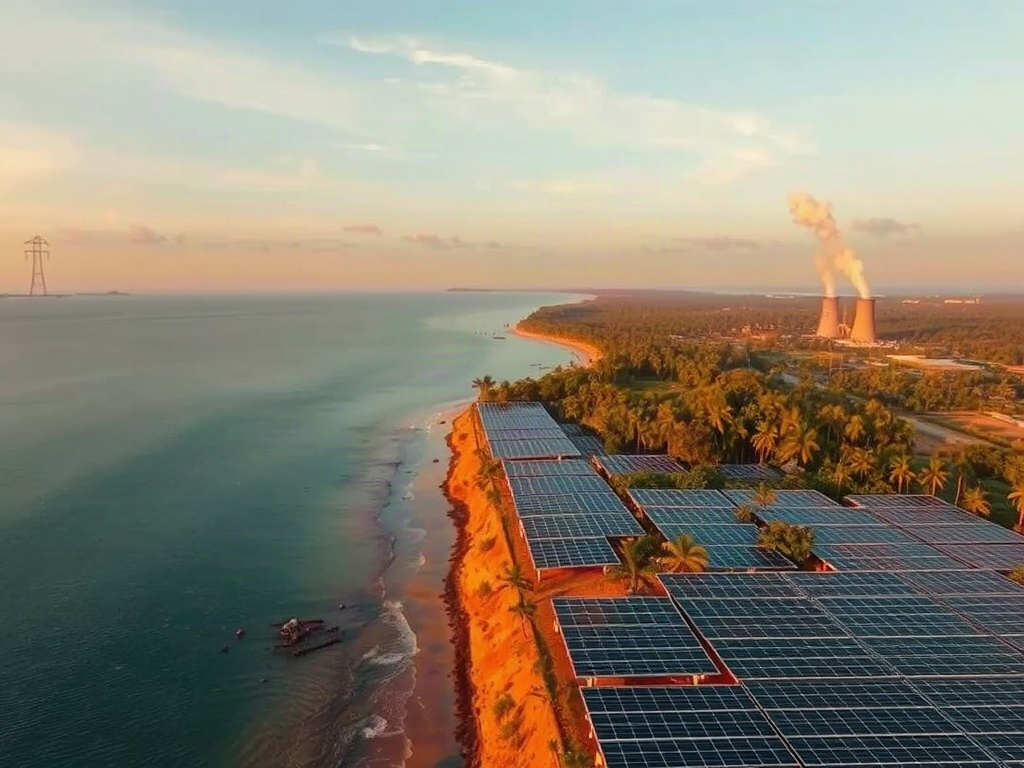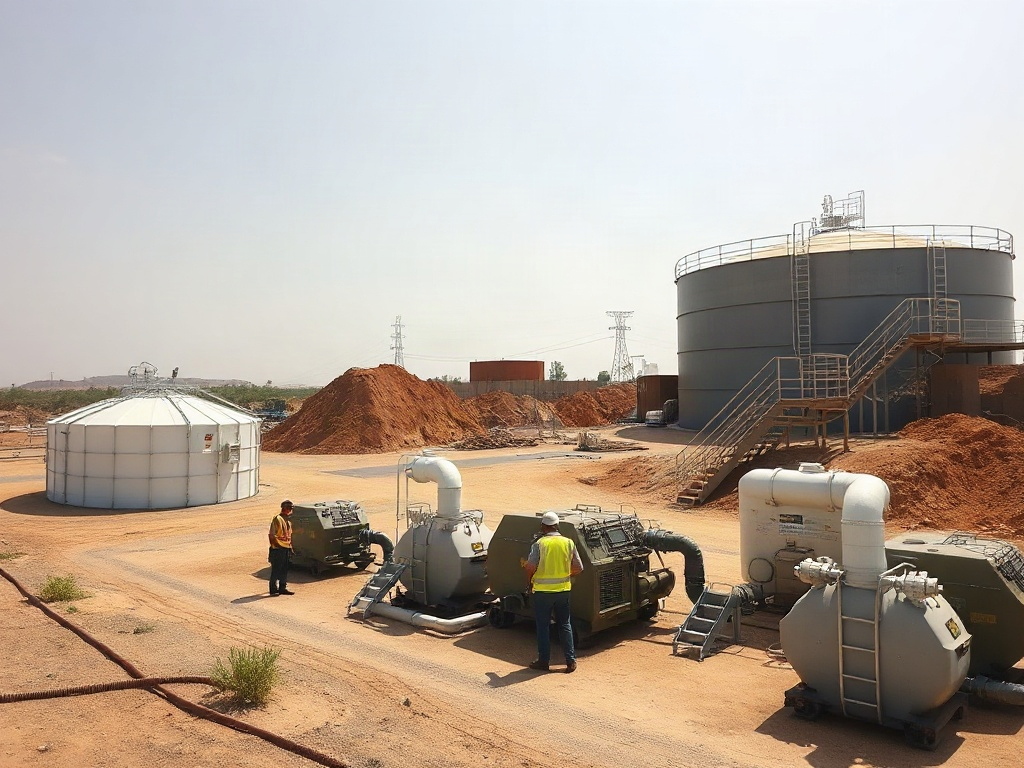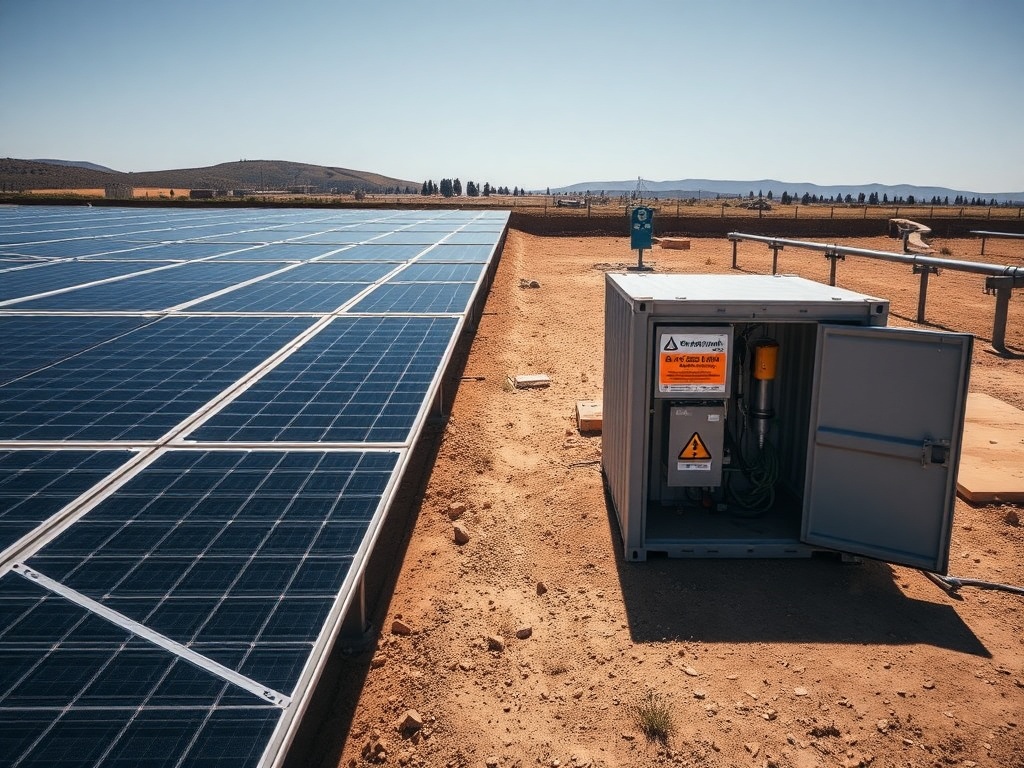

**Signed on March 11, 2026, at the European Hydrogen Energy Conference (EHEC) in Seville, the agreement between H2Pro and Doral Hydrogen to develop a solar hydrogen project in Extremadura boasts a headline that the market loves: "the first" to achieve something. In this case, it’s the production of hydrogen powered entirely by solar energy off the grid, aimed at blending hydrogen into Enagás’ existing gas network in the initial phase, with future hopes of injecting it into H2Med when the corridor reaches the area. The initial phase involves a 5 MW DWE electrolyzer connected directly DC-to-DC to 10 MWp of solar photovoltaics. If the pilot is successful, the plan is to scale to 50 MW of electrolysis and up to 80 MWp of solar, designed to meet RFNBO requirements.
This combination of off-grid, direct connection, and staged scaling may seem merely an engineering detail. However, from a business and governance standpoint, it represents an organizational design experiment: intermittency is managed not through rhetoric, but through technical, contractual, and human architecture. This is where the myth of the charismatic CEO who "pushes" the project forward through sheer will crumbles. Intermittency demands something different: teams that work as a system.
Off-grid Is Not a Technological Medal, It's a Risk Decision
Producing green hydrogen often hinges on an uncomfortable puzzle: renewable electricity is variable, electrolyzers have operational dynamics that penalize starts and stops in many configurations, and grid connection or electrical storage tend to inflate costs and complexity. In this project, Doral Hydrogen’s message is clear: the ability to "not depend on grid electricity" "simplifies design" and decreases the need for batteries or backup systems. That’s a developer's view, not a laboratory one: fewer parts, fewer permits, fewer interfaces, and fewer points where schedules can break.
The more serious point is not the world-first slogan. It’s the attempt to validate a project economy with less dependence on the electrical system in a continent where connection queues and capacity limitations can turn good renewable assets into stranded assets. If direct DC-to-DC coupling operates stably, it eliminates a layer of equipment and coordination. Furthermore, if the electrolyzer maintains efficiency at partial loads and tolerates start-stop cycles, the asset stops demanding "perfect energy" from the operator and starts adapting to available energy.
This is the type of decision that changes risk management. It does not eliminate risk. It shifts it: from grid dependence to dependence that technology, operations, and maintenance uphold the promise under real solar variability. That’s why this announcement, even without investment figures or construction dates from the available sources, carries strategic weight. It introduces an operational thesis: if hydrogen wants to lower costs, it must learn to coexist with intermittency without paying for its exit with expensive infrastructure.
Blending into Enagás’ Network Is a Pragmatic Commercial Shortcut
The choice to inject hydrogen for blending into Enagás’ gas network at the outset is a commercial play grounded in pragmatism. Before a large-scale dedicated backbone exists, the project needs a destination for its molecule. Blending allows converting a technical demonstrator into a viable asset, even if only partially, while maturing towards the next step: future integration with H2Med.
From an organizational culture standpoint, blending into the grid introduces discipline. Quality, continuity, and coordination with a critical infrastructure operator transform the team into an organization closer to an "industrial operator" than an "energy startup." This transition is often where the risk of charismatic leadership surfaces: when milestone pressure mounts, it's easy for public narratives to overshadow detailed engineering and governance.
Here, it’s important to carefully read what is indeed in the news. There are statements from the CEOs: H2Pro emphasizes the importance of operating with intermittent power, with “endless” start-stop cycles while maintaining efficiency at partial loads. Doral stresses that operating directly with renewables reduces the need for batteries or backup systems. These messages are correct but are designed to be incomplete: in public, advantages are highlighted, not limitations.
The C-Level executives who understand the game see something else: by choosing the blending path, the company self-imposes a regulated interface and therefore a standard of execution. It’s no longer about "works in demonstration"; it’s about "works integrated into a network with procedures." That’s a form of maturity independent of charisma. It relies on processes, clear roles, traceability, and a capable team able to support repeatable operation.
DWE as a Governance Test, Not a Lab Fetish
H2Pro provides the Decoupled Water Electrolysis (DWE) technology. According to available information, it produces hydrogen and oxygen at separate times, without membranes, allowing flexibility against variations in solar input, rapid ramping, and good efficiency at partial loads. In an off-grid environment, this feature is not an "extra." It’s the core of the case.
However, my reading doesn't stop at technical performance because the market rarely fails due to lack of promises. It fails due to a lack of organization to turn promises into operation. An electrolyzer tolerant of intermittency changes the electrical design; it also modifies how the team makes decisions: preventive maintenance, quality control, stop management, industrial safety, coordination with photovoltaic generation, and responsibility when production drops due to weather.
The typical risk in "first-time" projects is not bad intent. It’s dependence on a small core of experts who "understand the system" and, unwittingly, become indispensable. Technical sophistication creates internal heroes. And the market, hungry for narratives, fabricates an external hero: the CEO who "made it possible." That’s a pattern that needs to be cut early.
This kind of deployment demands an explicit governance choice: turn critical knowledge into a system, not personal reputation. Documentation, capability redundancy, internal transfers, operational training, and clear protocols with the development partner and network operator. A project aiming to scale from 5 MW to 50 MW cannot grow relying on a “critical” elite. It requires an organization that supports rotation, audits, inspections, supplier changes, and, above all, incidents. Energy and gases do not forgive improvisation.
Scaling from 5 to 50 MW Requires Less Epic and More Structure
The news outlines an incremental path: start with 5 MW of electrolysis and 10 MWp solar, then scale to 50 MW and 80 MWp, seeking compatibility with RFNBO. This phased design isn’t just technical prudence. It’s a way to manage capital and legitimacy: first demonstrate, then expand.
Without capex, opex, or timeline data, serious analysis focuses on the dependencies that are apparent. The first dependency: the DC-to-DC integration and the system’s ability to operate with the real solar profile in Extremadura. The second: the feasibility of blending into the grid shortly, which requires coordination with Enagás and compliance with injection specifications. The third: the promise of scalability, which often breaks when the pilot was designed by a “craftsmanship” team, and the large plant demands an “industrial” organization.
Doral provides a relevant signal: its group claims an approximate portfolio of 21 GW of solar and 32 GWh of storage, and Doral Hydrogen talks about 1 GW of green hydrogen projects focused on Iberia. That potential scale does not guarantee execution but explains the incentive: if the off-grid model works, it gets replicated. And replication is when the cult of individual leadership becomes the most costly. The replicable model needs engineering templates, standard contracts, design criteria, formalized lessons learned, and governance that does not depend on the daily presence of its founder or CEO.
The project also places itself on the European infrastructure map: first Enagás, then H2Med. This transition suggests a strategy for offtake and gradual integration with the future backbone. What is absent, and thus significant, is the detail regarding how responsibilities will be managed between technology, development, operation, safety, and third-party relations. This absence is not a criticism; it’s a reminder that success is determined in structure, not on a conference stage.
Effective Leadership Here Is Measured by Replaceability
The public statements of the CEOs serve their purpose: to set direction, defend the technical case, and reassure the market. Yet, the indicator of maturity won’t be eloquence but operational replaceability.
An off-grid solar hydrogen project with direct coupling, frequent starts and stops, and a marketing route via blending into the grid is a stress test for any organization. The internal question defining the future does not need to be voiced aloud. It’s evident in how power and responsibility are assigned: if decision-making remains concentrated in a few people, risk escalates faster than megawatts. If the team transforms complexity into procedures, redundancies, and autonomy, the project shifts from depending on figures to a system.
The energy transition is filled with grandiose announcements and pilots that never reach industrial execution. This agreement has one virtue: it focuses on operating renewables without a grid or batteries as the primary crutch. That virtue comes with a demand: sober, almost invisible leadership aimed at building an organization that supports error, learning, and growth without melodrama.
Corporate success in this sector solidifies when the C-Level constructs a system that is so resilient, horizontal, and autonomous that the organization can scale into the future without ever relying on the ego or indispensable presence of its creator.