
Robinhood aimed to turn access to late-stage startups into a more conventional stock product. The market responded with immediate penalties.
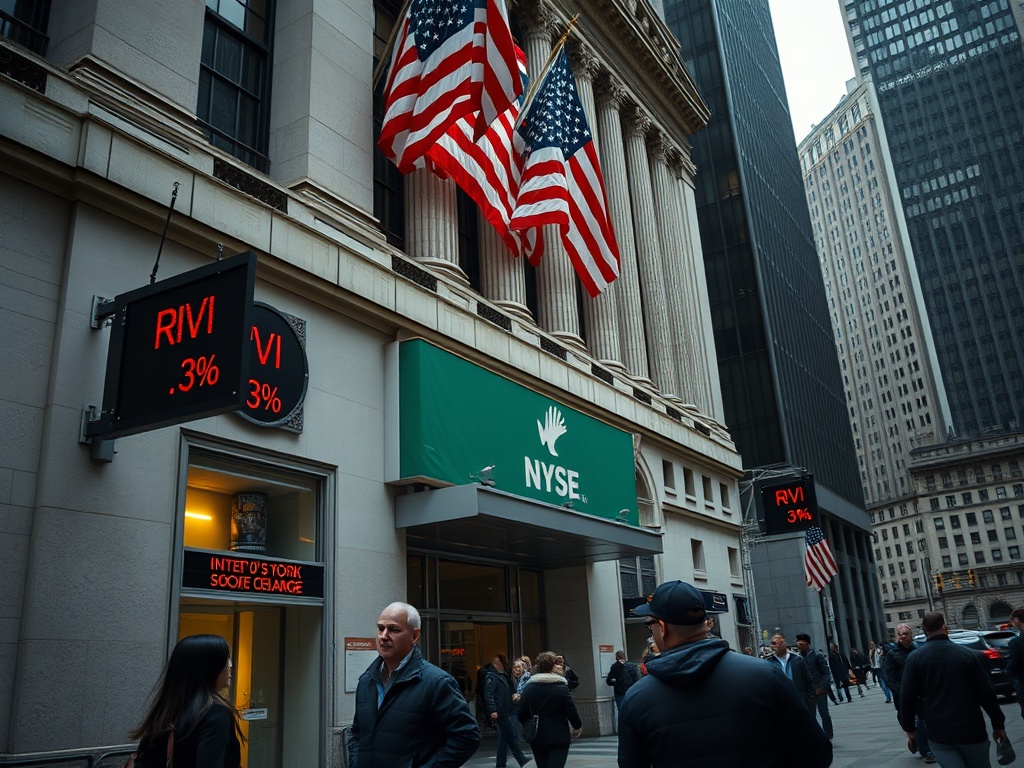
The Robinhood Ventures Fund I, a closed-end fund sponsored by Robinhood Markets Inc., debuted on the New York Stock Exchange under the ticker RVI. It was priced at $25 per share and raised $658.4 million, with the potential to reach $705.7 million if the overallotment option was fully exercised. Up to that point, it was solid fundraising execution. However, the issues arose as the instrument hit the trading floor: it opened at $22, a 12% discount from the offering price, and was seen hovering around $22.25 during the session, with reports later indicating it closed at $21, deepening skepticism.
This contrast—the ability to place the product but the inability to maintain the price in open market—is crucial. Because the “retail access to private capital” is less a marketing promise and more a physical clash: daily liquidity versus sporadic valuation, market transparency against assets marked infrequently, and an audience accustomed to narrow spreads facing a vehicle that absorbs uncertainty.
Adding to this was a risk-averse context. Some coverage linked the weakness in the debut to market pressure from geopolitical tensions following President Donald Trump’s statements amid escalating US–Israel–Iran conflict. While this backdrop matters, it doesn't explain everything. Even in a perfect scenario, the product’s mechanics would still have been tested.
A Closed-End Fund with Startups Inside is Not Just Another Ticker
RVI serves as a bridge for retail investors to gain exposure to private “frontier” companies that are typically reserved for venture capital funds and large institutions. According to reports based on SEC filings, the fund holds stakes in Databricks, Ramp, Revolut, Airwallex, Oura, Boom Supersonic, and Mercor; it was also noted that it was “days away” from closing a $14.6 million investment in Stripe. Furthermore, it was stated that the largest allocation was Databricks, comprising about $18.5 million.
By design, there are limits to concentration: the fund plans to invest in five or more companies and aims for none to exceed 20% of the assets at the time of purchase. This rule reduces the risk of a “winner-takes-all” scenario but doesn’t eliminate the primary issue: in private assets, the discussion isn’t just about what is bought, but at what price it can be sold and when.
A listed closed-end fund solves one problem while creating another. It solves access: anyone trading stocks can buy RVI. But it creates the issue of decoupling between the market price of the fund and the value of the underlying assets. When appetite wanes—be it macroeconomic factors, headlines, or simple rotation—the fund's stock can trade at a discount without an immediate mechanism to “arbitrate” value, as the underlying is not a portfolio of liquid stocks. In practice, liquidity is provided by the secondary market of RVI, not the portfolio.
This nuance is where the illusion of simplicity breaks down. The stock market imposes an uncomfortable truth: the “democratization” of an illiquid asset does not equate to making it liquid; it means transferring appetite variability to the price of the vehicle.
Why the Market Punished the Debut, Even with Attractive Names
On paper, the portfolio of investments sounds familiar to anyone following technology: global fintech, enterprise software, and traction-driven consumer brands. The easy angle is to say that the discount was a calendar accident or a bad market session. That would be incomplete.
First, the market wasn’t just buying “Databricks or Stripe”; it was purchasing Robinhood’s ability to package, value, and manage private capital risk at a retail scale. That’s a category change. Robinhood excels in distribution and user experience; private equity demands different capabilities: sourcing, governance, valuation calibration, round follow-ups, pricing discipline, and extremely precise communication of risk.
Second, the product arrives at a time when retail investors have learned—sometimes the hard way—that the promise of access doesn't guarantee returns. The narrative of “institutional access is now for everyone” holds until the screen shows -11% on the first day. At that point, a basic behavioral mechanism activates: people do not compare with intrinsic value; they compare with their entry price.
Third, some market flashes indicated a compositional factor: the perception that the fund does not include exposure to certain highly sought-after private names. Regardless of the accuracy of that reading, it reveals something valuable: in retail products, the story weighs as heavily as the portfolio. If the thesis is “access to the inaccessible”, the audience expects a list that reflects “what they couldn’t have”. When that doesn’t happen, the instrument begins to seem like an imperfect substitute.
Fourth, the early discount also signals another truth: the market is placing a premium on liquidity control. If an investor wants tech risk, they buy it with liquid stocks. If they want illiquid risk, they demand compensation for being immobilized. A listed vehicle that mixes both worlds tends to end up in a gray area where the price punishes ambiguity.
The Blind Spot is Not Financial, but Product Design and Trust
This debut is a class of design, not just market gossip. Robinhood is trying to extend its democratization promise from trading to private capital. The idea is consistent with its DNA. The blind spot is assuming that “putting it on a ticker” completes the transition.
A retail private capital product needs three layers of trust that cannot be obtained through distribution:
1) Trust in valuation. In private markets, price is not a continuous consensus; it’s an intermittent negotiation. When the vehicle trades minute by minute, the investor sees a number that appears precise. If the market suspects that number does not adequately reflect the underlying, a discount is demanded.
2) Trust in the horizon. Private capital is designed for patience. Retail investors, even if they claim otherwise, are conditioned by interfaces that allow for exit in seconds. This mismatch generates sales at the first sign of loss.
3) Trust in the governance of the “bridge”. The bridge is Robinhood Ventures. The market is calibrating how robust that structure is to sustain a portfolio of “frontier companies” through cycles, not just in a single quarter.
In this sense, the initial drop does not invalidate the model. It subjects it to a necessary condition: to demonstrate that the vehicle can coexist with the brutal transparency of the public market without confusing the end user. Here, reputational risk appears: if the product scales and is misinterpreted as “a basket of startups that always go up”, the result isn’t financial inclusion; it’s frustration at scale.
The constructive side is that the market is pushing Robinhood toward mandatory maturity: to explain precisely what is being bought, how it is valued, when returns can materialize, and what type of volatility is to be expected. True democratization isn’t just access; it’s legibility.
The New Balance of Power: Access Yes, but Without Erasing Friction
A shift in power is underway: technology and platforms are opening historically closed doors. RVI is a symptom of that movement. But friction doesn’t disappear just because the interface is good.
If Robinhood manages to iterate on this type of product, it could open a relevant line of business based on assets under management and associated fees while reinforcing its foundational narrative. It could also force traditional managers to improve transparency and costs. That’s the vector of abundance: more options, more access, more competitive pressure.
Still, the market has already set a limit: when the illiquid is wrapped with apparent liquidity, valuation suffers. The debut signal is that the “democratization” of private capital is in a phase where distribution is no longer the decisive advantage; what matters is product design, risk management, and communication.
This episode also leaves implications for startups and funds: retail is a potential source of capital, but also an audience with high sensitivity to daily prices. Turning private assets into listed instruments changes the type of pressure that the manager receives because judgment becomes continuous.
In terms of exponential dynamics, the market has progressed from digital access to the operational disappointment typical of early-stage ventures: the first mass attempt reveals where the hidden complexity lay. The correct direction is to transform that friction into design learning so that technology empowers human judgment and democratizes capital without trivializing its risk.