
Raspberry Prices Double, and the Problem Isn’t the War
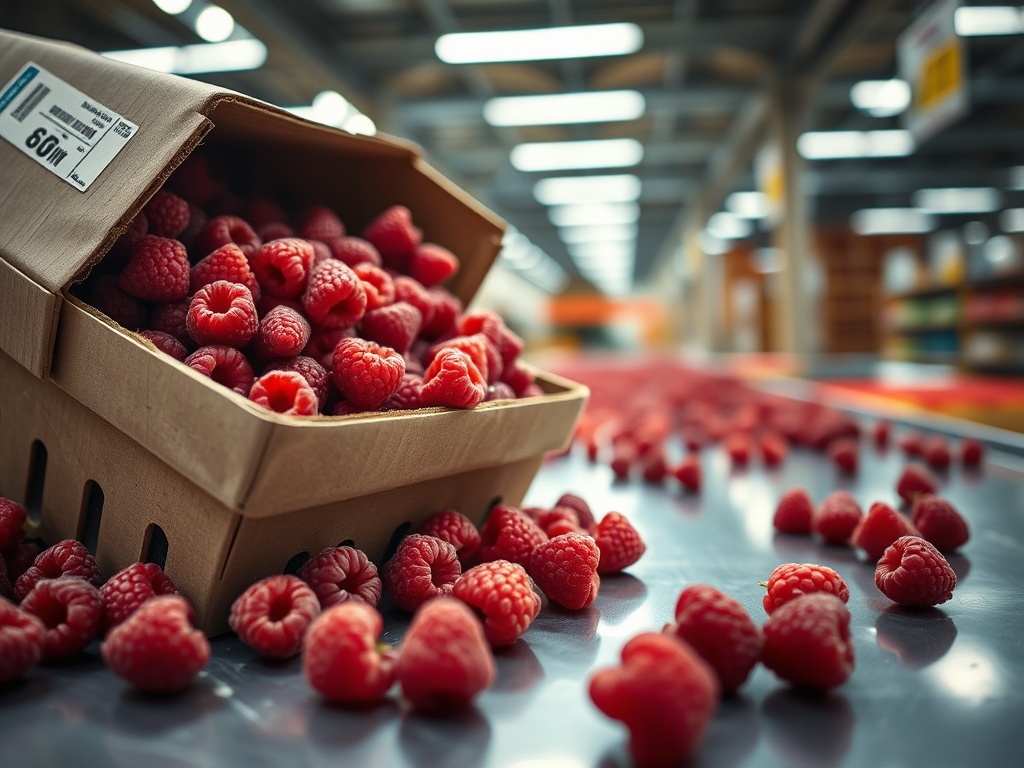
Wholesale prices for fresh raspberries in the United States have doubled between January and the end of March 2026, according to federal reports cited by The Boston Globe. This escalation is directly linked to military tensions surrounding Iran and their impact on transportation routes and energy costs throughout the cold chain of perishable goods. For consumers at the supermarket, the bill was already steep before anyone mentioned the word war. Now it is unsustainable.
However, if you are a marketing director for a food brand, a fresh produce retailer, or any company whose portfolio depends on ingredients with highly volatile prices, the headline about raspberries shouldn’t be read as a piece of geopolitical news. Instead, it should be viewed as a diagnostic of your value architecture and how much of it rests on assumptions that haven’t been revisited in years.
Rising Prices Reveal the Nonexistent Proposal
A nearly monotonous pattern emerges each time a key input abruptly rises in cost: brands that competed for years by trimming pennies from their list price or adding marginal attributes to appear distinct are laid bare. When the cost of the main product doubles within weeks, the only lever they had available—the price—becomes the source of the problem.
Raspberries are an extreme case, yet they serve as a magnifying lens on something structural. The premium fresh fruit market has been competing for over a decade based on the same variables: attractive packaging, organic certification, presence in the right aisle, and timely seasonal discounts. None of these variables protect a brand when wholesale costs double. They all increase the cost structure without building a reason for consumer preference that can withstand price turbulence.
What a shock like this does is reveal which brands have a value proposition that buyers appreciate independent of price and which simply occupied shelf space because they were the available option at the right price. The war didn’t create this fragility; it merely made it visible.
This distinction matters for C-Level executives because it defines two entirely different response paths. The first is defensive: absorb the blow, reduce margins, renegotiate with retailers, and wait for the conflict to calm. The second is structural: use the moment of disruption to rebuild the proposal around variables that competitors are not observing because they are all busy solving the same operational problem at once.
While Everyone Looks Up the Supply Chain, the Market Moves Sideways
When the price of a product rises abruptly, the standard industry response is to look upwards in the supply chain: renegotiate with suppliers, explore alternative sources, seek financial coverage for commodities. It’s the logical response, and it’s exactly what everyone is doing at the same time. This means that any advantages gained will be temporary and hard to sustain.
What few brands do in this moment is look sideways, at consumers who had already left fresh raspberries long before the war started, not due to price but because the product never truly solved their real problem. The consumer buying fresh raspberries to add to their morning yogurt isn’t just buying raspberries: they’re buying texture, color, and the feeling of having done something good for themselves in a very tight timeframe. When the price increases by 80%, that person doesn’t disappear; they migrate.
They migrate to frozen raspberries, to other berries with a better price-performance ratio, or to formats that solve the same problem more efficiently. Brands that understand this are not fighting to keep consumers within the fresh category. They are building presence in the formats where that consumer is already landing, with a value proposition that doesn’t depend on the stability of the wholesale price of a perishable product.
This shift requires reducing investment in the variables that the industry assumes are mandatory, like high-cost packaging, discount-centered loyalty programs, or seasonal activations, and creating value in dimensions that budget-conscious consumers find more relevant: constant availability, flavor consistency, and ease of use. This is not a low-price strategy. It’s a low-cost strategy with high perceived utility—two completely different things.
Burned Capital in the Wrong Aisle Doesn’t Come Back
There is a pattern I consistently observe in mass consumer brands when facing this type of external pressure: they reinforce investment in traditional touchpoints just as those touchpoints are losing effectiveness. More budget on in-store activations at grocery stores where premium fresh traffic is declining. More effort convincing retailers to keep a product’s space on shelves that consumers are purchasing less frequently.
This is the invisible cost that no income statement captures well: capital committed to defending a position in a shrinking market. It’s not just the money spent; it’s the teams’ time, leadership’s attention, and organizational capacity consumed trying to uphold something that the market is already choosing to abandon on its own.
The shock in raspberry prices is, among other things, an opportunity for an honest audit of how many of the variables a brand competes on today were designed for a price context that no longer exists. How many of those variables were adopted because competitors had them, not because they ever validated that consumers valued them enough to pay for them.
The brands that emerge best positioned from this cycle won’t be those that found better suppliers in other hemispheres. They will be those that seized the price dislocation to eliminate the variables inflating their cost structure without building real preference, using that recovered margin to create something that competitors, all busy solving the same supply problem, lack the capacity to copy in the short term.
The Market Doesn’t Wait for the Conflict to End
The war may end. Wholesale prices may normalize in six months or two years. But the buying habits that reconfigure during a period of price pressure do not automatically return to the starting point. The consumer who discovered that frozen raspberries solve their problem just as effectively at half the price isn’t going back to fresh ones out of inertia. They return only if someone builds a concrete reason for them to do so.
That reason isn’t built by lowering prices when inputs become accessible again. It’s built now by precisely understanding what job that buyer is trying to do and designing a proposal that solves it better than any alternative available, regardless of what happens to oil prices or air freight between the Persian Gulf and the port of Boston.
Leadership worthy of the name does not consist of managing the supply crisis better than the competitor next door. It consists of having the clarity to eliminate what should never have been in the value proposition, reduce exposure to uncontrollable variables, and create demand in the space where buyers are already migrating—before others realize that space exists.