
Panera and the Cost of Ignoring What Customers No Longer Forgive
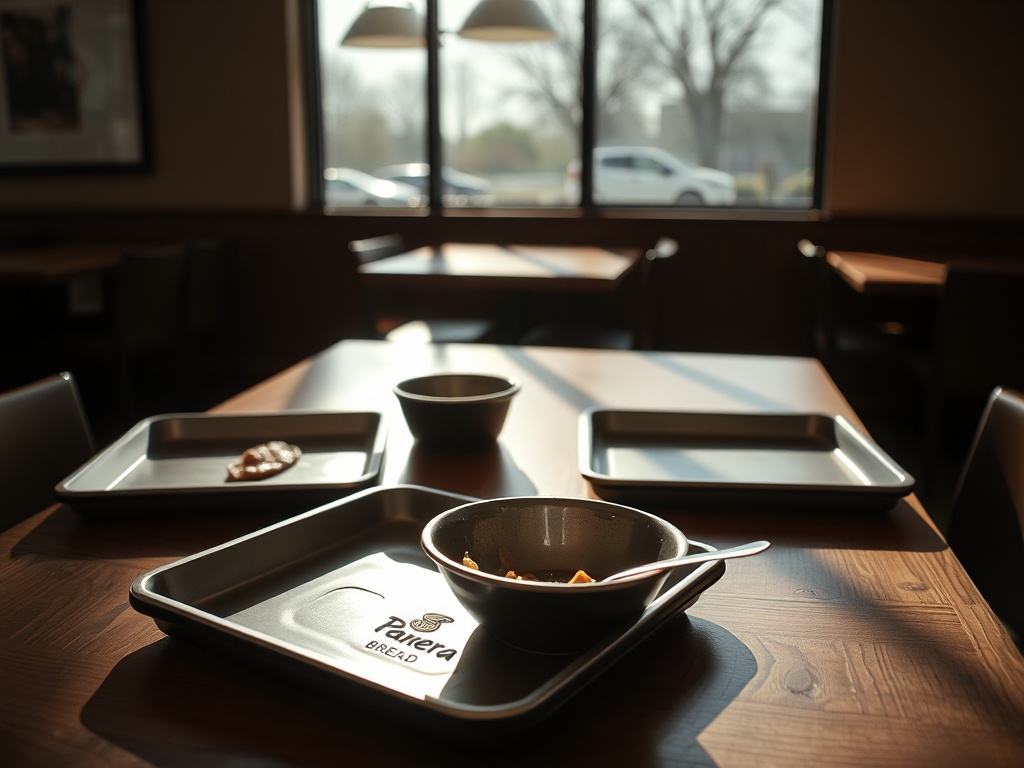
There comes a pivotal moment in the relationship between a brand and its customer that often goes unnoticed by corporate leadership. It doesn’t happen when a customer complains on social media, nor does it occur when sales decline in the first quarter. It happens quietly, when a customer crosses the threshold of a location, glances at the menu, and senses that something feels off. That afternoon, they won’t articulate it. Simply, the next time, they will seek another place.
That, at its core, is what has transpired with Panera Bread in recent years. The chain, which built its reputation on the promise of comforting, accessible food perceived as higher quality than conventional fast food, has made a series of corporate decisions that, when analyzed individually, may seem reasonable on a spreadsheet. Reducing portion sizes. Reformulating ingredients. Raising prices. The combined result was the collapse of something far more challenging to rebuild than an operating margin: the trust established in the buying ritual.
When Optimization Destroys the Bond
Panera is not an isolated case. It is the most recent example of a dynamic that occurs with astonishing regularity in diverse categories such as retail banking, subscription software, or low-cost airlines: a company that decides to extract value from its customer base rather than continue delivering it.
What makes Panera’s case particularly instructive is the sequence. There wasn't a single blow that fractured the relationship; rather, there was a buildup of small frictions. Portions reduced without prices dropping. Ingredients changed without any transparent communication. Prices rose in a context where consumers were already grappling with inflation from all sides. Each decision, viewed in isolation, could be internally justified. The problem is that customers do not experience these decisions in isolation; they perceive them as a pattern.
From the consumer behavior perspective, what Panera broke was the value heuristic, the mental shortcut through which customers instinctively know whether what they receive is worth what they paid. When that heuristic breaks down, the customer does not engage in rational analysis of alternatives. They simply stop activating the habit of returning. And once habits are broken, they do not restore with a press release or an advertising campaign promising to "return to what makes us great."
CEO Paul Carbone promised a thorough transformation last year. The question is not whether Panera has the will to change, but whether it understands precisely what has been damaged.
The Diagnostic Error that Turns a Crisis into a Chronic Issue
This is where most companies in a similar position commit their second error, which can sometimes be more costly than the first. They confuse the symptom with the cause. They see a drop in sales and diagnose a product or pricing problem. They reformulate the menu, launch promotions, hire an agency to refresh communication. They make the product shine. And customers still do not return because the product was never the central problem.
The issue was the erosion of trust in consistency, and that cannot be repaired with a new sandwich.
What consumer neuroscience has extensively documented is that brands do not primarily compete on functional attributes; they compete on certainty. At the moment of purchase, the customer choosing Panera is not comparing nutritional specs with other chains. They are activating a learned pattern that signals: here, I know what I’m getting, and that provides me relief. When that pattern gets interrupted repeatedly, the brain updates its model. The brand migrates from the “trustworthy” category to the “unpredictable” category. And in that category, no marketing effort has sufficient traction.
The strongest force currently working against Panera's recovery is not direct competition or input prices. It is the broken habit. Customers who stopped visiting found, out of necessity, other routines. Other brands now occupy that cognitive and emotional space. To win them back, Panera must not only improve; it must generate a return motivation strong enough to overcome the inertia of newly established habits.
This requires much more than making the product more appealing. It necessitates actively reducing the fear of disappointment, which is the real barrier to re-adoption. The customer who was let down does not fear paying more; they fear feeling deceived again. That fear does not vanish with advertising. It dissolves with repeated, consistent experiences that contradict it.
The Blueprint for Real Recovery
If the management team at Panera is making decisions based on correct analysis, the operational focus should not be on redesigning the menu as the centerpiece. It should be on reducing variability in experience, restoring the predictability that the customer lost. Consistent portions. Stable ingredients. Prices that customers can anticipate without surprises. None of that is glamorous from a marketing perspective. But it is the only foundation upon which a reclamation campaign can be built.
The second axis is signaling change. When trust has been broken, customers require observable evidence, not promises. The difference between a promise and evidence is operational: a promise exists in communication, while evidence exists at the point of contact. If Panera truly restored portions to previous standards, it must be visible, measurable, and consistent at every location, not just in PR photos.
The third axis, and the most underestimated, is time. Trust recovery does not follow the same curve as its destruction. Trust is lost quickly and rebuilt slowly. Leaders who expect to see results in two quarters after years of erosion are using the wrong measuring rod. The relevant metric at this phase is not sales per location; it is the recurrence rate, the frequency with which a customer who returned once decides to return a second and third time.
What Every C-Level Should Take from This Diagnosis
The Panera case is, above all, a lesson in trust economics. Decisions made under the logic of operational efficiency carried a hidden cost that did not show up in financial models: the cost of destroying customer certainty.
That cost is not accounted for in the quarter when decisions are made. It is recorded months later when visits begin to decline and no one in the boardroom can pinpoint exactly when everything went wrong. Because there isn’t a singular moment, there is a buildup.
Leaders operating under margin pressure tend to view customers as a response variable: if the product is good enough and the price competitive enough, customers will buy. This model ignores that customers do not buy products; they buy the certainty that they will not regret their decision. All the energy spent on making Panera shine again will yield marginal returns unless equal effort is invested in diffusing the fear of disappointment that currently occupies the center of decision-making for once-loyal customers. Brands that understand this don’t need remakes. Those that don't understand need them more frequently.