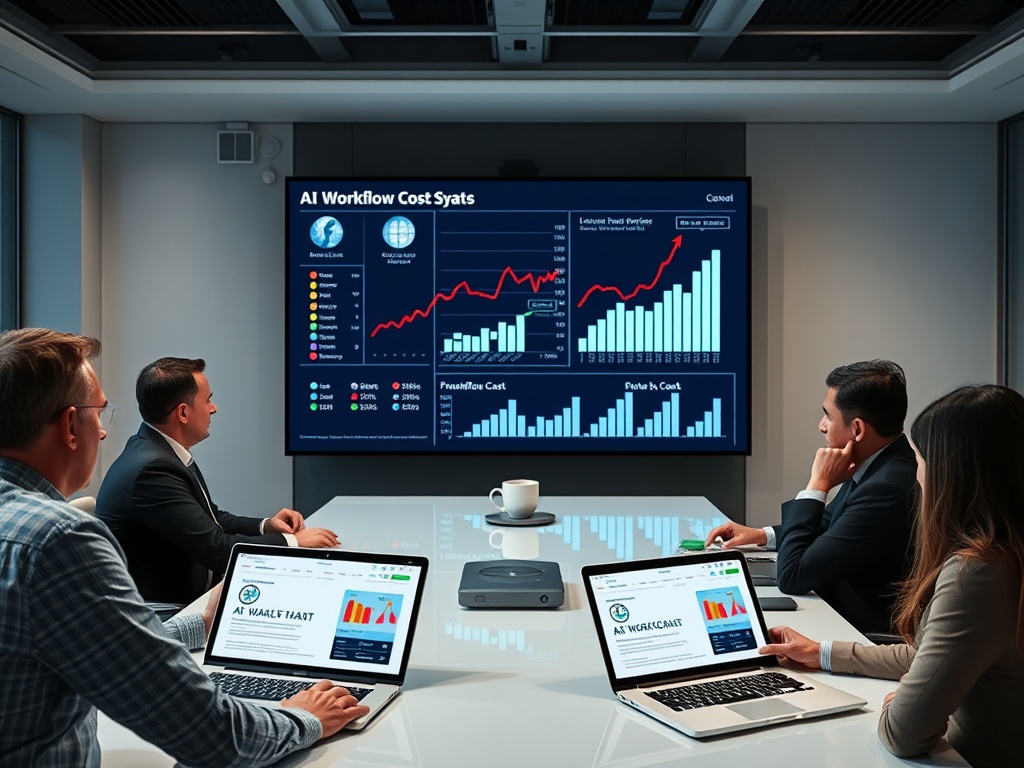

Only 15% Would Accept an AI Boss, and That Number Says It All
A recent Quinnipiac University survey released this week highlights a seemingly modest figure, but when examined closely, it reveals more about the future of work than any corporate roadmap on automation: only 15% of Americans would be willing to work under the direct supervision of an artificial intelligence program, meaning a system that allocates tasks, sets schedules, and evaluates performance. The remaining 85% do not desire such arrangements.
The first response from the tech industry will likely be to interpret this 15% as a promising starting point, a niche of early adopters ready to validate the model. The second, more honest reflection should be to ask why four out of five workers reject something that, on paper, would free them from human arbitrariness, favoritism, and inefficient feedback cycles. The answer is not found in the technology itself, but rather in what people seek when they accept a boss.
The Job No One Sees on the Org Chart
A supervisor is not merely a logistical function that distributes workloads and sets deadlines. For most employees, a boss fulfills a far more complex implicit contract: interpreting contextual ambiguity, absorbing political tension, granting situational recognition, and, most importantly, ensuring that someone with skin in the game shares responsibility for the outcome. This set of functions is not extraneous; it is at the core of the psychological contract that sustains the employer-employee relationship.
When a person accepts a job, they are not just contracting for a salary or a set of tasks. They are also securing a system of protection against organizational uncertainty. A human boss can intervene with the director when a project shifts direction, read the room before a tense presentation, or say "today is not the time" without needing to justify it in a decision log. An AI supervisor, by nature, operates on explicit rules and historical data. Its scope for contextual discretion is narrow, and employees understand this even if they don't express it in those terms.
The 85% who reject algorithmic supervision are not voicing a fear of technology. They are intuitively articulating that the emotional and political work of leadership has a value that does not appear on any productivity dashboard.
Why the 15% Matters More Than It Seems
Dismiss the 15% as an irrelevant minority would be a diagnostic error. This 15% represents the segment where the promise of algorithmic supervision addresses a genuine frustration, not a fantasy concocted by engineers. They are likely workers who have faced erratic management, documented favoritism, or chronic micromanagement. For them, a system that assigns tasks based on transparent criteria and measures performance without a personal agenda is not a threat; it is precisely what they would have requested if someone had asked them.
Here appears the pattern that intrigues me most about this figure: companies with the worst trust indices in middle leadership will be the first to see that percentage grow internally. Not because an AI supervisor is abstractly better, but because the point of comparison is a boss who has already failed to fulfill their implicit contract. The disruption in this case is not driven by more sophisticated technology but by the most deficient human management.
This has direct implications for any company evaluating automation pilots in human resources. Implementing an algorithmic supervision system within a team with high trust in its leadership will generate friction and turnover. Conversely, implementing it in a team where leadership has already broken that psychological contract may paradoxically improve perceptions of procedural justice. The same product can yield opposite results depending on the organizational context.
The Pitfall of a Well-Designed Pilot
Tech companies developing AI-assisted management tools often make a design mistake that this Quinnipiac data highlights: they optimize for the work that the boss claims to do, not the work that the employee is contracting them for.
A system that assigns tasks efficiently addresses the logistical function of leadership. However, if the employee does not perceive it as a figure who shares risk, can intercede, or has the ability to recognize effort beyond programmed metrics, the product fulfills its technical specification and fails in its functional purpose. It is a solution that solves the problem the developer diagnosed, not the problem the user has.
The history of work management products is littered with this fracture. Productivity tracking tools launched with narratives of "empowerment" that employees experienced as surveillance. Continuous feedback systems designed to alleviate the anxiety of annual evaluations that generated more anxiety, not less, because they eliminated human discretion without replacing the value that discretion provided.
The 85% rejecting the algorithmic boss are not asking for less technology. They are demanding that someone first solve the right problem: they want leadership that protects them, recognizes them, and shares their exposure to risk. If an AI can credibly achieve that, that 85% will shift. Until it can, the number will remain where it is.
The Insight Companies Should Take to Their Board
The executive takeaway from this survey is not that the adoption of AI in management is slow. The insight is that the market is accurately signaling what the unresolved work is: the relational and political dimension of leadership, not its operational dimension.
Organizations that understand this before their competitors will not wait for the AI supervisor to mature sufficiently to simulate empathy. They will use AI to free their human leaders from administrative burdens, task allocations, and deadline tracking, precisely the functions that the 15% of early adopters are already conceding to the algorithm without resistance, allowing those leaders to focus their time on the work that no system can perform yet: building the psychological contract that turns an employee into a committed individual.
That is not a philosophical bet. It is a business model hypothesis with numbers behind it. If algorithmic supervision frees up 30% of average management time, and that time is reinvested in development conversations, contextual recognition, and political intercession, the return on investment is not measured in completed tasks. It is measured in reduced turnover, resolved escalation cycles before they reach the C-suite, and teams executing with less friction.
The failure of early algorithmic boss models will not stem from technical limitations. It will arise from confusing the work an employee assigns to their supervisor with the work the supervisor believes they are doing. The advancement that the 85% of respondents are contracting is not coordination or task assignment: it is the certainty that someone with authority and context has their back when things get complicated.