
Not Releasing Strategic Reserves Amid Tensions with Iran: A Gamble on Costs
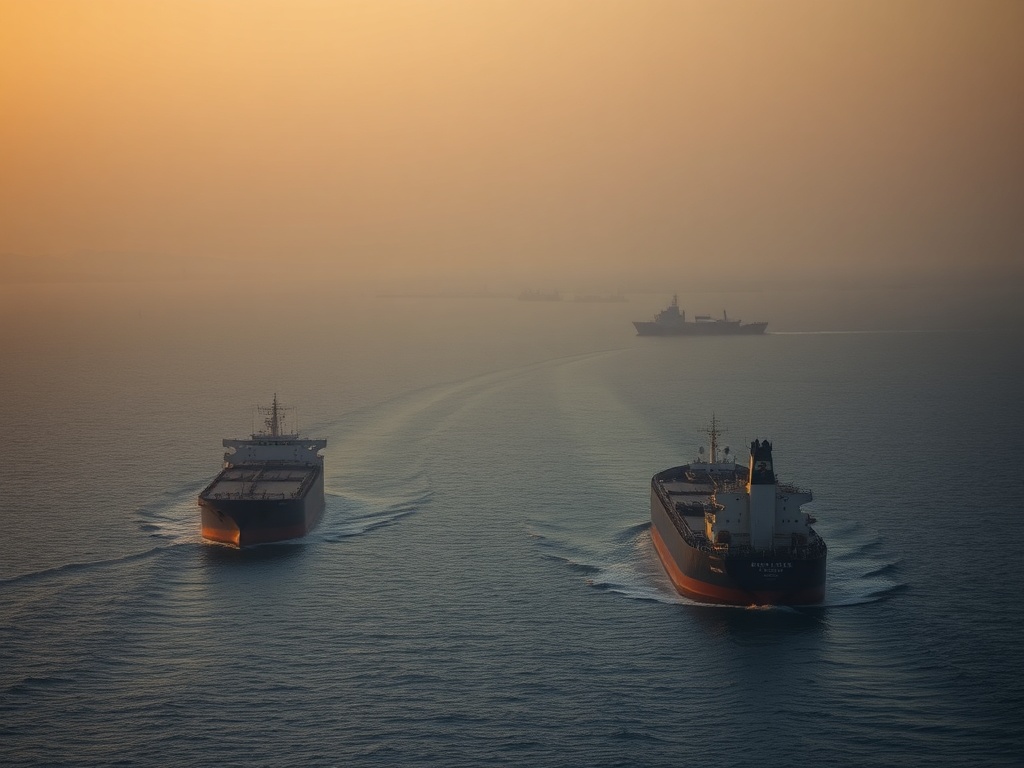
The Trump administration has taken a firm stance: it does not plan to use the Strategic Petroleum Reserve even as geopolitical risks with Iran have reignited uncertainty premiums in crude oil prices. This decision is significant considering the current timing. The military escalation in the Middle East following U.S. and Israeli attacks on Iran has heightened market anxiety, and the dialogue is no longer abstract: OPEC+ delegates describe that passage through the Strait of Hormuz has slowed to a "drip" as the conflict unfolds. In energy markets, when the flow turns to a drip, prices cease to be a technical variable and transform into a rationing mechanism.
Oil prices were already reflecting this risk. Brent fell to $67 on February 17 but remained above the average of $58 projected by the EIA for 2026. By February 28, prices returned to $67, about $5 more than a month prior, anticipating military action. Barclays, on the other hand, models a scenario of sustained hostilities pushing Brent towards $80. In other words: the market is not waiting for confirmation of a shock; it is already paying a premium for the probability.
From a strategic perspective, the key issue is not whether releasing reserves "lowers prices" on day one, but how the cost of risk is distributed among producers, governments, consumers, and supply chains. Choosing not to use the reserves essentially opts for coverage to be provided by other actors or, if none appear, for the adjustments to occur through consumer prices and inflationary pressures.
The Strait of Hormuz Turns Volatility into a Widespread Tax
When risk concentrates at a bottleneck, elasticity diminishes, and the system becomes fragile. The Strait of Hormuz is not just a cartographic detail: it is the critical passage for exports from OPEC+ members such as Saudi Arabia, the United Arab Emirates, Kuwait, and Iraq, and the possibility of prolonged disruption reconfigures the balance of power in the value chain. It is no longer just about "Iran exporting less," but that multiple exporters may be affected by the security of a route.
The CSIS briefing categorizes risks into four scenarios, each with distinct implications for value distribution. A blockade or capture of Kharg Island, Iran's main loading point, could interrupt up to 1.6 million barrels per day of Iranian exports, mostly heading to China. This scenario alone would imply a price spike of at least $10 to $12 per barrel due to China needing to compete for substitutes in the global market. Additionally, threats of attacks on offshore platforms could remove up to 1.5 million barrels per day from domestic production.
In incentive terms, this type of bottleneck creates automatic transfers: the producer with secure delivery captures rent, while the consuming industry pays a premium for operational continuity. Airlines, logistics sectors, energy-intensive manufacturing, and eventually households, act as “residual payers” of geopolitical risk. The problem for a government is that this transfer does not remain confined to a trader’s Excel sheet: it surfaces in gasoline prices, inflation, and living costs.
Thus, the decision regarding the strategic reserve is, in essence, a decision about who absorbs the shock. Releasing state inventory cushions marginal prices and buys time. Not releasing it allows the market to adjust, directing adjustments through the most immediate channel: consumer prices and demand destruction.
OPEC+ Offers Barrels, but Its “Idle Capacity” is a Finite Asset
In response to the conflict, OPEC+ acted swiftly: it announced it would resume accelerated production increases, with 206,000 barrels per day in April, which is 1.5 times the increases of 137,000 barrels in December. The signal is notable, but there is a physical and political limit: the International Energy Agency estimates that idle capacity is “largely confined” to Saudi Arabia and the UAE, at about 2.5 million barrels per day, or less than 3% of global supply, with some analysts suggesting that even this figure could be overestimated.
Here, a dynamic occurs that many executives underestimate: idle capacity is insurance, not inventory to be monetized freely. Helima Croft (RBC Capital Markets) emphasizes this operationally: if most of the margin is in Saudi Arabia and the rest is at maximum capacity, any actual increase will be “meager,” and each additional barrel that enters today leaves fewer “in reserve” for the next escalation.
This is the typical blind spot of reassuring narratives. An announcement of increased production generates momentary calm, but the system runs out of buffers if the conflict escalates. Moreover, some Gulf producers are already raising exports, replicating what they did during the U.S. assault on Iranian nuclear facilities in June 2025. This reaction stabilizes, yes, but also consumes the margin of maneuver.
In supply chain strategy, this translates to an uncomfortable truth for importers and consuming industries: stability depends not just on “producing more,” but on having buffers. When buffers diminish, pricing power concentrates in those who can still respond quickly without breaking their future responsiveness capacity.
China, as the Dominant Buyer, Globalizes a Regional Shock
The current market geometry means that an event in Iran spreads faster and further. China purchases nearly 90% of the 1.5 million barrels per day that Iran exports. If that flow is interrupted, China does not vanish as a demander; it goes out to replace barrels, and due to its size, can push global prices upward. The CSIS quantifies this clearly: forced replacement spikes competition for alternative supplies, elevating international prices.
This is a key point for understanding why the U.S. Strategic Reserve is not merely a domestic tool. In integrated markets, a dominant buyer reshuffles the priorities of others. When China "bids," countries and companies pay more for the same barrel, and that pressure filters into non-energy goods and services.
Moreover, the briefing mentions that China has been accumulating strategic reserves by buying excess from North America and other producers. This accumulation adds a strategic layer: demand is not just consumption, but also inventory policy. In a tense scenario, those with inventory choose when to buy; those without must buy when the market obliges.
From a distributive logic, the result is a double transfer: the secure supplier captures a premium; the buyer without inventory pays a markup; and the final consumer absorbs part of the adjustment. A country’s strategic reserve operates as a tool to prevent that transfer from occurring abruptly and regressively.
Not Using the Strategic Reserve is Risk Design, Not Neutrality
The Strategic Reserve exists to cushion supply shocks and stabilize expectations. The closest precedent is the massive release in 2022 following the Russian invasion of Ukraine. The current stance of not resorting to it communicates something different: confidence in alternative mechanisms or that the political cost of rising gasoline prices will be manageable. In terms of incentives, it can also be interpreted as a decision not to “subsidize” the consumer with state inventory in the short term.
However, the political economy of this choice is more concrete. If Brent approaches the $80 scenario modeled by Barclays, the transmission to domestic prices becomes more likely, and the adjustments are no longer discussed in terms of barrels but of purchasing power. The briefing outlines expectable impacts: gasoline, airline and transportation costs, pressure on margins in energy-intensive industries, and a geopolitical risk premium that revalues uncertainty in valuations.
In a production ecosystem, this decision tends to concentrate the damage on links with less negotiating power: logistics SMEs, manufacturing with fixed contracts, and households with limited capacity to absorb increases. The natural winners are those actors selling “continuity”: producers with responsive capacity, traders monetizing volatility, and companies with robust financial hedges.
The administration seems to gamble that OPEC+ and Gulf logistics will sustain enough flow to avoid a major shock. However, the limited idle capacity and slowed traffic in Hormuz indicate that the system operates with narrow margins. In that context, reserving the reserve is, in fact, letting the short-term correction be managed by price, not energy policy.
The distribution of value ends up being clear. If the conflict drives prices up, producers and exporters with deliverable barrels capture rent, while consumers and supply chains pay the tax of uncertainty; and when a government opts not to use its most direct buffer, it is deciding that stability will be financed by those who cannot negotiate the price of fuel.