
The Largest AI Factory in Europe and the Void No One Wants to Name
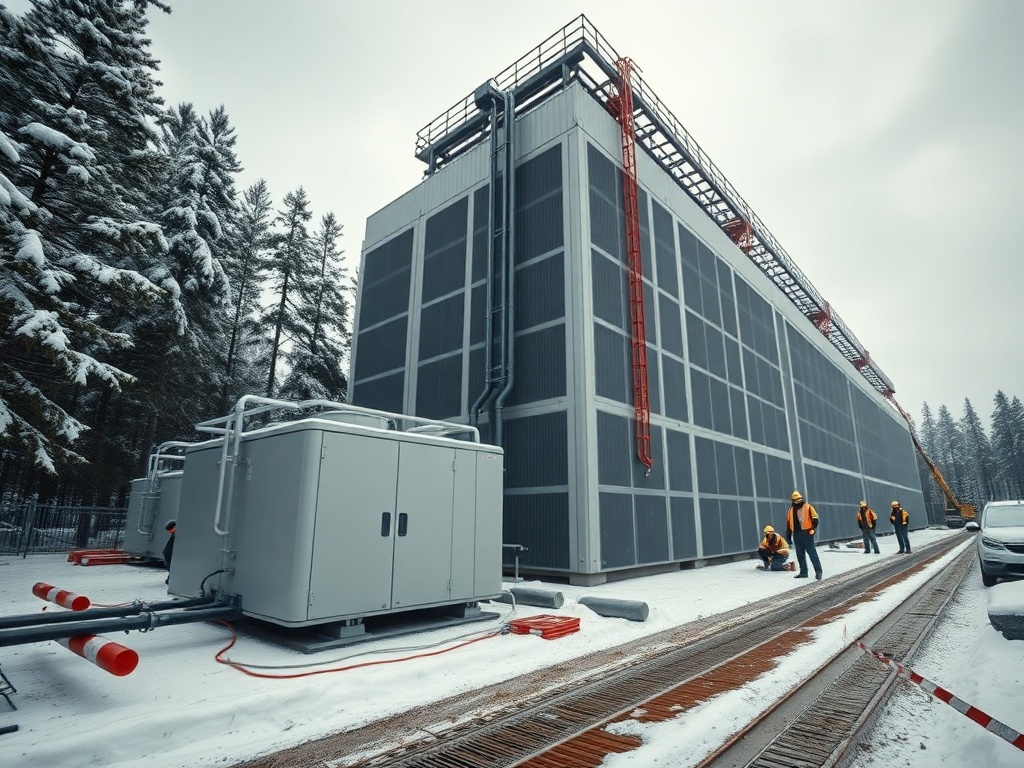
Finland is poised to become the epicenter of the European race for artificial intelligence infrastructure. Nebius, a cloud computing firm emerging from Yandex's technological assets in Europe, has just announced its plans to build one of the largest AI factories on the continent. This bold move comes at a time when all of Europe watches anxiously as its dependence on American and Asian infrastructure threatens not only its digital autonomy but also its capacity to compete in the coming decade of an economy driven by language models, computer vision, and intensive automation.
The announcement has all the makings of a heroic story: a region reacting, capital flowing into critical infrastructure, and a company positioning itself as the sovereign provider that Europe needs. However, when one examines such movements with the impartiality of an economic auditor, the narrative becomes more complex, more intriguing, and, in some segments, more uncomfortable.
A Region Buying Autonomy with Carbon Debt
Finland is not an arbitrary choice. The country provides a difficult-to-replicate blend: a cold climate that reduces cooling costs for data centers, an electrical infrastructure with a relatively high proportion of nuclear and renewable energy, and a regulatory stability that attracts institutional capital. From the perspective of operating cost structures, installing intensive computing capacity in Finland makes solid economic sense. The energy efficiency differential compared to southern European locations can yield significant operational cost reductions for projects consuming electricity on an industrial scale.
But here lies the first tension deserving of attention. AI factories, by their nature, are extraordinarily heavy fixed capital assets. We are talking about facilities that require investments of hundreds of millions of dollars before processing a single inference token for a paying client. The question a CFO must ask is not whether computing demand will grow —that’s almost certain— but whether the monetization model is designed to survive capital cycles. The history of technological infrastructure is filled with operators who constructed capacity for projected demand that took longer than expected to materialize, and who found themselves stuck with unsustainable fixed costs as GPU-hour prices plummeted due to oversupply.
Nebius, which began trading on Nasdaq in 2024 after separating from Yandex's European assets, is betting that the current shortage of computing in Europe is structural, not cyclical. They may be right. But converting variable costs into fixed assets is a wager only won by those who secure long-term contracts before building, not after. That operational detail does not feature in press releases.
Who Benefits from This Infrastructure and Who is Left Out
When I analyze the value map of a project of this nature, the first exercise I undertake is to identify who has real access to the resource and who is structurally excluded. The mass computing capacity at competitive prices primarily benefits large European tech firms, well-funded research laboratories, and well-capitalized startups that can afford market prices for GPU time. This universe, while growing, remains relatively narrow.
The smaller and medium-sized enterprises (SMEs) in Europe that could capture more value from artificial intelligence —specialized manufacturing, precision agriculture, regional logistics— generally lack the technical teams or budgets to consume infrastructure of this type at scale. What I find most crucial to highlight is not that this represents a moral failure on Nebius' part —it does not; they are an infrastructure company operating with legitimate business logic— but that the narrative of European technological sovereignty conceals an asymmetry of access that the governments celebrating these announcements rarely acknowledge.
Europe does not face solely a hardware problem. It has an intermediary issue between computational capacity and the productive sectors that need it most but have the least access. Building the factory is a necessary condition, but it is not sufficient. Without a distribution ecosystem that channels this capacity to the middle layers of the productive economy, the value created by this infrastructure will migrate to the same actors already dominating the digital market: large platforms and investment funds with technology portfolios.
The Financial Architecture No One is Questioning
Beyond the geopolitical debate regarding digital sovereignty, what I find most revealing about this announcement is what it says about the financing model for Europe’s AI race. Europe is reacting, in many cases, with public money funneled into private infrastructure. Tax incentives, state guarantees, and direct subsidies are part of the landscape through which projects like this advance. This is not inherently negative, but it demands a level of scrutiny that rarely occurs.
A business model that requires public capital to take off but generates returns that go exclusively to private shareholders is not a shared value model: it is the privatization of profits with the socialization of risks. This pattern is not an accusation against Nebius specifically —I have no evidence that this is their particular case— but rather a warning about the structural pattern that recurs throughout the technological infrastructure industry as governments compete to attract investment without negotiating a stake in the generated value.
Startups that want to operate in this space —and there are genuine opportunities to do so in a more distributed and less capital-intensive manner— must design their financial architecture with a discipline that the moment’s euphoria tends to suppress. Charge before building. Convert capacity into modular service. Generate recurring income from the first customer before scaling infrastructure. These principles are not ideology: they are the difference between a company that survives the next interest rate cycle and one that becomes a distressed asset.
The Mandate European Leaders Prefer to Ignore
The race for AI infrastructure in Europe will reach some kind of stabilization. Factories will be built, capacity will increase, and prices per unit of computing will decline over time. That process is inevitable and, in aggregate terms, positive. What is not inevitable is that the value generated by this infrastructure will reach the sectors of the economy that need it most and who today have no voice in these decisions.
The mandate for those leading companies in this space is clear: honestly audit whether their model is using the geopolitical urgency of Europe as leverage to concentrate more capacity in fewer hands, or if they have the financial architecture and strategic will to design distributed access from day one. Using money as fuel to elevate more productive actors is the bet that turns infrastructure into legacy. Everything else is just another heavy asset waiting for the next downturn.