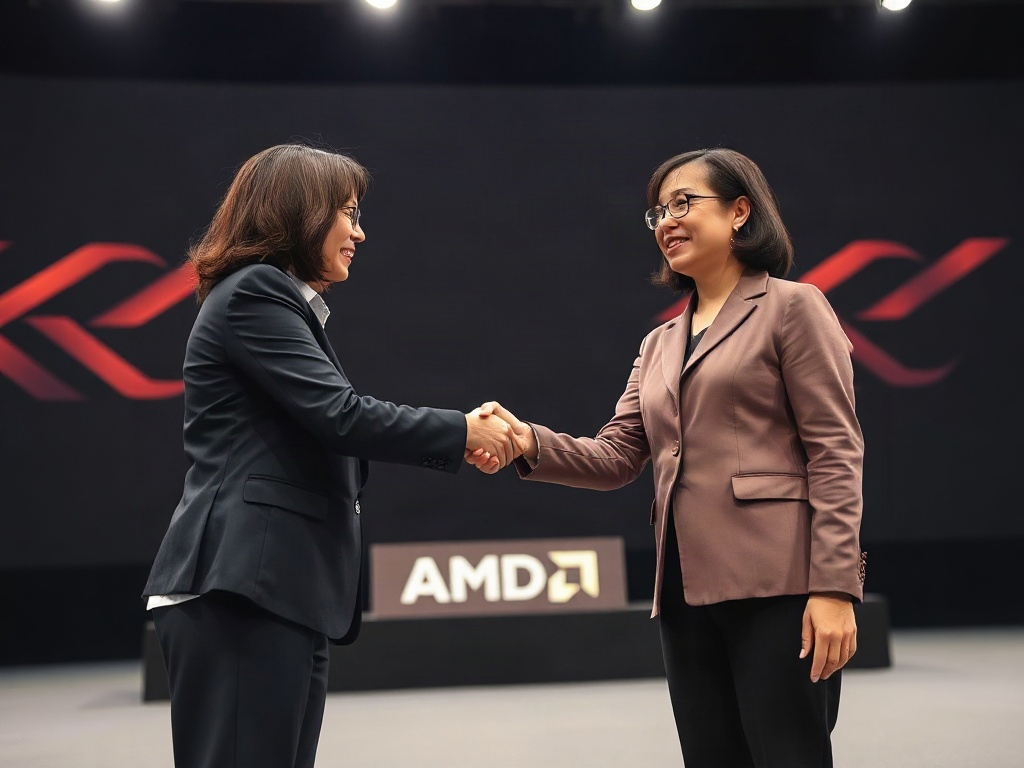
Google Pays $32 Billion for Wiz to Secure Cloud Space
On March 18, 2025, Google announced its acquisition of Wiz for $32 billion in cash, and by November 2025, the deal had already passed through the antitrust review by the U.S. Department of Justice, with expectations to close by early 2026, as reported by Reuters and cited by TechRepublic. This operation stands out even for Alphabet due to its significant size.
Wiz is a cloud security platform that began as a specialist in CNAPP (Cloud Native Application Protection Platform) designed with a clear thesis: to defend modern cloud environments where companies no longer stick to a single provider. Its clients include corporates like BMW, Salesforce, Slack, and DocuSign, and its positioning is explicitly multicloud, operating across AWS, Microsoft Azure, Oracle Cloud, and Google Cloud. In the acquisition announcement, Google Cloud highlighted that Wiz's products will remain available and that the plan is to bolster security across multiple clouds.
The detail that shifts the mental framework is the jump in valuation: Google had spoken with Wiz in 2024 and offered $23 billion, which Wiz turned down. A year later, the agreed price jumped by 50%. In financial markets, this resembles paying more for the same asset because the opportunity cost of not having it has increased. In cloud security, the opportunity cost often materializes as incidents, business friction, and delays in adoption.
Price Does Not Buy Revenue, It Buys Operational Speed
In acquisitions, the usual rhetoric is about “synergies.” Here, the number compels a different reading: Google is paying $32 billion in cash for a company that does not publish critical metrics in available sources, like ARR or margin. What does appear is that Wiz doubled its year-over-year revenue before the deal gained final traction, according to analyst comments cited in the briefing. This indicates commercial traction, but it is not sufficient to justify the multiple without looking at the entire landscape.
The entire landscape is that Google Cloud is chasing AWS and Azure for market share, competing with a more visible advantage in AI integration. The issue is that while AI increases productivity, it also amplifies attack surfaces and control complexity. In terms of portfolio, Google is paying a premium for an asset that can reduce the volatility of the cloud business: fewer incidents, fewer customers halting migrations, and a greater capacity to sell cloud by arguing for "built-in security."
Wiz, by its design, is a fitting piece because it does not require converting the customer to the “Google stack.” If security depended solely on Google Cloud, the acquisition would be a double-edged sword: it would strengthen the product but weaken access to accounts that exist in multicloud. The statement points to the contrary: maintaining support across all clouds.
The cold reading is that Google is buying time. In security, time translates to two things: speed in identifying risks and speed in deploying controls without blocking development teams. CNAPP plays in that realm. If Google tried to build at that speed from scratch, the cost wouldn't be just R&D. It would involve a commercial delay against rivals and a learning curve fraught with interim incidents.
Multicloud Is the Battlefield and Wiz Is a "Neutral Asset"
The most interesting aspect of the acquisition is the bet on a product that inherently exists in shared territory. Wiz is marketed as a layer that observes and reduces risks across AWS, Azure, Oracle, and Google. For a buyer like Google, this is unusual: large tech companies usually prefer total control. However, the operational reality of corporate customers is no longer monoculture. The cloud resembles a diversified portfolio rather than a concentrated position.
When viewed as a risk manager, multicloud is a rational response to concentration: it avoids relying on a single provider for computing, data, or continuity. The cost is complexity: identities, permissions, configurations, telemetry, and policies are multiplied. That complexity is a breeding ground for gaps.
Here, Wiz functions as a "neutral asset": it can sit on top of various clouds without forcing a substrate change. For Google Cloud, this has a commercial implication: selling security without requiring total migration. If the corporate buyer perceives that the security tool aligns with only one cloud, adoption slows due to internal policy, compliance, or simple prudence.
Thomas Kurian, CEO of Google Cloud, positioned the goal as making cybersecurity "more accessible and easier to use" for organizations of any size in complex environments. This message is not poetry; it’s go-to-market. Security is purchased when friction decreases and when teams can operate without an army of specialists.
There’s also a geopolitical layer and national narrative: this is touted as the largest technology exit linked to Israel, given Wiz’s origins and the leadership of its CEO, Assaf Rappaport. For Google, that detail matters less than the asset, but for the talent market and the legitimacy of Wiz as an “execution machine,” the stamp weighs in.
Regulation, Integration, and the Silent Risk of Breaking What Works
The operation has already surpassed a tough point: the antitrust review by the U.S. Department of Justice, according to statements by Assaf Rappaport at a Wall Street Journal event reported by Reuters and referenced by TechRepublic. The European Union approved it unconditionally, according to the briefing. This reduces the binary risk of a veto but does not eliminate a bigger risk that often undermines large acquisitions: integration.
Integration has three vectors of fragility.
First, product. Wiz is valuable because it’s multicloud and because it moves quickly. If the integration process binds it to long internal cycles, the advantage evaporates. In terms of natural selection, a species survives by its adaptability rate, not by its size. Google is already huge; Wiz adds the adaptability rate.
Second, commercial. Wiz has clients who also buy from Google Cloud competitors. The message of multicloud continuity is a condition for those clients not freezing contracts. The promise that Wiz will remain available in the Google Cloud Marketplace and alongside partner solutions goes in that direction.
Third, governance. An all-cash acquisition of this magnitude brings pressure to justify returns. When a buyer pays a high price, the typical bias is to force "rapid monetization” by hiking prices or pushing aggressive cross-selling. In security, raising prices without increasing operational value often pushes the customer to alternatives. The asset loses value right where it’s supposed to protect it.
The fact that the price is cash also has a financial reading: Alphabet avoids dilution through stock but assumes a clear capital cost. This clarity aids in measuring internal discipline. In a company juggling multiple simultaneous bets, cash makes mistakes painful from an accounting perspective, not just narratively.
What This Purchase Reveals About the Cybersecurity Startup Market
The deal occurs in a year with multiple large purchases: the briefing mentions it as one of eight M&A deals in cybersecurity above $1 billion in 2025. This is no coincidence. It’s consolidation out of necessity.
Cybersecurity startups that survive and come out at these prices usually have three attributes.
First, they sell something the customer sees as "direct pain," not a nice-to-have. Cloud security falls into that category because a mistake becomes an incident, and an incident leads to costs, interruptions, and legal risks.
Second, they execute quickly. The briefing cites patent analytics from LexisNexis IP indicating that, combined, the intellectual property portfolios would elevate Google's presence in certain cloud security clusters from more than 90 to 190 active patent families, a 110% increase. Without diving into patent fetishism, the message is that Google is buying technological density that it didn’t have at the same pace as its rivals.
Third, they have distribution. Wiz has a relevant roster of enterprise clients. This matters because, in security, sales are long and trust is costly. In software markets, the customer acquisition cost can kill a startup before the product matures. An enterprise base reduces that fragility.
My critique of the typical external capital theater is simple: many startups inflate growth by subsidizing the market with spending. Here, there are no public data on burn or margins in the provided sources, so it’s not appropriate to impute financial fragility. What can be stated is that the increase from $23 billion to $32 billion in one year suggests that Wiz managed to elevate its bargaining power, whether through growth, competitive strength, or because the buyer perceived that the risk of not acquiring it became greater.
For the Israeli market (and any talent hub), this exit validates a strategy: to build products with global adoption and clear positioning in a category at the center of corporate spend. For other startups, the message is less romantic: the market pays for operational risk control, not for rhetoric.
Google’s Rational Play Is to Keep Wiz Modular
If one models this acquisition as a portfolio, Google is adding an asset that should reduce the variance of the cloud business and increase the conversion rate of large accounts in a multicloud context. That is the upside. The downside is paying $32 billion and ending up with a unit that becomes slow, politicized, and less useful to clients outside Google Cloud.
The technically prudent move is to keep Wiz as a modular unit: sufficient autonomy to iterate products and well-defined couplings with Google Cloud to integrate signals, AI, and distribution. In financial engineering, this resembles buying a business with operational advantage and leaving what generates alpha untouched; risks are controlled by adjusting interfaces, not rewriting everything.
Assaf Rappaport's statement in the release points to that continuity: support for clients “across all major clouds” and the use of additional resources and “deep AI expertise” from Google to reinforce the mission of preventing breaches. Translated into the language that matters, Wiz wants to continue selling where the customer is, and Google wants security to be a reason for choosing its cloud without forcing clients to concentrate.
The expected closing in early 2026 leaves a window where market trust is at stake. The asset begins to depreciate if the customer perceives abrupt changes in multicloud support, pricing, or roadmap.
The acquisition of Wiz is a significant gamble, but it’s not a leap into the void if Google maintains Wiz's speed and limits organizational coupling; the survival of value depends on keeping the operational structure light enough for the product to continue adapting more rapidly than the threat environment.