
From Laboratory to Factory: The $100 Million Center Transforming Robotics into a Production Line
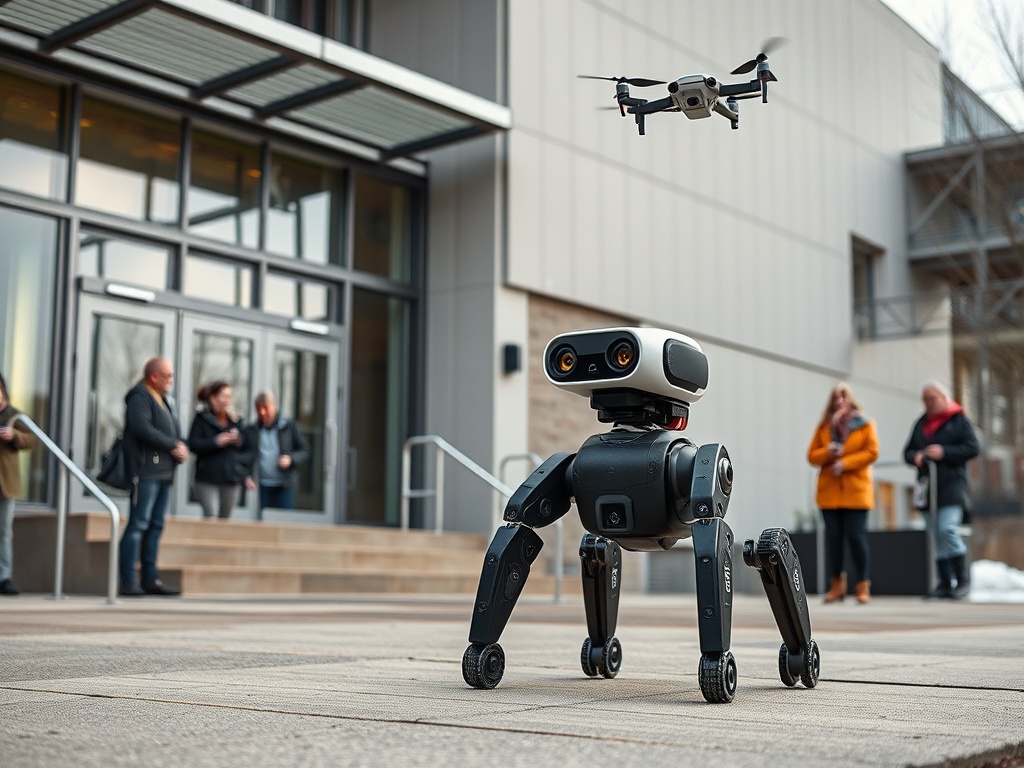
On February 27, 2026, Carnegie Mellon University (CMU) cut the ribbon on its Robotics Innovation Center (RIC) in Hazelwood Green, Pittsburgh, with a carefully orchestrated display: advanced quadrupedal robots, flying drones, and live demonstrations conveying a message of actual capability rather than mere promises. The hard data supports the gesture: 150,000 square feet dedicated to testing robots on land, water, air, and space; a $100 million project bolstered by a leading $45 million grant from the Richard King Mellon Foundation. While the infrastructure is a visible headline, the real play lies in designing workflow.
The RIC emerges from land with industrial memory, previously the site of a steel mill undergoing transformation. The metaphor is both obvious and useful. In the 20th century, Pittsburgh optimized steel; in 2026, CMU aims to optimize innovation cycles in robotics: reducing friction, shortening iterations, and bringing the lab closer to real-world operations. The university articulates its vision directly: to create an environment where academia, industry, national labs, and startups collaborate to shorten the time from fundamental research breakthroughs to deployable solutions in transportation, manufacturing, national security, and healthcare.
Market signals arrived even before the inauguration. FieldAI, a unicorn valued at $2 billion with $405 million in backing, announced its entrance as the first corporate tenant, setting up a 2,500 square foot lab and office on the second floor, led by Sebastian Scherer, director of Fieldable Embodied AI. Additionally, the state adds another operational block: Governor Josh Shapiro announced $1.5 million for a Physical AI Accelerator of 25,000 square feet within the RIC. Infrastructure, philanthropic capital, public signals, and private traction all align in the same direction.
The Real Bet: Standardizing the Transition from Prototype to Deployment
Most organizations talk about "innovation" as if it’s merely an attitude. Here, innovation is treated as a productive capacity. A 150,000 square foot building isn’t merely decoration; it’s an industrial architecture decision applied to robotics. When CMU positions the RIC as a space for robots of land, water, air, and space, it acknowledges a classic problem in the sector: the leap from a controlled environment to a hostile one.
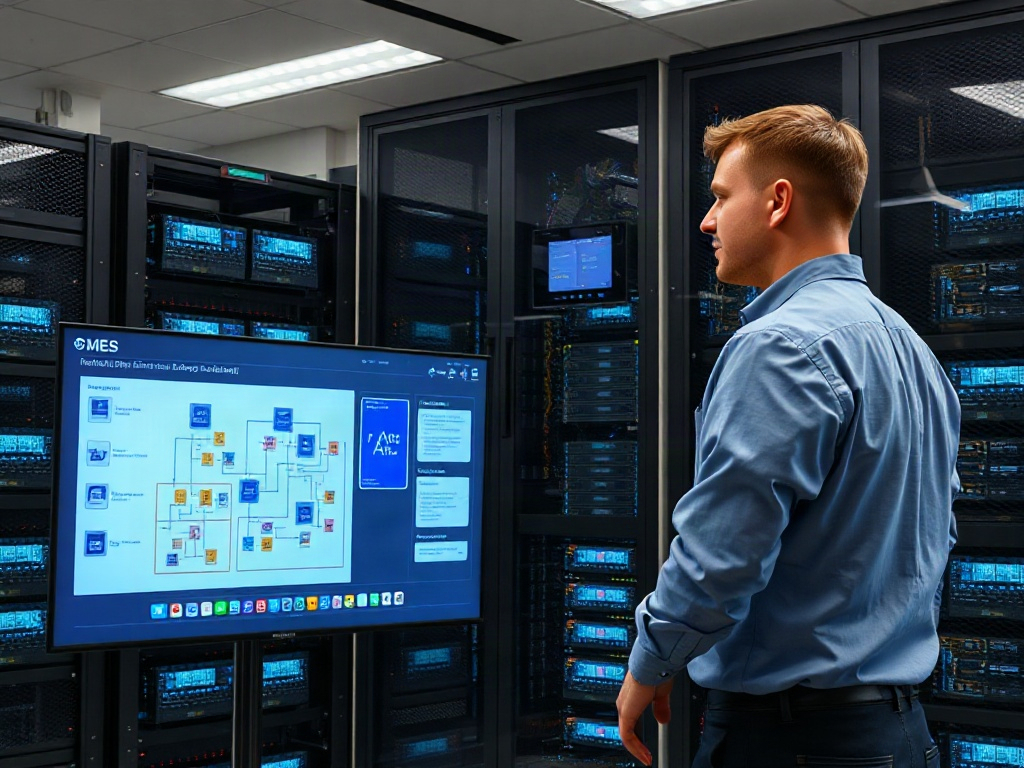
This raises the core operational concept underpinning everything: Physical AI. It’s not a slogan; it’s the convergence of AI models and robotic systems that must withstand friction, climate, uncertainty, and failures. In portfolio terms, this shifts the center of gravity from pure exploration to integration and field validation. FieldAI, for example, focuses on robots in complex environments like nuclear cleanup and unmapped industrial zones, cases where the cost of error is high and reliability is non-negotiable.
What’s relevant for executives and investors is the mechanism: the RIC installs a pipeline. Basic research at CMU; applied engineering with assets like the National Robotics Engineering Center; manufacturing partners; and now a site where prototypes can confront scenarios that closely resemble customer environments rather than lab conditions. If this works, Pittsburgh won't just "have robotics"; it will create a repeatable way to turn research into deployable products.
The inauguration made this clear: more than a dozen live demonstrations showcased that a collaboration flow with the industry already exists. This detail is crucial as it alters the dominant risk. The risk shifts from "if there will be ideas" to "if there will be throughput", meaning how many projects cross the threshold of reality without organizational breakdown.
The Governance Design: Preventing Mature Business from Stifling Exploration
My reading as a portfolio manager is straightforward: the RIC is a tool for managing the mortal tension between exploiting what already works and exploring what hasn’t yet paid off. A common mistake in corporations is when exploration is expected to perform like exploitation. A prototype is measured with profitability KPIs, unrealistic forecasting accuracy is demanded, and learning is penalized.
The setup of the RIC suggests a pragmatic response: placing different actors in the same building, but not necessarily under the same logic. A university can tolerate uncertainty; a startup must iterate quickly; a public agency needs to justify funding; an industrial company requires reliability. The value lies in designing interfaces between those worlds.
The announcement of the Physical AI Accelerator within the RIC, with state funding, adds a governance layer that can be virtuous as long as it remains focused on accelerating validation and deployment, not bureaucratizing the process. The danger isn’t ethical; it’s operational: too many committees, too many approvals, too many vanity metrics. The opportunity lies in the opposite: transforming the accelerator into a bridge with engineering discipline and iterative cadence.
FieldAI as the first tenant is another signal of correct architecture. It isn’t a generic satellite office; it’s a specific lab, with identified leadership, inside the same building where testing and integration occur. The fact that a company "not born" in Pittsburgh chooses to set up there—as emphasized by the president of the Pittsburgh Technology Council—indicates that the perceived value proposition isn’t narrative but resource-driven: talent, research infrastructure, and faculty depth.
In portfolio language, the RIC isn’t just about incubation. It’s a piece of transformation: the phase where what worked as an idea is redesigned to scale, withstand, certify, and operate. This phase is the most likely to break in rigid organizations.
Pittsburgh as a Testing Platform: Physical Assets Becoming Competitive Advantages
There’s a geographical component that the market often underestimates because it doesn’t fit in a presentation. Pittsburgh has rivers and a unique logistical condition: it hosts 10% of the country’s locks. This isn’t tourism; it’s infrastructure that facilitates research and testing in marine robotics and river logistics. When discussing water robots, more than a tank is needed: real variability, currents, operation near traffic, maintenance, and a context where failure is possible without destroying the initiative.
The combination of local assets with a center like the RIC turns the city into something resembling a permanent "testing bank". This provides a strategic input for sectors where robotics has high-impact use cases: national security, agriculture, healthcare, and transportation, all of which the RIC lists as targets.
The narrative of “economic renaissance” holds up if translated into two metrics that truly matter: speed to market and quality of technical employment. At the opening, the involvement of local contractors and trades during construction was underscored, along with a focus on workforce development. Moreover, the Pittsburgh Technology Council represents over 37,000 tech workers in the region, a figure reinforcing the talent density thesis.
The building also incorporates symbolic elements aiming for industrial continuity: the last steel beam, forged in Pennsylvania and signed in July 2024, was integrated into the ceiling of the second floor. While it may seem anecdotal, in regional transformation, these gestures help align narrative with execution: it’s not about denying the industrial past, but rather legitimizing it for the next cycle.
The Discipline that Determines Returns: Learning Metrics and Deployment Routes
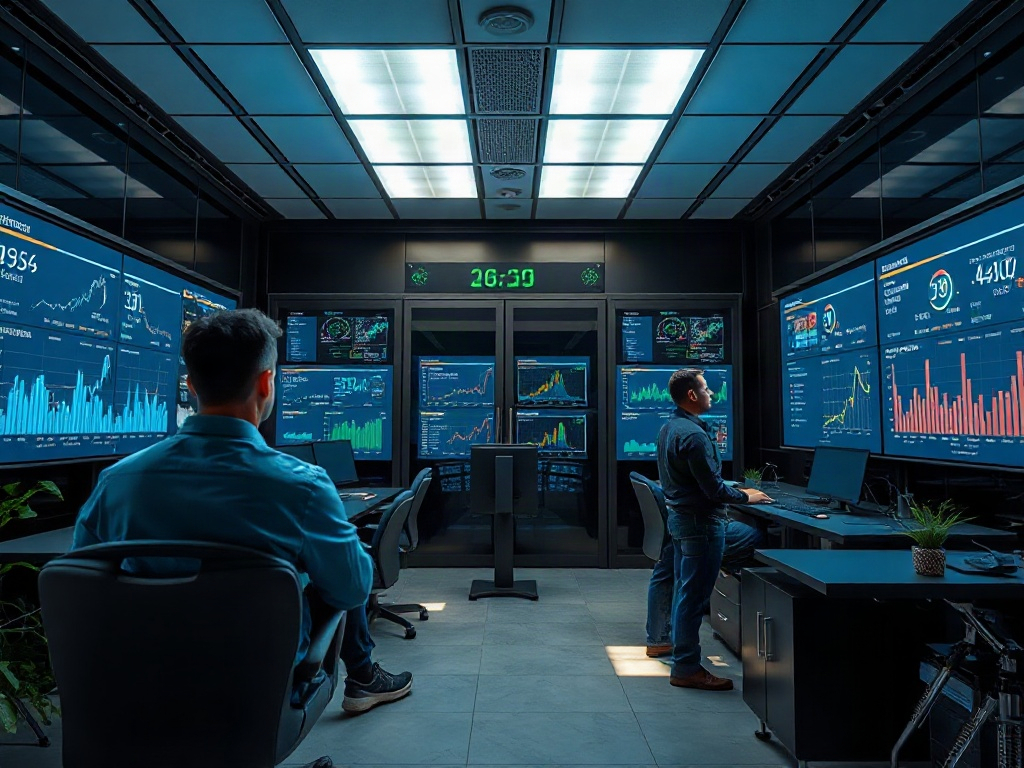
Capital is already committed: $100 million in the facility, $45 million as a leading grant, and $1.5 million in state funds for the accelerator. This puts healthy pressure on the system, as long as the right metrics are measured. The trap is evaluating the RIC as if it were a mature business with a quarterly margin. It is not. Its real product is time reduction, technical risk reduction, and generation of projects that reach deployment.
In practice, the RIC should operate with clear portfolio accounting. Part of it is the existing research engine and reputation of CMU. Another element is efficiency: shared infrastructure that prevents each team from replicating labs and testing banks. The third is incubation: early-stage projects that must be measured by validated technical learning. The fourth is transformation: programs like the Physical AI Accelerator, which should be obsessed with converting prototypes into operable, maintainable, and adoptable systems.
The presence of partners such as the National Robotics Engineering Center, the Manufacturing Futures Institute, the Advanced Robotics for Manufacturing Institute, and Catalyst Connection, along with the BioForge of the University of Pittsburgh, suggests a value chain that can cover everything from research to advanced manufacturing and intersections with bioengineering. The risk returns to design: if each actor defends their agenda and budget without an integration logic, the building becomes an expensive condominium. If governed with common deployment goals, the building becomes a factory of iterations.
CMU, through its research vice president, framed the idea as reducing the time to incorporate advancements into deployable solutions. This phrase is a KPI in itself. It measures not glamour; it measures innovation logistics.
An Innovation Machine Operates When the Portfolio is Separated by Rules
The RIC arrives with sufficient signs of seriousness: physical scale, committed capital, a first high-profile tenant, and public support aimed at acceleration. Its success will depend less on new ideas and more on the ability to operate under two simultaneous management systems: one for present excellence and another for future uncertainty.
If CMU and its partners maintain genuine autonomy for early-stage projects, and measure progress as learning and deployment capacity rather than immediate profitability, the RIC will be a viable structure to sustain the profitability of the core while scaling applied exploration in robotics.