
Four Years, Eight Acquisitions, and an Exit: Who Captured Value in Star Waste?
On April 1, 2026, Clairvest Group announced the sale of Star Waste Systems to Casella Waste Systems, Inc. The press release was neat, orderly, and optimistic: eight acquisitions completed, revenues increased more than threefold in four years, and a consolidated waste management platform in the Greater Boston area ready to integrate into one of the largest regional operators in the northeastern United States. Everything a private equity investor wants to read in an exit announcement.
What the release doesn't convey, and what anyone analyzing the value chain is interested in auditing, is the mechanics of distribution behind those numbers. Tripling revenues in four years through eight acquisitions is an operational feat. It is also a potentially classic recipe for margin compression for the smaller players who get absorbed along the way.
The Architecture of a Pressurized Waste Platform
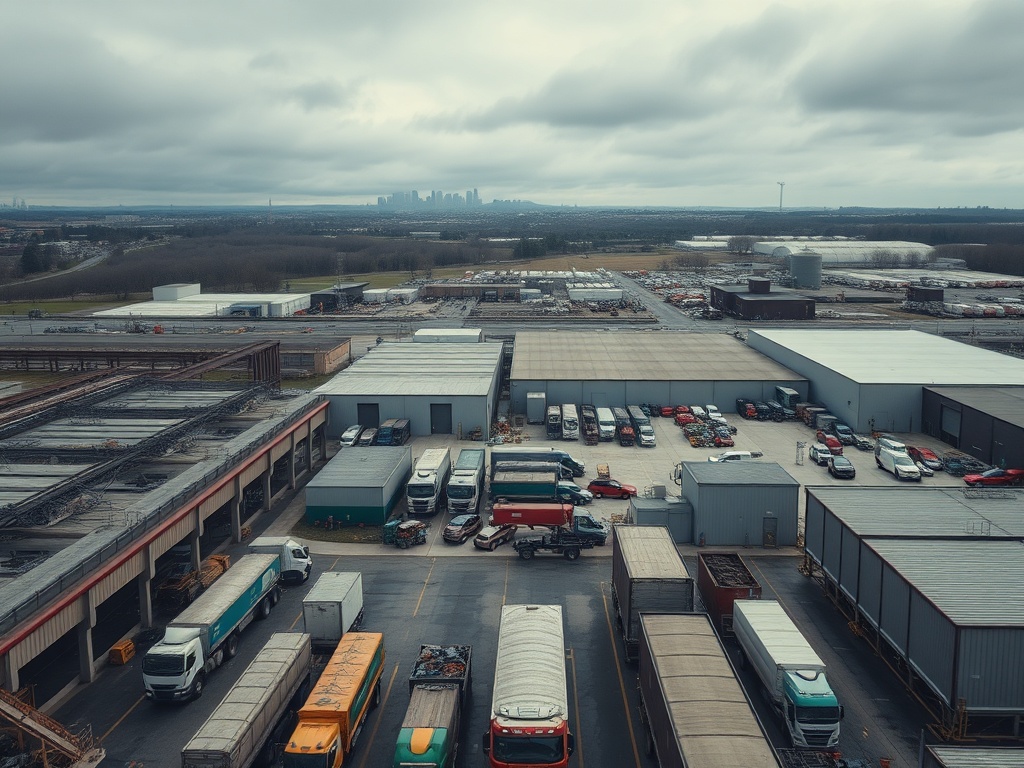
Clairvest entered Star Waste in July 2022, teaming up with Patsy Sperduto, the founder and CEO of the company, to accelerate growth. The logic was relatively straightforward: Star Waste operated in the Greater Boston metropolitan area, a dense market with a high concentration of commercial, residential, and construction waste generators, and with regulatory entry barriers that make it difficult to compete without installed infrastructure. The company already had a construction and demolition material recovery facility and a commercial solid waste transfer station north of the city.
That physical asset is not trivial. In waste management markets, control over transfer and processing infrastructure determines who can set prices and who has to accept them. When an independent operator doesn’t have its own access to a transfer station, it relies on the operator that does, and that dependency comes at a cost directly affecting its business economics.
What Clairvest did over four years is exactly what market consolidation manuals prescribe: buy smaller local operators, incorporate their routes and contracts, reduce operational redundancy, and scale up revenues on a fixed cost base that doesn’t grow proportionately. Eight acquisitions in four years imply, on average, one acquisition every six months. That pace leaves no room for deep integrations; there is time only for financial and route integrations.
The arithmetic result is clear: over 3x in revenues on a platform that already had anchored infrastructure. From the investor's perspective, the logic is impeccable. From the perspective of the acquired operators, the story depends on how much they captured in the sale price and how much they lost in future bargaining power.
What Casella Buys and What It Cannot Buy
Casella Waste Systems is not an opportunistic buyer. It is one of the most active regional consolidators in the northeastern United States, with operations in Vermont, New Hampshire, Maine, Massachusetts, New York, Pennsylvania, and Maryland. Its business model rests on exactly the same logic that Clairvest applied in Star Waste: controlling final disposal and transfer assets, route density, and long-term municipal contracts.
For Casella, this acquisition does not dramatically expand its total addressable market. What it buys is operational density in the Boston area, access to construction and demolition material recovery infrastructure, and — more importantly — the removal of an independent competitor with enough scale to pressure prices in commercial contracts.
That last point reveals the most about value distribution in this kind of transaction. When a regional market transitions from having several independent operators to one or two dominant players, the customer's willingness to pay does not increase because the service improves. It rises because alternatives disappear. Municipalities and commercial generators in North Boston are not happier with fewer choices; they are more captive.
Here is where the financial architecture of the operation deserves a colder analysis. Clairvest built value through acquisitions that, in several cases, probably eliminated the bargaining power of the absorbed operators. Casella consolidates that value and, in doing so, further reduces competition in the market. The end customer — the municipality, the construction company, the residential complex — ends up paying the consequences of a market structure that becomes progressively less competitive with each consolidation cycle.
The Pattern Confirmed by This Sale Regarding Private Capital in Essential Services
The solid waste management sector has been one of private equity's favorite markets for over two decades for reasons that have little to do with innovation and much to do with market structure. Municipal contracts are quasi-monopolistic by nature. Physical infrastructure is difficult to replicate and costly to build. Demand is perfectly inelastic: no one stops generating waste when the price of service rises.
This creates ideal conditions for a value-creation model that rests, to a large extent, not on making the service better but on making competition harder. Clairvest did not invent this pattern; it executed it with discipline in a geographically concentrated market. The result — tripling revenues in four years through eight acquisitions — is precisely the return that CEP VI needed to show to its own institutional investors.
What the press release describes as “accelerating the business's growth trajectory” is technically correct. It is also a description that deliberately omits who funded that growth. Local operators who sold their routes to Star Waste during that period captured a sale price, probably appealing compared to their alternatives at the time. What they did not capture was the ability to continue competing in that market independently. That capability carries a value that does not appear in any line of the release.
Casella, for its part, enters this transaction with a clear structural advantage: it pays for an asset that has already eliminated the most relevant competitive friction in its target area. The acquisition price, which was not disclosed, reflects that consolidated market value. What Casella cannot buy with this transaction is the long-term trust of municipal and commercial customers who, over time, will measure whether the reduction in competition translates into worse service conditions or unjustified price increases.
The only competitive advantage that survives multiple consolidation cycles is the one that makes customers, workers, and suppliers choose to stay because it is beneficial for them to do so, not because they have no other option. Casella inherited Star Waste's infrastructure; what it still needs to demonstrate is whether it also inherited the right incentives for all stakeholders in that regional market to prefer operating within its structure rather than finding alternatives where none exist.