
Capping Gasoline Prices is a Band-Aid: The Real Move is Redesigning the Market Quickly, Not Just Talking
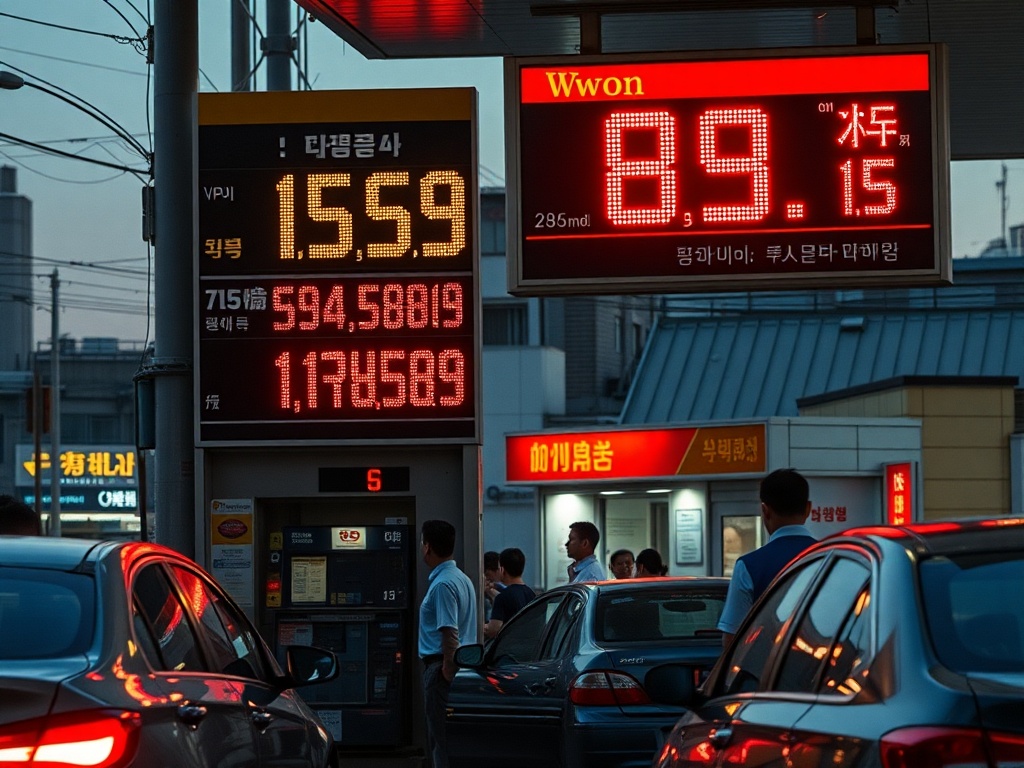
The trigger was external, but the political and operational damage is domestic. Following the escalation of conflict in the Middle East and the war between the United States and Iran, the South Korean government began preparing a measure that had been shelved for decades: activating a legal mechanism to set maximum retail fuel prices. The context is clear. In Seoul, gasoline has surpassed 1,900 won per liter, and the government viewed this as a rapid increase, even though President Lee Jae Myung stated there had not yet been an “objectively serious” physical disruption in supply.
Here lies a tension that any leader understands within their profit and loss statements: when input prices soar due to a global shock, retail prices must follow suit. However, when prices increase more rapidly than the logic of replenishment allows, suspicions of opportunism arise, and political pressure mounts. The response being designed is significant: reviving for the first time in about 30 years a state capability not used since the liberalization of 1997, based on Article 23 of the Petroleum and Petroleum Alternative Fuel Business Act, which enables the Ministry of Trade, Industry, and Energy to establish caps if import or retail prices fluctuate significantly or if necessary to stabilize daily life and the economy.
The strategic issue is not whether a price cap is “good” or “bad.” The problem is that a cap is a high-friction tool. If implemented without fine instrumentation, it destroys signals, compresses margins where it does not belong, and shifts scarcity from price to availability. In an import-heavy economy, the margin of error manifests in logistics, trust, and ultimately inflation through other channels.
When the Government Threatens a Price Cap, It's Actually Diagnosing a Transmission Failure
Reports indicate that the government and the ruling party are attempting to “operationalize” an exceptional and temporary lever to curb price spikes and dissuade abusive behavior. The official narrative conflates two distinct matters: the oil shock caused by war and the behavior of the retail market. For that latter concern, Minister of Economy and Finance Koo Yoon-cheol spoke of indications of excessive price increases and promised intensive inspections and penalties for collusion or unfair practices.
From a market design perspective, this mixture is delicate. The geopolitical shock impacts expected marginal costs. Retailers react by looking at the next shipment, not the last one. If the state intervenes solely based on current receipts, it risks compelling sellers to “subsidize” future inventory using present margins. This often leads to two undesirable outcomes: rationing (queues, quotas, temporary closures) or explicit compensations that later become politically difficult to remove.
The president's own statement that there is no serious physical disruption is crucial because it limits the technical legitimacy of a stringent control. If supply is not broken, the real focus shifts to price transmission and competitive discipline. According to reports, the gas station association agreed to investigate unusual rapid increases but requested consideration of the sector’s operational conditions. Operational translation: if a cap is imposed without understanding the cost structure and inventory turnover, it puts pressure on the weakest link and creates execution problems at thousands of retail points.
Thus, the intervention should be viewed as a power message to temper expectations, not as an automatic solution. In jittery markets, the term "cap" seeks to replace trust when measurement instruments and rapid response are lacking.
Article 23 is a Legal Hammer with Practical Ambiguity and Credibility Costs
The government is reviewing a mechanism that authorizes setting caps for refiners, importers, exporters, and retailers. On paper, it sounds "complete." In reality, it is a major surgical operation. Recent coverage emphasizes that neither the timing nor the levels of the potential price cap have been defined. This is not a trivial matter: without a transparent methodology, the market interprets it as arbitrariness.
There is a historical precedent that weighs heavily. South Korea had direct caps until 1996, with older figures reported as 608 won per liter for gasoline and 216 won for diesel during previous regimes. These were applied during the shocks of the 1970s and the Gulf War in the early 1990s. However, these mechanisms have not been utilized since 1997. This discontinuity creates an operational void. A tool that has not been used for three decades loses manuals, institutional muscle, and procedural legitimacy.
When a regulator revives a dormant tool, the first risk is that the design is hurried due to political pressure rather than based on field tests. The second risk is precedent: if used now, the market begins to price in the possibility of further use in the face of future price increases, altering inventory behavior and risk coverage. The third is legal-administrative: the president has requested urgent changes to enable administrative sanctions for unjustified price increases and hoarding, arguing that the current framework complicates execution. This statement reveals what often happens in crises: a desire for outcomes without the necessary machinery.
From a public policy perspective, the real question is how to minimize collateral damage. A broad, uniform national cap may be easy to announce but difficult to maintain. Thus, the president has called for “realistic” caps by region and fuel type, along with alternatives if a single cap is not feasible. This nuance represents the serious aspect of the strategy: it acknowledges the heterogeneity of logistical costs and demand.
The 100 Trillion Won Stabilization Fund Reveals the Right Fear: Financial Contagion
In parallel, Lee ordered the acceleration of a 100 trillion won financial market stabilization fund. This indicates that the government is not only focusing on the fuel price bomb but also on its transmission to the broader economy: exchange rate volatility, risk premiums, and investor nerves in an energy-import-dependent economy.
The guideline that the program should not “artificially support” stock prices and should avoid purchases that distort markets is also significant. It implies a basic lesson learned: when large sums are used for intervention, the market becomes accustomed to it and subsequently demands ongoing bailouts. In execution terms, that fund may be more defensible than a cap because it addresses liquidity and systemic confidence, rather than the microprice of a specific commodity.
However, it is crucial not to confuse stabilizing markets with fixing the fuel problem. They are distinct layers. If the cap is applied poorly and leads to shortages, political costs will increase, and macroeconomic costs might return through transportation inflation, industrial disruptions, and declining productivity. South Korea has also issued a resource security alert for oil and gas, mentioning monitoring risks along critical routes, such as the Strait of Hormuz, with South Korean vessels operating there. This underscores that the fragility lies in the supply chain, not just in price.
Pure strategy: the fund buys time in markets; the price mechanism design buys governability on the street. If either is executed clumsily, the time gained will burn away.
The Executive Response is Not the Cap: It’s a Short Cycle of Evidence with Three Metrics Audited Daily
If I were advising a crisis table under this level of pressure, my focus would be on reducing the risk of overreaction and increasing precision. A price cap may be a last resort, but first, it must be demonstrated that the system is understood.
Three daily, public, and consistent metrics shift the game without the need for regulatory theatrics. First, transfer speed between wholesale and retail, separated by region and type of fuel, to identify real outliers. Second, signals of physical availability at stations, not just average prices, because the worst-case scenario of a poorly calibrated cap is that the product disappears. Third, observable margin structure by segments of the supply chain, even if in ranges, to prevent the debate from devolving into generic accusations.
News already anticipates that the Executive will inspect and punish collusion or unfair practices. This is correct as a disciplinary measure, but insufficient as a design. Inspecting without instrumentation becomes a slow hunt. What works in crises is something else: simple rules, frequent monitoring, and small adjustments.
If the implementation of Article 23 progresses, the safest executive strategy would be to treat it as a reversible experiment. Start with strict limits by product and region, with a short duration and an explicit review formula. The presidential instruction to consider regional caps suggests this direction. And if the declared objective is “temporary” and “exceptional,” the exit strategy must be outlined before entry. Otherwise, the market assumes permanence and protects itself.
In the private sector, the lesson is uncomfortable but useful. When the state wields hammers, it perceives that the market is not self-correcting at a socially tolerable speed. Surviving companies through these episodes are those that can explain their prices clearly, operate with flexible costs, and hold inventory without financing it through opaque margins.
Real growth, even amid geopolitical crises, occurs when the illusion of a perfect plan is discarded and operations are validated constantly against actual customers.